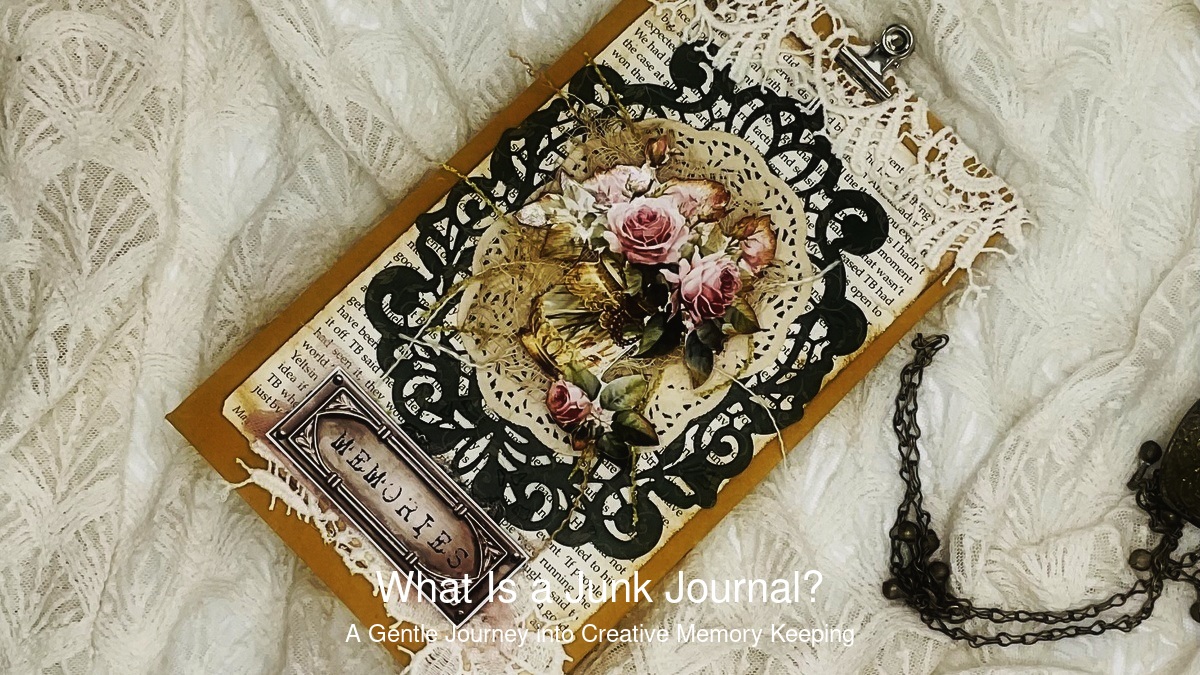
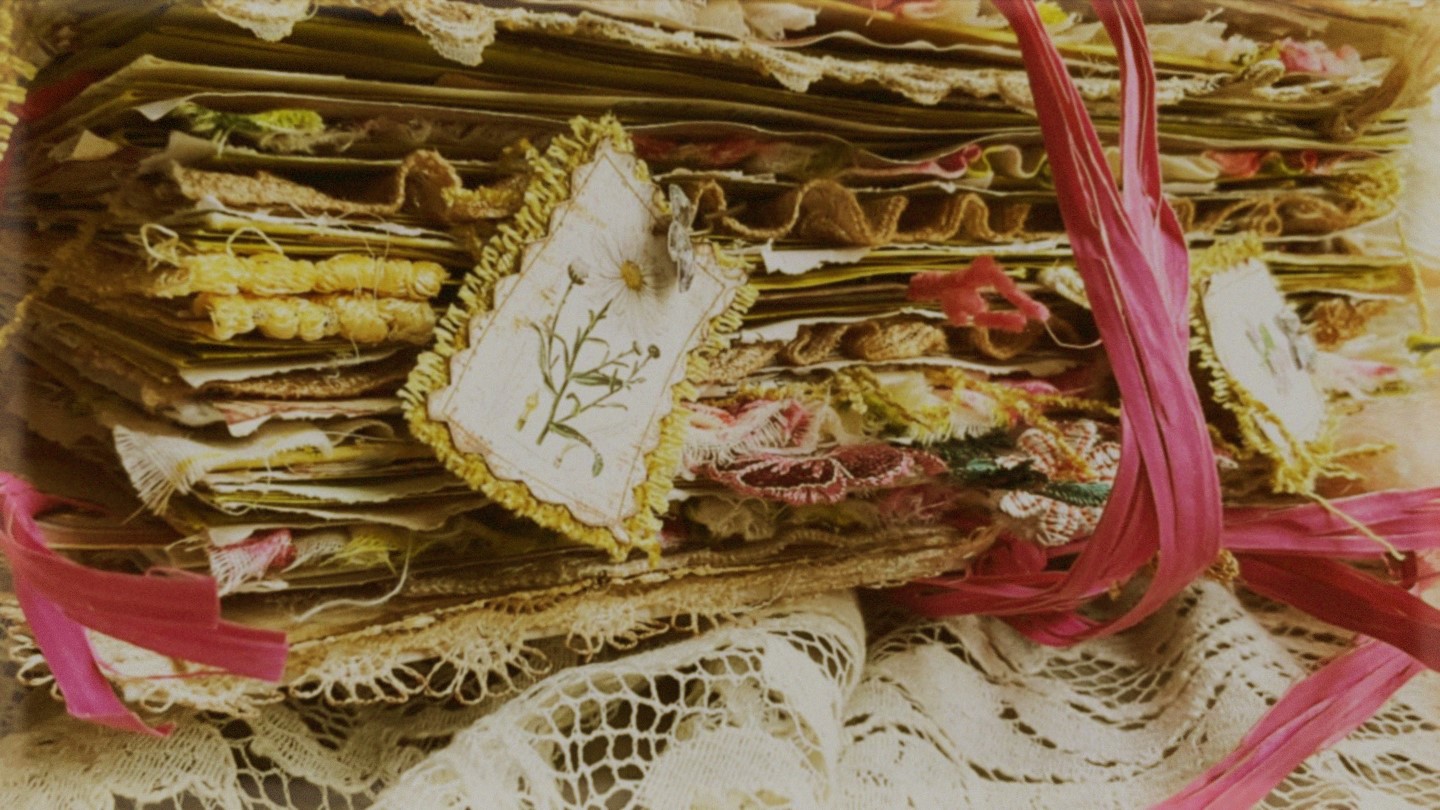
A junk journal is a handmade book assembled from recycled and found materials — vintage book pages, old envelopes, fabric scraps, tea-dyed papers, lace, and ephemera. Used as a creative diary, art journal, memory keeper, or slow craft practice, it has no rules and no wrong way to make one. Every junk journal is completely unique.
Junk Journal
A junk journal is a handcrafted book created from a variety of found and recycled materials. It is a versatile and artistic way to document memories, thoughts, and creative expressions. Unlike traditional journals, junk journals embrace an eclectic mix of paper, fabric, ephemera, and other materials, making each one unique and personal. The beauty of a junk journal lies in its imperfections and the personal touch of its creator, allowing for endless creativity and individuality.
Our Junk Journals
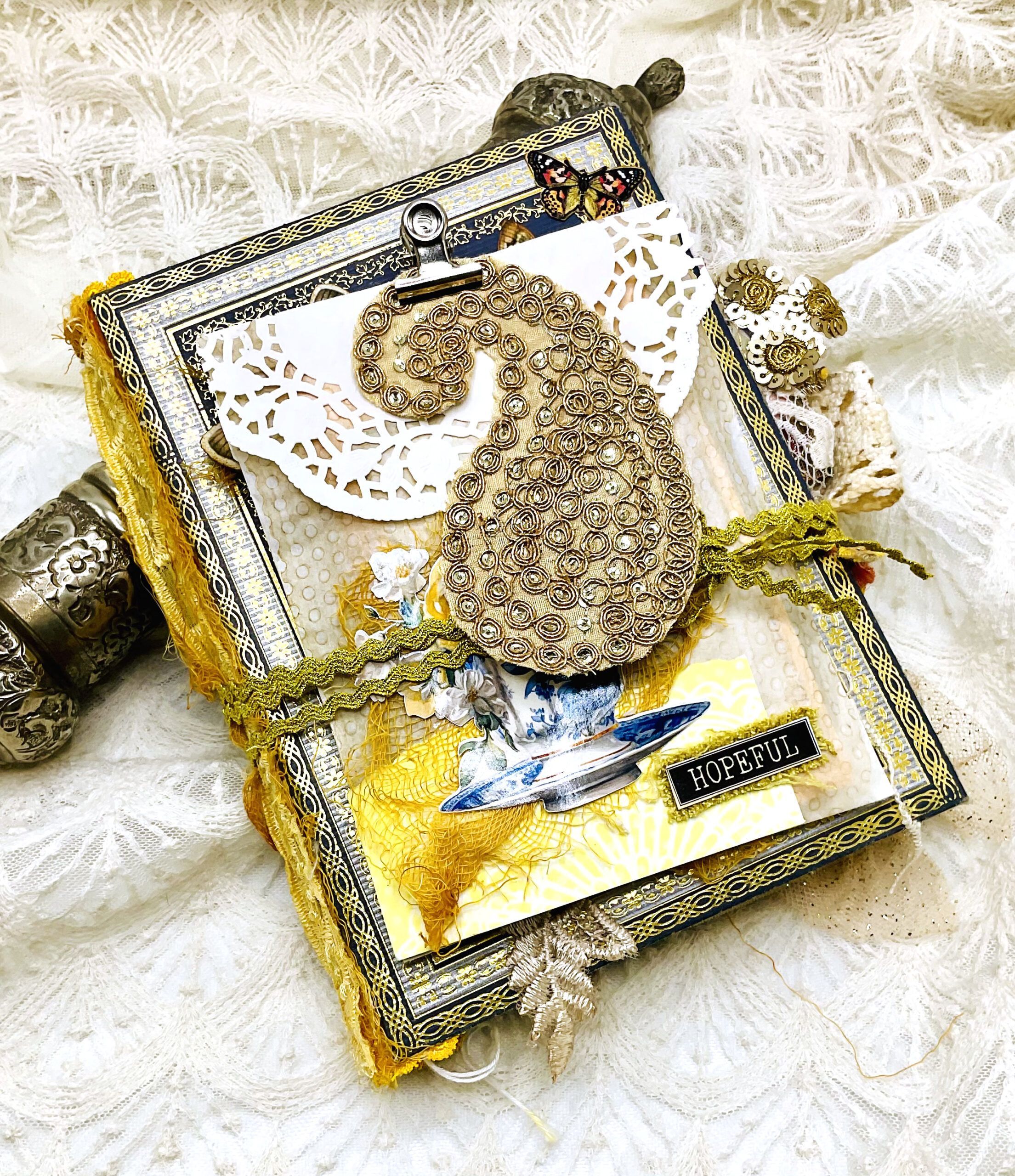
At Trinketz we create junk journals that are not just unique but are also rich in cultural heritage and vintage charm. Each journal is designed to evoke a sense of nostalgia and connect you with the past while celebrating a vibrant culture and ethnicity.
Our junk journals are infused with a vintage essence, using materials and techniques that transport you back to a bygone era. Here’s how we achieve that timeless appeal:
What is slow junk journaling?
Slow junk journaling is the practice of making and using junk journals as a deliberate act of slow living — choosing handmade over mass-produced, repurposed over new, and process over perfection. It is part of the wider 2026 analog movement: a response to digital overwhelm that finds meaning in tactile, screen-free creativity.
Unlike fast crafting tutorials focused on speed and output, slow junk journaling is about the rhythm of making. tea-dyeing a stack of papers on a quiet afternoon. Sorting through vintage envelopes collected over years. Stitching signatures by hand. The journal that results is both an object and a record of unhurried time.
At Trinketz, slow junk journaling has been Savera’s practice for over a decade — long before it had a name.
Most Important Benefits
Personal Expression
Our handmade junk journals offer customers a canvas to express their thoughts, memories, and creativity in a tangible and meaningful way.
Memorable Keepsakes
Serving as more than just notebooks, these journals become cherished keepsakes, capturing moments and stories to be revisited over time.
Thoughtful Gifting
With customization options, our journals make for thoughtful and unique gifts that hold sentimental value.
Travel Journals
They make great travel journals, allowing for the inclusion of maps, tickets, postcards, and other travel ephemera.
Planner
Junk journals can be adapted as planners, combining functionality with artistic expression to organize schedules creatively.
Stress Relief and Relaxation
Engaging with our journals provides customers with a therapeutic outlet, offering a relaxing and immersive creative experience.
Artistic Appreciation
For users who value craftsmanship, our junk journals become not just writing surfaces but pieces of art reflecting beauty in imperfection.
Timeless Stories
By blending vintage and cultural elements, our journals allow you to tell your story in a way that bridges past and present.
Inspiration Books
They can serve as inspiration books, filled with images, quotes, and ideas that spark creativity and motivation.
Scrapbooking
Junk journals are perfect for scrapbooking, preserving photos and memorabilia in a creative and personalized format.
Self-Expression
Junk journals provide a creative outlet for expressing emotions, thoughts, and experiences in a cathartic process.
Mindfulness
The act of creating and decorating a junk journal can be a meditative practice, encouraging mindfulness and reducing stress.
Emotional Release
Writing, drawing, and collaging in a junk journal allows for emotional release and can help in managing anxiety and depression.
Recipe Books
They can be transformed into unique recipe books, combining handwritten recipes with food-related clippings and decorations.
Creative Writing
They can be used for writing poetry, short stories, or stream-of-consciousness entries, blending writing with visual art.
Frequently Asked Questions about Junk Journaling
What materials do you need to start a junk journal?
At minimum you need paper of any kind, something for a cover such as cardboard or an old book cover, and a way to bind the pages such as string, staples, or a pamphlet stitch. Everything else — lace, fabric, vintage ephemera, tea-dyed papers — is optional and makes the journal your own.
What is the difference between a junk journal and a scrapbook?
A scrapbook typically follows a structured layout with specific photo spaces and a consistent theme. A junk journal is freeform — assembled from whatever materials you have, with no rules about size, format, or content. Junk journals embrace imperfection and the beauty of repurposed materials.
Can you sell junk journals on Etsy?
Yes — handmade junk journals and digital junk journal kits are both popular on Etsy. If you want to sell junk journal kits, the free Trinketz Studio can help you discover trending themes, plan your kit contents, and generate ready-to-publish Etsy listing copy.
What is tea-dyeing and why do junk journal makers use it?
Tea-dyeing is the process of soaking paper in brewed tea to give it a warm, aged appearance. Junk journal makers use it to create vintage-looking pages from plain paper, to unify different paper types in a journal, and to add warmth and character to their work.
What is slow junk journaling?
Slow junk journaling is the practice of making and using junk journals as a deliberate act of slow living — choosing handmade materials, working without rushing, and finding meaning in the process rather than the finished object. It connects junk journaling to the wider slow living and analog lifestyle movement.
How is a Trinketz journal different from other handmade journals?
Every Trinketz journal is individually made by Savera in Rawalpindi, Pakistan using vintage textiles, repurposed wedding envelopes, Banarasi fabric, tea-dyed papers, and slow craft techniques built over more than a decade of making. No two journals are alike. See her Design Team work.
How can I plan my own junk journal kit to sell on Etsy?
The free Trinketz Studio walks you through discovering live Etsy trends, choosing a colour palette, planning your kit contents, generating Midjourney image prompts, and writing your Etsy listing — all in one free tool.
Why Choose Our Junk Journals?
Handcrafted Excellence
Each junk journal is meticulously crafted by hand, ensuring a unique and personalized touch that sets it apart from mass-produced alternatives.
Customization Options
Customers have the opportunity to tailor their journals to reflect their personal style, interests, or commemorate special occasions, making each purchase a truly individualized experience.
Eclectic Design Aesthetic
Incorporating a blend of vintage papers, ephemera, and creative embellishments, our journals boast an eclectic design that appeals to those seeking distinctive, artistic keepsakes.
Quality Materials
Utilizing high-quality materials sourced locally in Pakistan ensures the durability and authenticity of our journals, providing customers with a tangible connection to the cultural richness of the region.
One-of-a-Kind Creations
Every journal is a truly one-of-a-kind creation, made with materials that not only tell a story but also carry the essence of Pakistan’s artistic tradition, ensuring each piece is a unique and treasured work of art.
Imperfection as Art
Embracing the beauty of imperfection, each page tells a story through its charming quirks, creating a narrative that resonates with the uniqueness of life.
Read more: The Art of Tea-Dyeing — The Handmade Hour
Junk Journal Glossary — A to Z
The junk journal world has its own beautiful language. Here are the terms you will hear most often — explained simply, the way one maker would explain them to another.
B — Belly Band
A strip of paper, fabric, or lace wrapped around the outside of a journal to hold it closed. Often decorated with a tag, a button, or a wax seal. Beautiful to make and one of the first things people notice when they pick up a handmade journal.
B — Binding
The method used to hold a journal’s pages together. Junk journals use many binding styles — coptic stitch, pamphlet stitch, Japanese stab binding, and simple binder rings. The binding you choose affects how the journal opens and how chunky it becomes.
C — Collage
Layering different papers, images, fabrics, and found materials onto a page to build up texture and depth. The heart of junk journaling. There are no rules — you layer until it feels right.
E — Ephemera
The small paper treasures that go inside a journal — vintage postcards, ticket stubs, tags, labels, seed packets, recipe cards, old photographs, scraps of wrapping paper. The word means things not meant to last. We keep them anyway. See also: What Is a Junk Journal?
F — Flip-Out Page
A page that is folded and tucked inside another page, which unfolds to reveal more writing or decorating space. One of the most satisfying interactive elements to discover inside a handmade journal.
F — Folio
A sheet of paper folded in half to create four pages. Folios are stacked and nested together to build signatures, which are then bound into a journal.
F — Fussy Cutting
Cutting around the exact outline of an image rather than cutting it into a square or rectangle. Time-consuming and completely worth it — a fussy-cut rose sits on a page like it grew there.
G — Gusset
An extra piece of paper or fabric sewn or glued into a pocket to give it more depth — so it can hold bulkier ephemera like folded letters or fabric scraps.
J — Junk Journal
A handmade book created from recycled, reclaimed, and found materials — vintage book pages, old envelopes, tea-dyed papers, fabric scraps, lace, and ephemera. Every junk journal is completely unique. See our full guide: What Is a Junk Journal?
L — Landscape Format
A journal that is wider than it is tall — oriented horizontally rather than vertically. Savera’s signature format at Trinketz. It opens like a small stage.
M — Memory Keeping
Using a journal to preserve moments, feelings, and the physical traces of your life — tickets, fabric, handwriting, pressed flowers. Junk journaling is memory keeping made beautiful.
P — Pocket Page
A page with a folded or glued pocket that can hold loose ephemera, folded notes, or small cards. One of the most-loved features of handmade journals. Every Trinketz journal has several.
S — Signature
A small group of folded pages nested together — usually 4 to 8 sheets — that forms one section of a journal. Multiple signatures are bound together to make the full book.
S — Slow Craft
Making something by hand with full attention and no hurry. Tea-dyeing a page and watching the colour deepen. Stitching a binding slowly on a quiet afternoon. The opposite of fast content and quick results. Read more about slow junk journaling.
T — Tea Dyeing
Brewing a strong pot of tea, dipping paper into it, and leaving it to dry. The result is a warm amber or honey tone that makes new paper look wonderfully aged. Every batch is slightly different — that variation is the point. See the full tea-dyeing guide.
T — Tuck Spot
A small folded flap or hidden pocket on a page — just big enough to slip a tag, a note, or a folded piece of ephemera into. Finding a tuck spot is one of the small joys of using a handmade journal.
V — Vellum
A translucent paper with a slightly frosted look. Layered over images or text it softens them beautifully. Often used as a pocket or an overlay page in junk journals.
W — Washi Tape
A decorative Japanese paper tape that peels off cleanly and comes in hundreds of patterns. Used to attach ephemera, cover edges, add colour, or create borders. A junk journal staple.