Author: Savera | Updated January 2026 | 9 Minute Read
A Vintage Fabric Planner Journal Created from Treasured Wedding Textiles
The Story Behind the Banarasi Fabric
Some journal projects begin with beautiful papers or a new digital kit.
This project began with a piece of fabric that held years of memories.
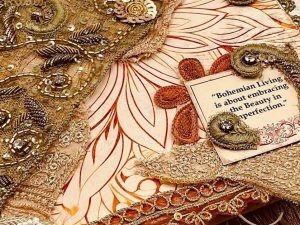
The vintage Banarasi fabric used in this planner journal was originally given to me by my parents when I got married. It was intended to become a bed cover and featured intricate gold threadwork, vibrant colors, and traditional woven patterns. Although it was beautiful, it was not practical for everyday use because the delicate metallic threads would continually loosen and pull.
Part of the fabric was eventually used to create a decorative window pelmet, while the remaining sections were carefully stored away in a cupboard.
Years later, while sorting through old boxes, I rediscovered the fabric and immediately knew it deserved a second life.
The colors were still vibrant. The texture was still stunning. And the fabric felt absolutely perfect for creating junk journal covers.
This planner journal became the first completed project from that treasured collection of vintage wedding textiles.
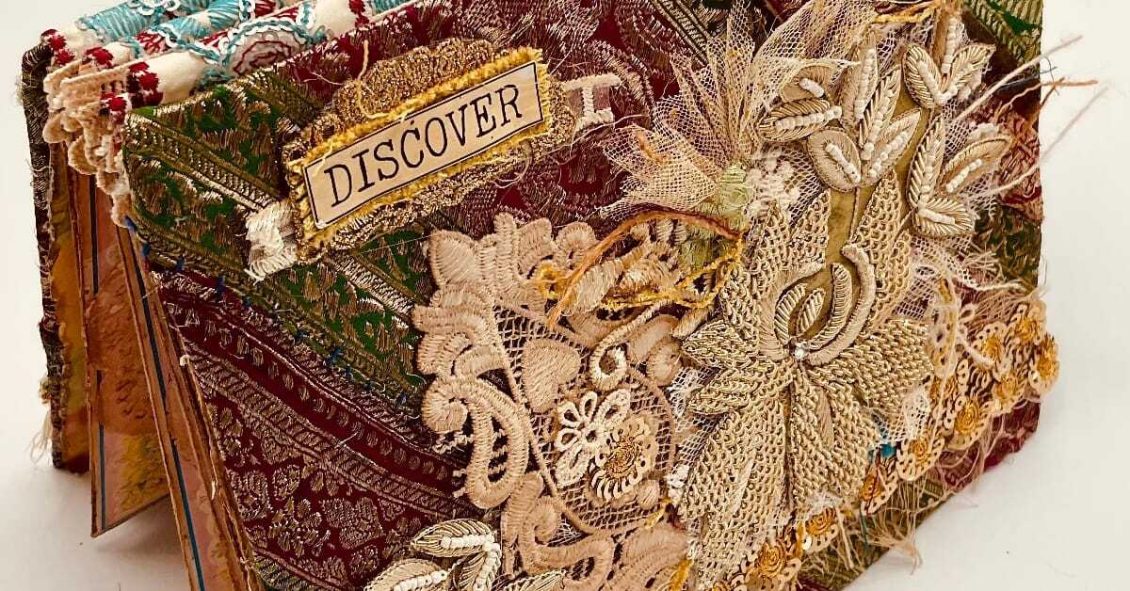
The fabric used throughout this journal is traditional Banarasi fabric, known for its rich texture and intricate metallic threadwork.
What made this fabric especially meaningful was not just its beauty—it was its history.
Originally gifted by my parents as part of my wedding belongings, it carried memories and sentimental value that made it difficult to part with. Rather than allowing it to sit unused in storage, I wanted to transform it into something that could be appreciated and enjoyed every day.
The journal preserves that history while giving the fabric an entirely new purpose.
Each cover created from these textiles becomes a small piece of family history reimagined through creativity.
Supplies Used in This Vintage Planner Journal
Fabrics and Textiles
– Vintage Banarasi wedding fabric
– Bridal trim offcuts
– Decorative lace
– Fabric scraps
– Textile remnants
– Ribbon ties
Papers
– Peruvian Pearl planner digitals
– Vintage-inspired papers
– Writing papers
– Decorative journaling cards
– Coffee-dyed papers
Embellishments
– Gold embroidered appliques
– Wedding trims
– Decorative lace pieces
– Fabric flowers
– Beaded embellishments
– Handmade paper clips
Tools
– Sewing machine
– Glue
– Scissors
– Cardstock
– Distressing supplies
Creating the Journal Cover
The Banarasi fabric immediately became the focal point of the journal.
Its rich colors and metallic details required very little additional decoration because the fabric itself already carried so much visual interest.
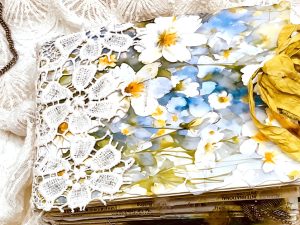
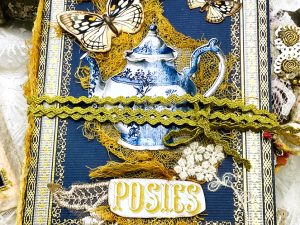
The cover was constructed using layered textiles and decorative trims to highlight the vintage character of the fabric while preserving its original beauty.
The result feels luxurious, textured, and deeply personal.
Every section of fabric tells part of its story.
The Planner Pages Throughout the Journal
The planner uses beautiful Peruvian Pearl digitals to create a complete yearly planner journal.
Each month includes dedicated planning pages with elegant vintage styling and plenty of room for writing.
The soft neutral tones of the planner pages balance the richness of the Banarasi fabrics, creating a journal that feels both practical and decorative.
Each monthly spread invites daily planning while still feeling like an heirloom keepsake.
The journal includes:
– Monthly planner pages
– Writing space
– Decorative inserts
– Removable journaling cards
– Interactive storage areas
– Fabric embellishments
Handmade Writing Pads and Journaling Inserts
One of my favorite features in this planner journal is the collection of removable writing inserts tucked throughout the pages.
These inserts provide additional space for:
– Notes
– Lists
– Reflections
– Appointments
– Memory keeping
– Creative writing
Because the inserts can be removed from the journal, writing becomes much easier and more flexible.
After use, they can simply be returned to their pockets and tuck spots.
This allows the journal to function as both a planner and a personal journaling system.
Vintage-Inspired Journaling Cards
Throughout the journal, you will find beautifully aged journaling cards featuring vintage-inspired imagery.
Softly distressed edges, botanical details, and delicate illustrations help maintain the journal nostalgic aesthetic.
One of my favorite pieces includes a graceful bird illustration paired with softly aged paper tones.
These cards can be used for:
– Daily journaling
– Gratitude entries
– Goal tracking
– Memory keeping
– Personal reflections
The combination of decorative beauty and practical writing space makes them especially versatile.
Fabric Belly Bands and Interactive Storage
To create additional storage throughout the journal, I incorporated handmade fabric belly bands and pockets.
The colorful Banarasi fabric strips secure removable inserts while adding visual interest and texture.
These interactive elements encourage exploration and make the journal feel engaging without becoming bulky.
Each page offers a small surprise waiting to be discovered.
Handmade Pockets Using Vintage Wedding Cards
One of the more unique elements of this planner journal is the use of vintage wedding cards.
I had accumulated a large collection over the years, and rather than allowing them to remain unused, I repurposed them into decorative pockets.
Two cards were layered together to create sturdy storage pockets that open from the top.
Inside each pocket, I included:
– Coffee-dyed papers
– Decorative inserts
– Journaling cards
– Writing space
These recycled materials fit perfectly with the journal vintage aesthetic while adding both function and history.
Wedding Trims, Gold Embroidery, and Textile Embellishments
Because the journal was created from wedding textiles, I wanted the embellishments to reflect that heritage.
Throughout the planner, I incorporated:
– Gold embroidered appliques
– Bridal garment trims
– Decorative lace
– Fabric flowers
– Beaded accents
– Vintage textile fragments
Many of these materials came from leftover pieces used in traditional wedding clothing.
Whenever my tailor had decorative scraps left from bridal garments, he would save them for me, knowing they would eventually find their way into a journal project.
These embellishments preserve the beauty of the original textiles while giving them a meaningful new purpose.
Handmade Decorative Paper Clips
Large decorative paper clips appear throughout the planner journal.
Each clip is embellished with combinations of:
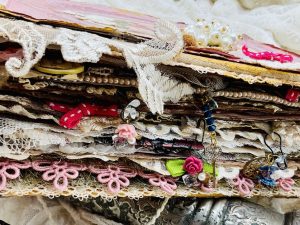
– Lace
– Fabric scraps
– Bridal trims
– Ribbon
– Textile remnants
These clips are both decorative and functional, helping secure inserts and notes while adding texture and movement throughout the journal.
Why This Planner Journal Means So Much to Me
Many journals tell a story.
This one tells part of my own story.
The Banarasi fabric used throughout the journal was originally a wedding gift from my parents. Although it served its purpose for many years tucked away safely in storage, rediscovering it gave me the opportunity to create something meaningful.
Rather than remaining hidden in a cupboard, the fabric now becomes part of a handmade object that can be enjoyed, used, and appreciated.
Every journal created from these textiles preserves a small piece of family history while celebrating creativity, memory, and craftsmanship.
Tips for Creating a Fabric-Based Planner Journal
1. Repurpose Meaningful Textiles
Old clothing, wedding fabrics, linens, and vintage textiles can become beautiful journal covers.
2. Balance Decoration and Function
Allow beautiful fabrics to shine without overwhelming them with too many embellishments.
3. Include Removable Elements
Journaling cards, inserts, and writing pads add flexibility and usability.
4. Save Textile Scraps
Small fabric remnants often become the most beautiful embellishments.
5. Preserve Personal Stories
Materials with history bring depth and meaning to handmade journals.
Creative Ways to Use a Vintage Planner Journal
This style of planner journal works beautifully for:
– Daily planning
– Memory keeping
– Goal setting
– Creative journaling
– Faith journaling
– Wedding planning
– Scrapbook journaling
– Personal reflections
Because of the removable inserts and interactive features, the journal can evolve throughout the year while remaining both practical and beautiful.
Final Thoughts on This Banarasi Fabric Planner Journal
This planner journal became much more than a paper crafting project.
It became a way to preserve treasured materials, celebrate family memories, and transform forgotten textiles into something useful and beautiful.
Between the vintage Banarasi fabric, Peruvian Pearl planner pages, handmade pockets, wedding card ephemera, decorative trims, removable inserts, and textile embellishments, every page reflects the joy of creating with meaningful materials.
Sometimes the most inspiring crafting supplies are the ones we already own.
All they need is a second chance to tell a new story.
Watch the Full Planner Journal Flip Through
Watch the complete flip-through to see:
– Vintage Banarasi fabric cover
– Planner pages
– Removable journaling inserts
– Handmade pockets
– Wedding card ephemera
– Decorative paper clips
– Bridal textile embellishments
– Interactive storage elements
Frequently Asked Questions about Banarasi Fabric Junk Journals
What is a Banarasi fabric junk journal?
A Banarasi fabric junk journal is a handmade journal covered in traditional Banarasi silk — a richly woven Pakistani textile known for its intricate gold threadwork and vibrant colours. This journal uses vintage wedding fabric gifted to Savera at her marriage.
What materials does this planner journal use?
The journal uses vintage Banarasi wedding fabric, bridal trim offcuts, decorative lace, Peruvian Pearl planner digital pages, coffee-dyed papers, gold embroidered appliques, and handmade paper clips.
Can I use any fabric to make a junk journal cover?
Yes — sari silk, cotton, linen, velvet, and embroidered textiles all work beautifully as journal covers. The key is choosing fabric with enough body to hold its shape, or backing it with cardstock.
What makes Pakistani textile journals distinctive?
The hand embroidery, metallic threadwork, and richly decorated wedding textiles available in Pakistan create covers that carry real cultural history — each journal becomes a small piece of heritage reimagined.
How do I plan a fabric journal theme?
Start by gathering your fabrics, trims, and papers to see how they work together. The free Trinketz Studio can help you plan a cohesive collection before you begin construction.
Related Articles
– What Is a Junk Journal? A Gentle Journey into Creative Memory Keeping
– How I Made a Chinoiserie Inspired Junk Journal
– How I Made a Boho Flip Flop Junk Journal
Create Your Own Vintage Journal
If you enjoy vintage journaling, printable ephemera, handmade journals, and creative paper crafting, explore the resources available at Trinketz.
After years of creating handmade junk journals, I designed the Trinketz Kit Builder specifically for journal makers who want cohesive vintage collections and printable aesthetics.
About the Author: Savera