
Tag: handmade journal

How I Turned Vintage Banarasi Wedding Fabric Into a Handmade Planner Journal
Author: Savera | Updated January 2026 | 9 Minute Read
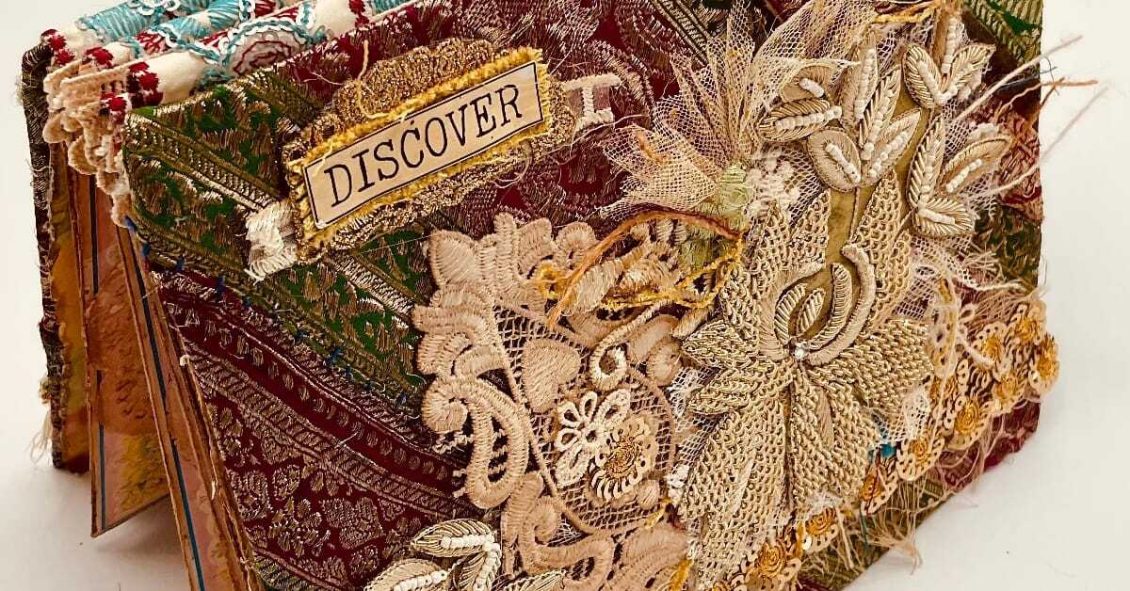
A Vintage Fabric Planner Journal Created from Treasured Wedding Textiles
The Story Behind the Banarasi Fabric
Some journal projects begin with beautiful papers or a new digital kit.
This project began with a piece of fabric that held years of memories.
The vintage Banarasi fabric used in this planner journal was originally given to me by my parents when I got married. It was intended to become a bed cover and featured intricate gold threadwork, vibrant colors, and traditional woven patterns. Although it was beautiful, it was not practical for everyday use because the delicate metallic threads would continually loosen and pull.
Part of the fabric was eventually used to create a decorative window pelmet, while the remaining sections were carefully stored away in a cupboard.
Years later, while sorting through old boxes, I rediscovered the fabric and immediately knew it deserved a second life.
The colors were still vibrant. The texture was still stunning. And the fabric felt absolutely perfect for creating junk journal covers.
This planner journal became the first completed project from that treasured collection of vintage wedding textiles.
The fabric used throughout this journal is traditional Banarasi fabric, known for its rich texture and intricate metallic threadwork.
What made this fabric especially meaningful was not just its beauty—it was its history.
Originally gifted by my parents as part of my wedding belongings, it carried memories and sentimental value that made it difficult to part with. Rather than allowing it to sit unused in storage, I wanted to transform it into something that could be appreciated and enjoyed every day.
The journal preserves that history while giving the fabric an entirely new purpose.
Each cover created from these textiles becomes a small piece of family history reimagined through creativity.
Supplies Used in This Vintage Planner Journal
Fabrics and Textiles
– Vintage Banarasi wedding fabric
– Bridal trim offcuts
– Decorative lace
– Fabric scraps
– Textile remnants
– Ribbon ties
Papers
– Peruvian Pearl planner digitals
– Vintage-inspired papers
– Writing papers
– Decorative journaling cards
– Coffee-dyed papers
Embellishments
– Gold embroidered appliques
– Wedding trims
– Decorative lace pieces
– Fabric flowers
– Beaded embellishments
– Handmade paper clips
Tools
– Sewing machine
– Glue
– Scissors
– Cardstock
– Distressing supplies
Creating the Journal Cover
The Banarasi fabric immediately became the focal point of the journal.
Its rich colors and metallic details required very little additional decoration because the fabric itself already carried so much visual interest.
The cover was constructed using layered textiles and decorative trims to highlight the vintage character of the fabric while preserving its original beauty.
The result feels luxurious, textured, and deeply personal.
Every section of fabric tells part of its story.
The Planner Pages Throughout the Journal
The planner uses beautiful Peruvian Pearl digitals to create a complete yearly planner journal.
Each month includes dedicated planning pages with elegant vintage styling and plenty of room for writing.
The soft neutral tones of the planner pages balance the richness of the Banarasi fabrics, creating a journal that feels both practical and decorative.
Each monthly spread invites daily planning while still feeling like an heirloom keepsake.
The journal includes:
– Monthly planner pages
– Writing space
– Decorative inserts
– Removable journaling cards
– Interactive storage areas
– Fabric embellishments
Handmade Writing Pads and Journaling Inserts
One of my favorite features in this planner journal is the collection of removable writing inserts tucked throughout the pages.
These inserts provide additional space for:
– Notes
– Lists
– Reflections
– Appointments
– Memory keeping
– Creative writing
Because the inserts can be removed from the journal, writing becomes much easier and more flexible.
After use, they can simply be returned to their pockets and tuck spots.
This allows the journal to function as both a planner and a personal journaling system.
Vintage-Inspired Journaling Cards
Throughout the journal, you will find beautifully aged journaling cards featuring vintage-inspired imagery.
Softly distressed edges, botanical details, and delicate illustrations help maintain the journal nostalgic aesthetic.
One of my favorite pieces includes a graceful bird illustration paired with softly aged paper tones.
These cards can be used for:
– Daily journaling
– Gratitude entries
– Goal tracking
– Memory keeping
– Personal reflections
The combination of decorative beauty and practical writing space makes them especially versatile.
Fabric Belly Bands and Interactive Storage
To create additional storage throughout the journal, I incorporated handmade fabric belly bands and pockets.
The colorful Banarasi fabric strips secure removable inserts while adding visual interest and texture.
These interactive elements encourage exploration and make the journal feel engaging without becoming bulky.
Each page offers a small surprise waiting to be discovered.
Handmade Pockets Using Vintage Wedding Cards
One of the more unique elements of this planner journal is the use of vintage wedding cards.
I had accumulated a large collection over the years, and rather than allowing them to remain unused, I repurposed them into decorative pockets.
Two cards were layered together to create sturdy storage pockets that open from the top.
Inside each pocket, I included:
– Coffee-dyed papers
– Decorative inserts
– Journaling cards
– Writing space
These recycled materials fit perfectly with the journal vintage aesthetic while adding both function and history.
Wedding Trims, Gold Embroidery, and Textile Embellishments
Because the journal was created from wedding textiles, I wanted the embellishments to reflect that heritage.
Throughout the planner, I incorporated:
– Gold embroidered appliques
– Bridal garment trims
– Decorative lace
– Fabric flowers
– Beaded accents
– Vintage textile fragments
Many of these materials came from leftover pieces used in traditional wedding clothing.
Whenever my tailor had decorative scraps left from bridal garments, he would save them for me, knowing they would eventually find their way into a journal project.
These embellishments preserve the beauty of the original textiles while giving them a meaningful new purpose.
Handmade Decorative Paper Clips
Large decorative paper clips appear throughout the planner journal.
Each clip is embellished with combinations of:
– Lace
– Fabric scraps
– Bridal trims
– Ribbon
– Textile remnants
These clips are both decorative and functional, helping secure inserts and notes while adding texture and movement throughout the journal.
Why This Planner Journal Means So Much to Me
Many journals tell a story.
This one tells part of my own story.
The Banarasi fabric used throughout the journal was originally a wedding gift from my parents. Although it served its purpose for many years tucked away safely in storage, rediscovering it gave me the opportunity to create something meaningful.
Rather than remaining hidden in a cupboard, the fabric now becomes part of a handmade object that can be enjoyed, used, and appreciated.
Every journal created from these textiles preserves a small piece of family history while celebrating creativity, memory, and craftsmanship.
Tips for Creating a Fabric-Based Planner Journal
1. Repurpose Meaningful Textiles
Old clothing, wedding fabrics, linens, and vintage textiles can become beautiful journal covers.
2. Balance Decoration and Function
Allow beautiful fabrics to shine without overwhelming them with too many embellishments.
3. Include Removable Elements
Journaling cards, inserts, and writing pads add flexibility and usability.
4. Save Textile Scraps
Small fabric remnants often become the most beautiful embellishments.
5. Preserve Personal Stories
Materials with history bring depth and meaning to handmade journals.
Creative Ways to Use a Vintage Planner Journal
This style of planner journal works beautifully for:
– Daily planning
– Memory keeping
– Goal setting
– Creative journaling
– Faith journaling
– Wedding planning
– Scrapbook journaling
– Personal reflections
Because of the removable inserts and interactive features, the journal can evolve throughout the year while remaining both practical and beautiful.
Final Thoughts on This Banarasi Fabric Planner Journal
This planner journal became much more than a paper crafting project.
It became a way to preserve treasured materials, celebrate family memories, and transform forgotten textiles into something useful and beautiful.
Between the vintage Banarasi fabric, Peruvian Pearl planner pages, handmade pockets, wedding card ephemera, decorative trims, removable inserts, and textile embellishments, every page reflects the joy of creating with meaningful materials.
Sometimes the most inspiring crafting supplies are the ones we already own.
All they need is a second chance to tell a new story.
Watch the Full Planner Journal Flip Through
Watch the complete flip-through to see:
– Vintage Banarasi fabric cover
– Planner pages
– Removable journaling inserts
– Handmade pockets
– Wedding card ephemera
– Decorative paper clips
– Bridal textile embellishments
– Interactive storage elements
Frequently Asked Questions about Banarasi Fabric Junk Journals
What is a Banarasi fabric junk journal?
A Banarasi fabric junk journal is a handmade journal covered in traditional Banarasi silk — a richly woven Pakistani textile known for its intricate gold threadwork and vibrant colours. This journal uses vintage wedding fabric gifted to Savera at her marriage.
What materials does this planner journal use?
The journal uses vintage Banarasi wedding fabric, bridal trim offcuts, decorative lace, Peruvian Pearl planner digital pages, coffee-dyed papers, gold embroidered appliques, and handmade paper clips.
Can I use any fabric to make a junk journal cover?
Yes — sari silk, cotton, linen, velvet, and embroidered textiles all work beautifully as journal covers. The key is choosing fabric with enough body to hold its shape, or backing it with cardstock.
What makes Pakistani textile journals distinctive?
The hand embroidery, metallic threadwork, and richly decorated wedding textiles available in Pakistan create covers that carry real cultural history — each journal becomes a small piece of heritage reimagined.
How do I plan a fabric journal theme?
Start by gathering your fabrics, trims, and papers to see how they work together. The free Trinketz Studio can help you plan a cohesive collection before you begin construction.
Related Articles
– What Is a Junk Journal? A Gentle Journey into Creative Memory Keeping
– How I Made a Chinoiserie Inspired Junk Journal
– How I Made a Boho Flip Flop Junk Journal
Create Your Own Vintage Journal
If you enjoy vintage journaling, printable ephemera, handmade journals, and creative paper crafting, explore the resources available at Trinketz.
After years of creating handmade junk journals, I designed the Trinketz Kit Builder specifically for journal makers who want cohesive vintage collections and printable aesthetics.
How I Made a Boho Flip Flop Junk Journal
Author: Savera | Updated December 2025 | 8 Minute Read
A Handmade Journal Inspired by Boho Textiles and Creative Reuse
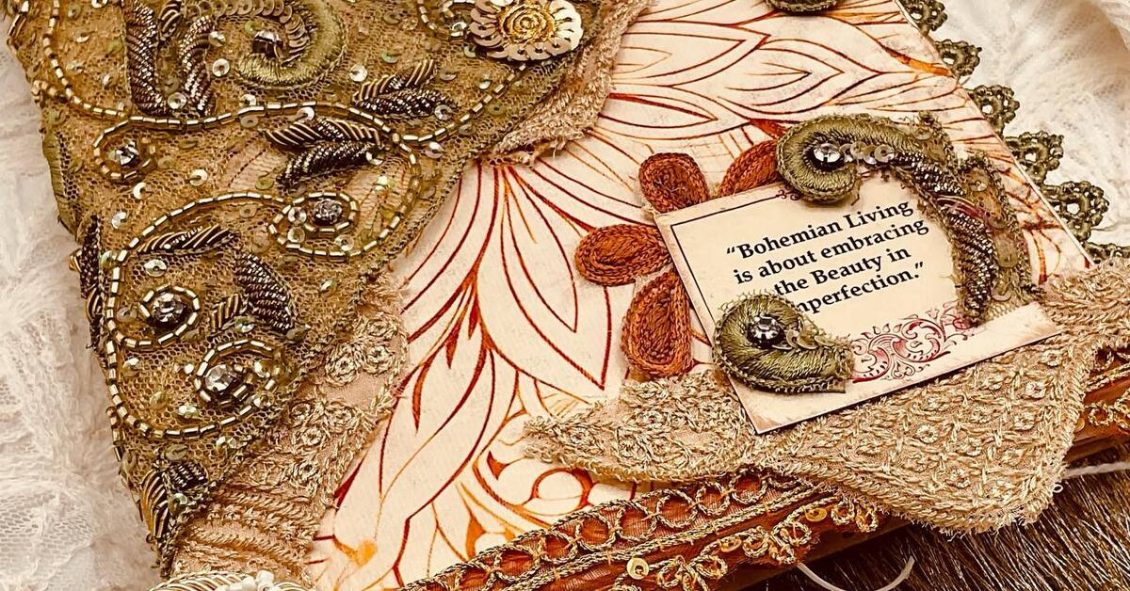
Some journal projects begin with a finished vision in mind. This one evolved slowly through experimentation, layering, and the materials I had available around me. Created as part of the “How Boho Can You Go” collaboration hosted by Rachel Bella Crafts, this flip flop junk journal became a celebration of creative reuse, vintage-inspired journaling, and the beauty of handmade textile embellishments.
The foundation of this journal came from something many people would normally throw away: vintage wedding invitation envelopes. In Pakistan, wedding invitations often include beautifully designed envelopes, decorative cards, embossed papers, and luxurious cardstock. I have collected many of these over the years, and they became the perfect starting point for a sturdy interactive journal.
What makes this handmade journal especially meaningful is that many of the embellishments come from old garments, leftover tailoring materials, hand embroidery, sari trims, and vintage textile fragments. Instead of purchasing large quantities of specialty supplies, I enjoy working with materials that already have a history and a story behind them.
The result is a boho junk journal filled with envelope pockets, tuck spots, layered embellishments, interactive pages, and plenty of space for creative journaling.
What Inspired This Journal?
The inspiration for this journal came from two sources: Rachel Bella Crafts’ boho digital kits and the abundance of beautiful textile materials available locally in Pakistan.
Because many garments here are custom stitched, fabric stores and lace shops offer an incredible variety of trims, embroidered appliqués, sari ribbons, decorative lace, and embellishments. These materials naturally lend themselves to a bohemian aesthetic, making boho journal making feel like a very organic style for me to work with.
The journal also draws inspiration from vintage wedding stationery. Many of the invitation cards I use are no longer fashionable for modern weddings, but their colors, textures, embossing, and decorative details make them perfect for junk journaling. Rather than letting them go unused, I enjoy transforming them into journal pockets, ephemera holders, and decorative features.
The overall mood is warm, layered, eclectic, and collected over time—the essence of a true boho junk journal.
Supplies Used in This Junk Journal
Papers
• Vintage wedding invitation envelopes
• Decorative invitation cards
• Digital papers from Rachel Bella Crafts
• Tea-dyed papers
• Waxed paper inserts
• Scrapbook papers
Embellishments
• Sari silk ribbon
• Decorative trims
• Vintage lace
• Hand embroidery
• Textile clusters
• Fabric scraps
• Handmade tabs
Printables
• Boho journal cards
• Digital ephemera
• Decorative tags
• Journaling cards
Tools
• Sewing machine
• Texture paste
• Distress Ink
• Glue
• Scissors
Creating the Journal Cover
The cover construction began with a sturdy wedding invitation envelope made from heavy cardstock. Unlike a traditional junk journal cover, this flip flop journal unfolds in multiple directions, creating hidden compartments and interactive sections throughout the structure.
For the focal point, I selected a large embroidered textile piece salvaged from an old garment. The embroidery featured beautiful gold thread work and a naturally aged appearance that perfectly suited the vintage boho style of the journal.
One thing I rarely do is plan every layer beforehand. Instead, I build my covers gradually. Pieces are added, removed, rearranged, and tested repeatedly until the composition feels balanced. This process allows the journal to evolve naturally rather than forcing a predetermined design.
A Look Inside the Journal
Interactive Elements
One of the most exciting aspects of this flip flop junk journal is its interactive construction.
The journal opens in multiple directions and includes:
• Envelope pockets
• Flip-out sections
• Hidden tuck spots
• Layered pockets
• Removable inserts
• Decorative notebooks
• Interactive flaps
The envelope-based structure naturally creates pockets and storage areas throughout the journal, making it ideal for memory keeping, ephemera collecting, and creative journaling.
Journaling Space
Although highly decorative, the journal still provides plenty of room for writing.
The inserts include digital pages, journaling cards, decorative papers, and blank spaces where future memories, notes, sketches, and personal reflections can be added. Some pages incorporate waxed paper and lightly distressed surfaces to create a vintage appearance while maintaining usability.
Tags and Ephemera
The journal contains a variety of removable ephemera pieces, many created from vintage invitation cards and leftover decorative papers.
Small notebooks, journaling cards, tags, and decorative inserts provide opportunities for both decoration and practical journaling. These elements can be removed, written on, and rearranged throughout the journal.
Special Features
One of the most unique aspects of this journal is its use of local Pakistani textile materials.
Many of the embellishments originated as:
• Old embroidered garments
• Tailor shop leftovers
• Decorative shirt trims
• Hand-embroidered textile fragments
• Vintage lace pieces
These materials add texture and authenticity that cannot easily be replicated with mass-produced embellishments.
The journal also features texture paste accents, layered clusters, and handmade textile embellishments that enhance the dimensional quality of the pages.
Techniques Used
Tea-Dyeing and Aging Papers
Tea-dyed and aged papers help create a soft vintage appearance that complements the boho style.
Distressing
Light distressing around paper edges softens bright colors and creates an aged look.
Layering
Most decorative elements were created through multiple layers of paper, lace, embroidery, trims, and ephemera.
Stitching
Machine stitching secures inserts and adds texture throughout the journal.
Color Palette and Design Choices
The palette combines warm creams, soft neutrals, vintage golds, muted florals, and rich textile colors.
The embroidered trims add touches of gold and texture, while the digital papers introduce soft boho-inspired artwork. Together they create a layered, collected aesthetic that feels both vintage and artistic.
The combination of paper and textile elements helps bridge the gap between traditional junk journaling and fiber art.
Planning a Similar Journal Theme
Before starting a boho journal, gather a selection of papers, trims, fabrics, vintage ephemera, and embellishments to see how they work together.
The free Trinketz Kit Builder is a helpful way to experiment with different journal themes, color palettes, embellishments, and paper combinations before beginning construction.
Tips for Creating a Similar Journal
1. Save Decorative Packaging and Invitations
Many beautiful papers can be repurposed into journal elements.
2. Use Textile Scraps
Even tiny fabric remnants can become tabs, clusters, and embellishments.
3. Build Layers Slowly
Allow your design to evolve naturally rather than forcing every decision upfront.
4. Create Interactive Features
Pockets, flaps, and envelopes make journals more engaging.
5. Reduce Bulk Strategically
Trim larger embellishments into smaller decorative pieces to maintain functionality.
What I Learned While Making This Journal
One lesson reinforced during this project is that limitations often inspire creativity.
Because many specialty crafting products are difficult to find locally, I have learned to look at everyday materials differently. Wedding invitations, old garments, tailoring leftovers, and decorative trims all become valuable crafting supplies when viewed creatively.
My favorite part of the journal is the layered textile cover. It captures the essence of the project and showcases the combination of embroidery, lace, and paper that defines the journal’s style.
If I revisit this design in the future, I would likely expand the envelope system even further and add additional interactive sections.
Final Thoughts on This Boho Flip Flop Junk Journal
This project was especially meaningful because it allowed me to combine local materials, vintage inspiration, and handmade craftsmanship into one cohesive journal.
The finished journal celebrates creative reuse, cultural influences, textile art, and the joy of handmade journaling. Every layer tells a story, whether it came from an old embroidered shirt, a forgotten wedding invitation, or a piece of beautiful lace waiting for a second life.
For anyone who enjoys boho junk journals, vintage ephemera, textile embellishments, and interactive journal designs, this style offers endless creative possibilities.
Watch the Full Journal Flip Through
Watch the complete journal flip through and tutorial to see:
• The flip flop journal construction
• Envelope pocket assembly
• Textile layering techniques
• Handmade embellishments
• Interactive journal features
• Vintage invitation card repurposing ideas
Frequently Asked Questions about Boho Flip Flop Junk Journals
What is a flip flop junk journal?
A flip flop junk journal is a journal that opens and unfolds in multiple directions, creating hidden compartments, envelope pockets, and interactive sections. The structure comes from folded and layered materials rather than traditional bound signatures.
What materials does this boho junk journal use?
This journal uses vintage Pakistani wedding invitation envelopes, sari silk ribbon, hand embroidery, lace trims, fabric scraps, and digital ephemera from Rachel Bella Crafts — all layered to create a warm boho aesthetic.
Can I make a flip flop junk journal at home?
Yes — the basic structure uses folded cardstock or envelopes. You build outward by adding pockets, flaps, and layers. Old wedding invitations, fabric scraps, and printable ephemera are all you need to start.
What makes Pakistani textile junk journals distinctive?
The hand embroidery, sari silk, and embossed wedding stationery available locally in Pakistan create a layered richness that feels unlike any other junk journal style — each piece carries real cultural and personal history.
Can I sell boho junk journals on Etsy?
Boho junk journals are consistently popular on Etsy. If you want to plan your own boho kit collection, the free Trinketz Studio helps you build cohesive vintage collections ready to list.
Related Articles
• What Is a Junk Journal? A Gentle Journey into Creative Memory Keeping
• How I Made a Chinoiserie Inspired Junk Journal
• How I Made a Parisian Pink Junk Journal
Create Your Own Vintage Journal
If you enjoy vintage journaling, printable ephemera, handmade journals, and creative paper crafting, explore the resources available at Trinketz.
After years of creating handmade junk journals, I designed the Trinketz Kit Builder specifically for journal makers who want cohesive vintage collections and printable aesthetics.
How I Made a Parisian Pink Junk Journal
Author: Savera | Updated November 2025 | 9 Minute Read
A Handmade Journal Inspired by Parisian Pink Vintage Ephemera
This Parisian Pink junk journal was created as my very first Design Team project for The Graphics Fairy, making it an especially meaningful project for me. When I was invited to join a group of talented artists and designers, I immediately knew I wanted to create something that combined beautiful vintage imagery with practical journaling space.
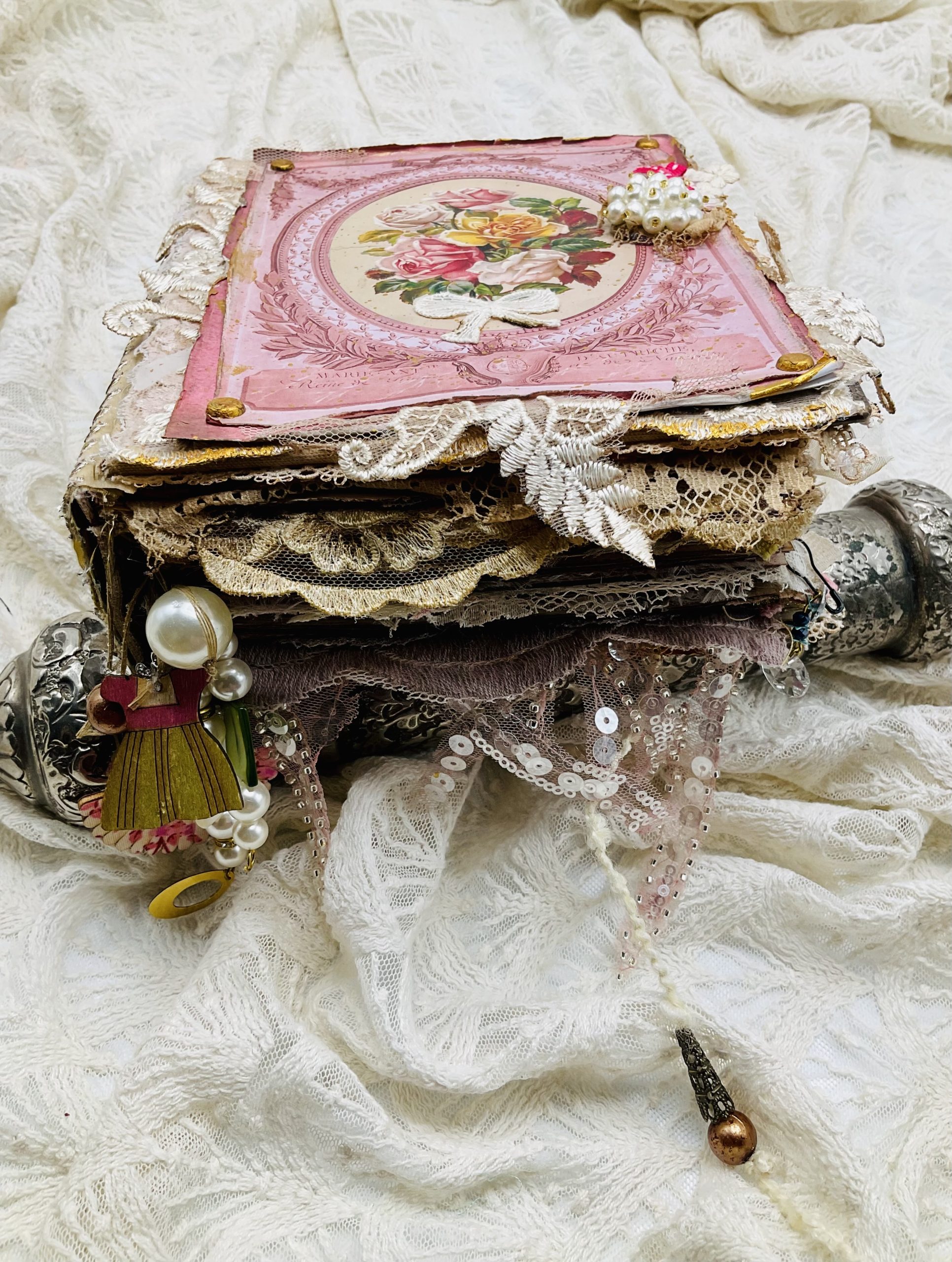
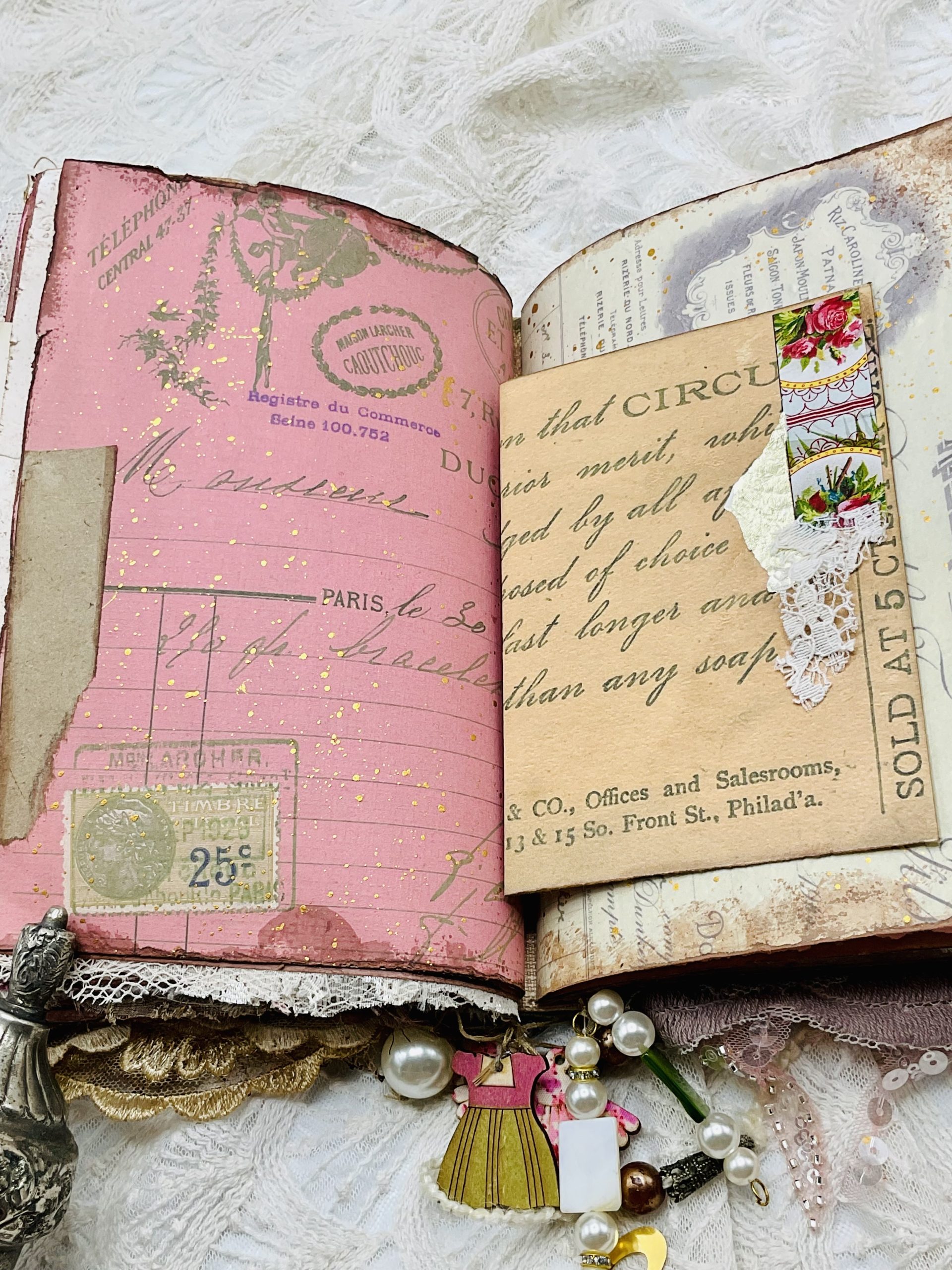
The inspiration came primarily from the Parisian Pink collection available through The Graphics Fairy Premium Membership. I was instantly drawn to the delicate pink tones, vintage butterflies, birds, floral imagery, labels, and ephemera. While many vintage journals rely heavily on brown, cream, and sepia tones, this collection offered a refreshing pink palette while still maintaining a beautifully aged vintage aesthetic.
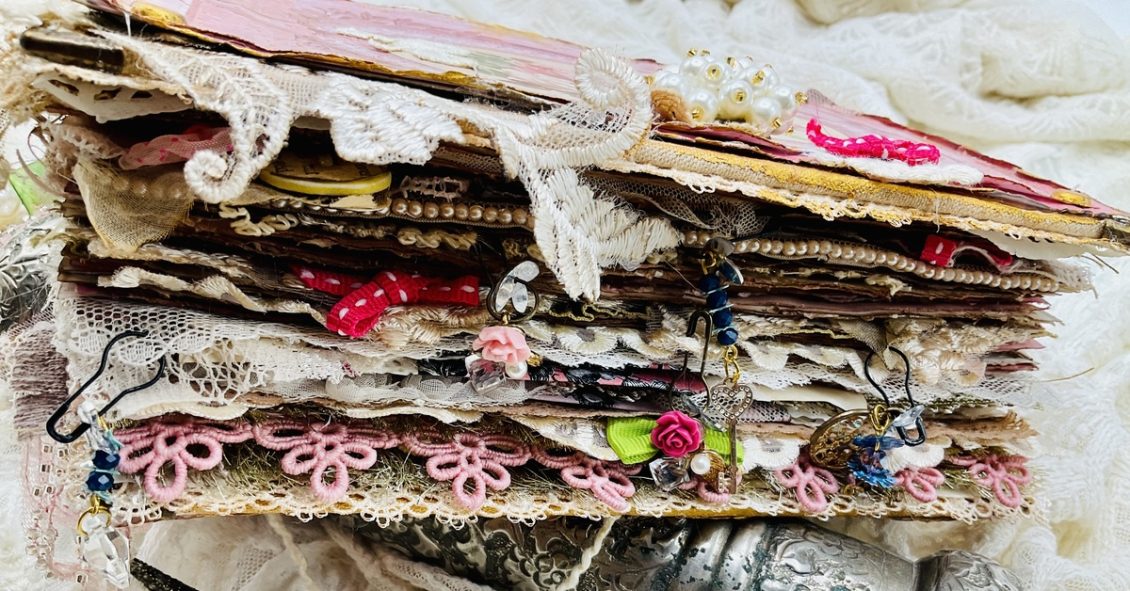
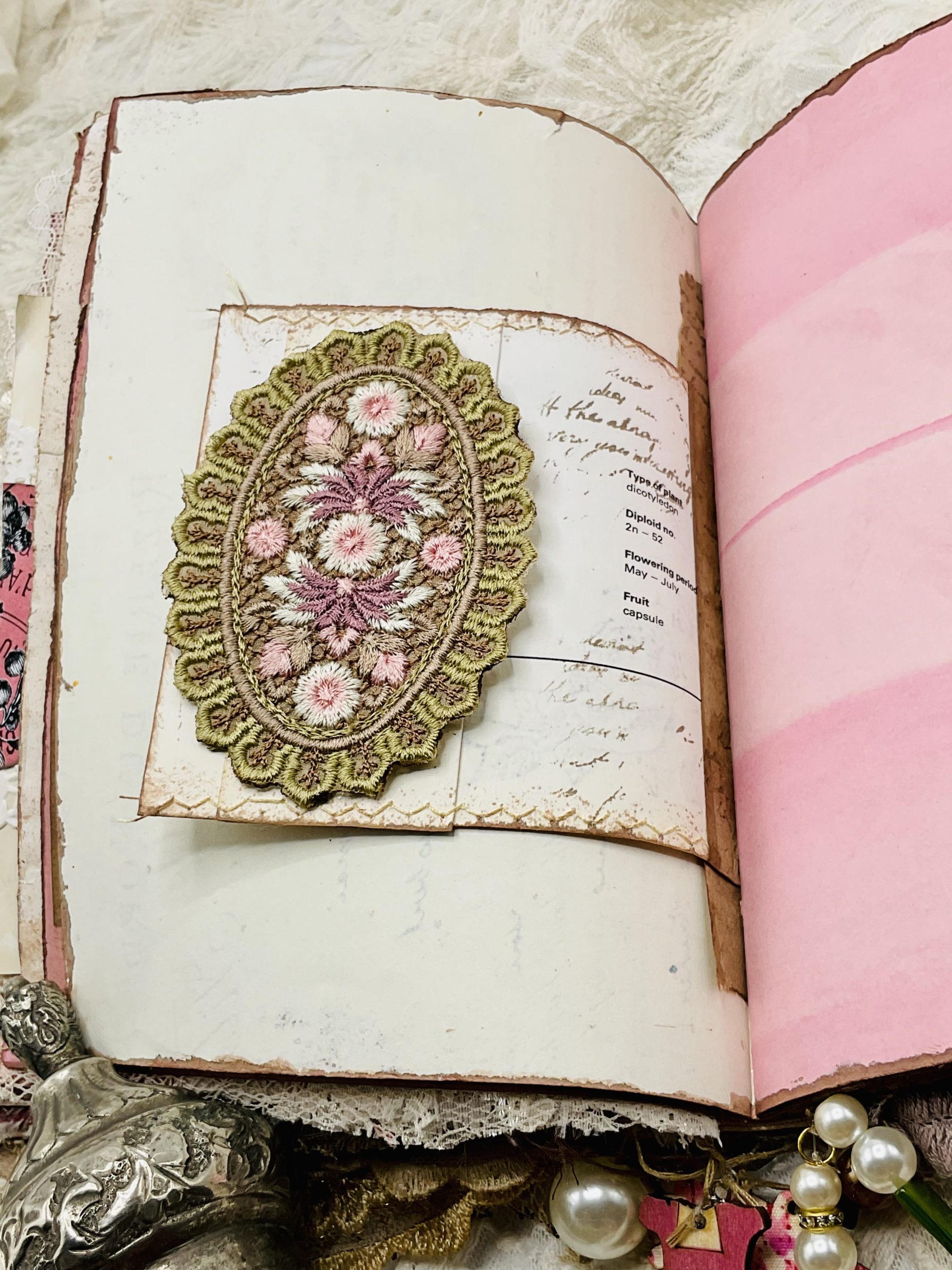
Although this journal is richly embellished with lace, trims, bows, charms, and decorative details, it was designed primarily as a writing journal. The signatures contain a smaller number of pages, allowing the journal to remain functional while still feeling luxurious and layered.
One of my favorite aspects of this project was exploring the versatility of printable PNG images. The transparent backgrounds made it easy to layer multiple elements together, creating depth and dimension throughout the journal. Combined with tea-dyed papers, waxed pages, textured paper, and vintage-inspired ephemera, the result is a handmade journal that feels romantic, feminine, and timeless.
This Parisian Pink Junk Journal combines vintage ephemera, lace embellishments, and practical writing space to create a shabby chic journal perfect for creative journaling and memory keeping.
What Inspired This Journal?
The overall theme of this journal is Parisian vintage elegance.
I wanted the journal to feel like a collection of treasured letters, antique documents, lace handkerchiefs, vintage postcards, and romantic keepsakes gathered over time. The soft pink palette immediately suggested a feminine vintage style that feels both nostalgic and sophisticated.
The Graphics Fairy’s Parisian Pink collection became the foundation of the project. The bundle contains beautiful butterflies, birds, labels, circles, decorative elements, and vintage ephemera in shades of blush pink, cream, ivory, and faded rose.
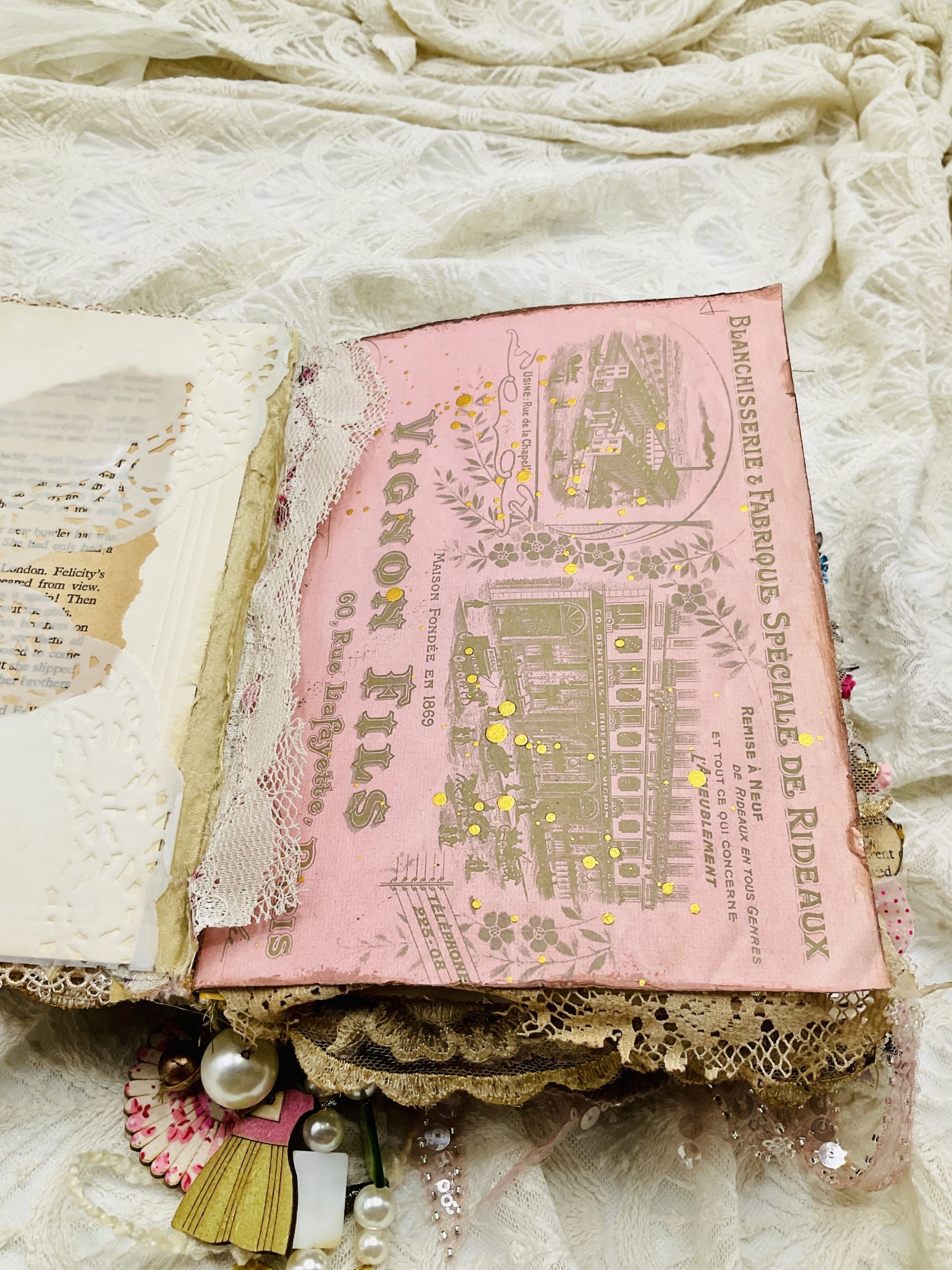
Historically inspired French ephemera played a major role in the design. Vintage receipts, antique labels, handwritten documents, and decorative advertisements all contribute to the journal’s old-world charm.
The mood throughout the journal is soft, romantic, and delicate. Layers of lace, tea-dyed papers, fabric, waxed doilies, and pink accents help create a cohesive vintage story from cover to cover.
Supplies Used in This Junk Journal
Papers
• Tea-dyed papers
• Vintage-style printable papers
• Textured paper
• Old music paper
• Printable ephemera sheets
• Decorative writing papers
Embellishments
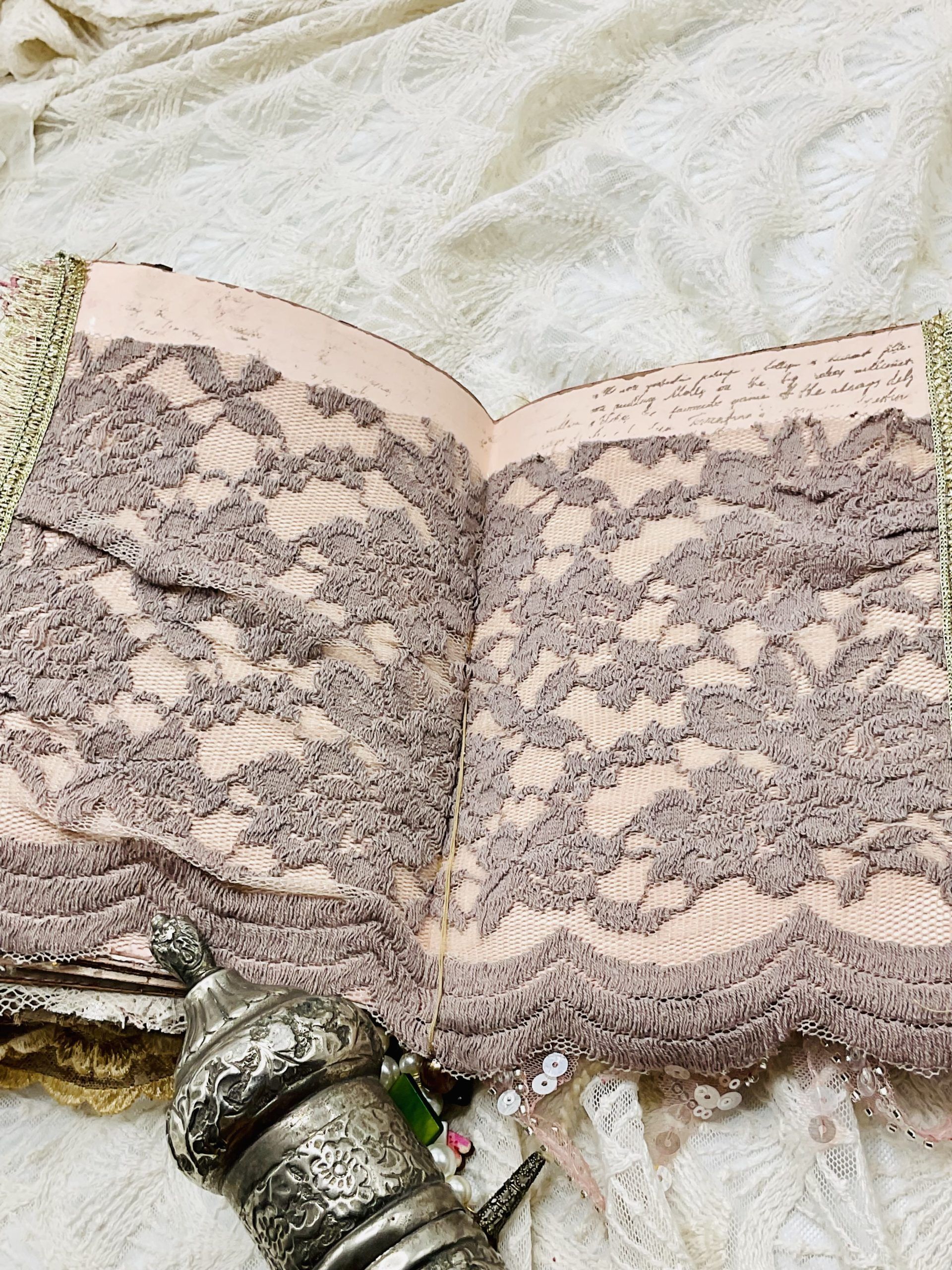
• Lace trims
• Tea-dyed lace
• Silk ribbons
• Sari silk
• Charms
• Bows
• Doilies
• Repurposed pearl button
Printables
• Journal cards
• Vintage labels
• Butterflies
• Birds
• Matchbook printables
• Ephemera pieces
• Vintage receipts
Tools
• Distress Ink
• Glue
• Sewing machine
• Beeswax
• Stamps
• Paint splatter techniques
Creating the Journal Cover
The cover was designed to immediately establish the romantic vintage theme.
Using layered PNG images from The Graphics Fairy made it easy to build a dimensional focal point. Multiple images were carefully layered together before adding trims, bows, lace, and decorative embellishments.
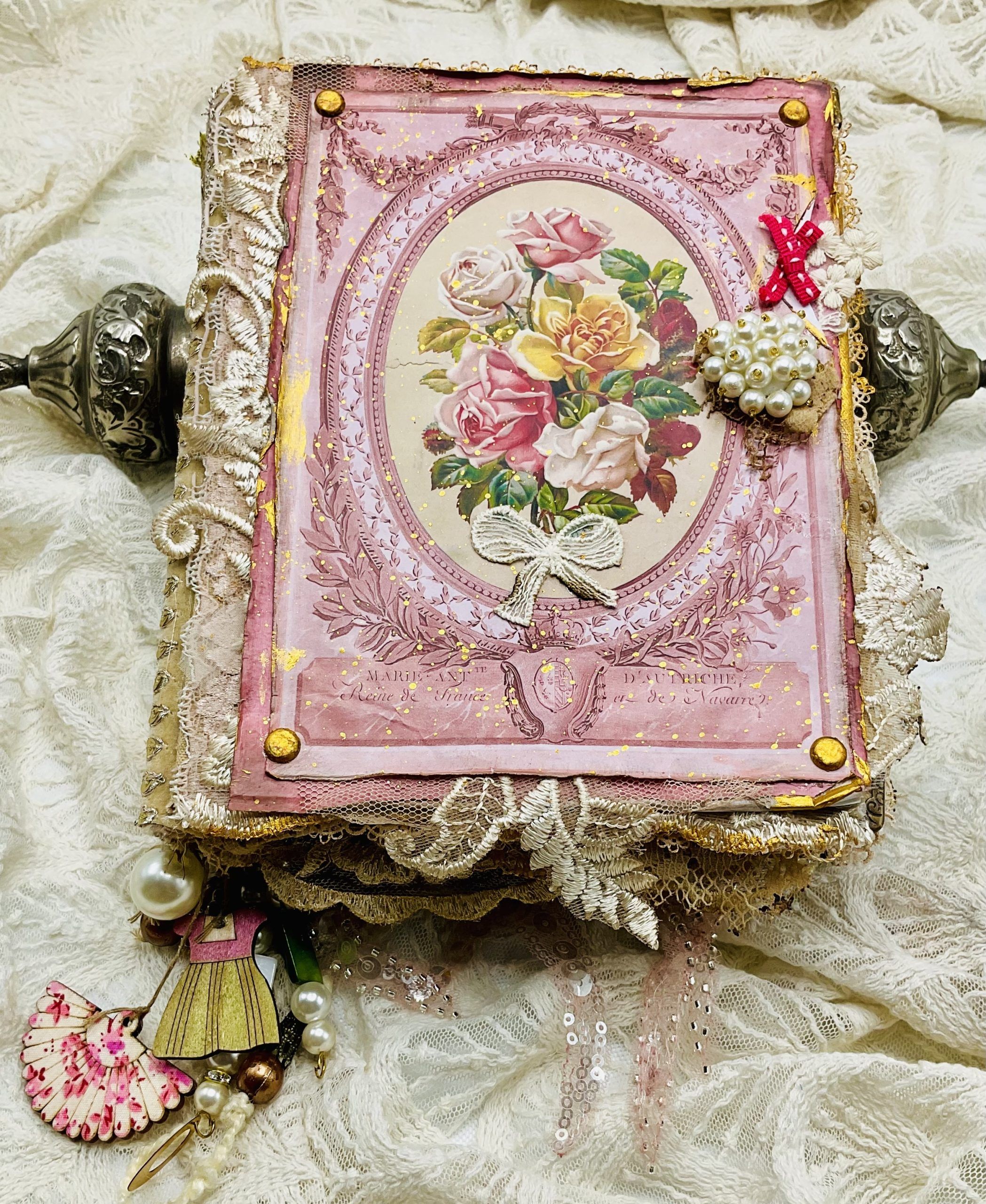
The front cover combines vintage floral imagery with soft pink elements, creating a delicate but visually rich composition. Lace and textile embellishments soften the design while adding texture and depth.
The closure features a repurposed pearl button, which feels perfectly suited to the feminine aesthetic of the journal. It provides a practical closure while contributing to the vintage appearance.
Even the back cover received the same level of attention, incorporating layered printable images, decorative paper, lace, and embellishments to create a fully finished piece.
A Look Inside the Journal
Interactive Elements
Throughout the journal, I included a variety of interactive features designed to encourage exploration and creativity.
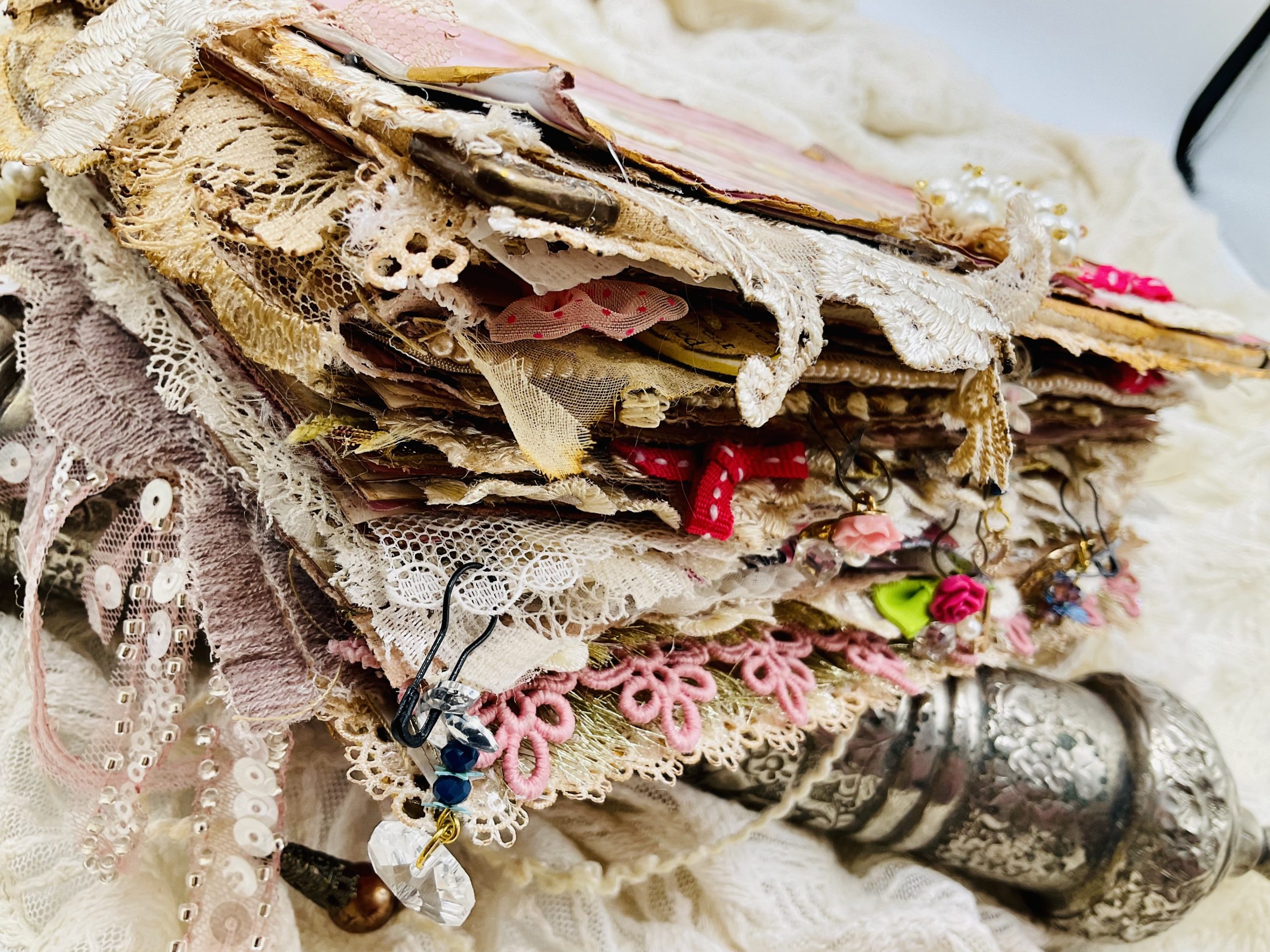
There are decorative pockets, tuck spots, removable inserts, lace pockets, floating pockets, and several small matchbook-style booklets hidden among the pages. These interactive elements create opportunities for storing notes, keepsakes, photographs, and additional journaling cards.
The journal contains multiple signatures, giving it plenty of writing space while still maintaining a manageable size for everyday use.
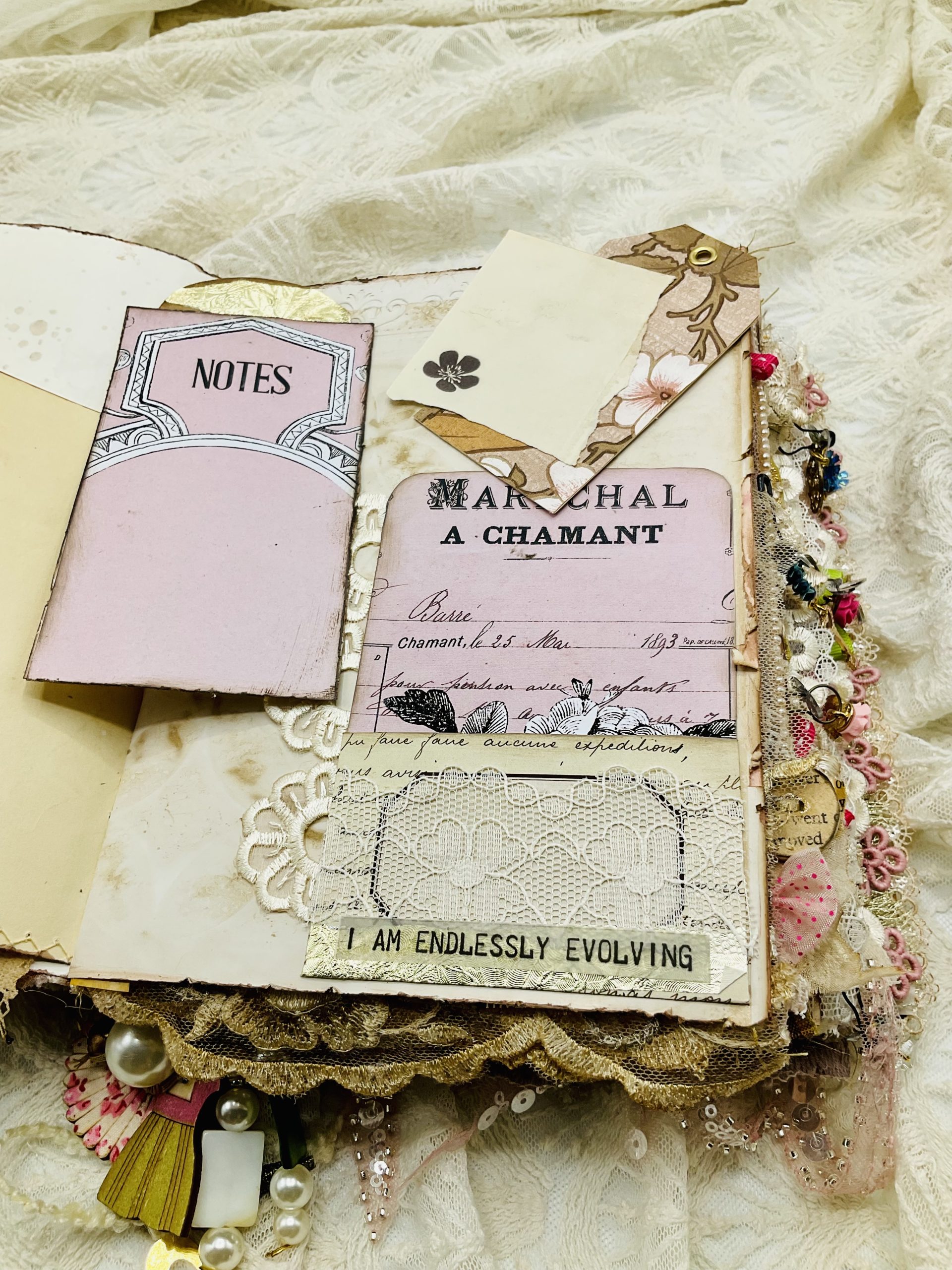
Journaling Space
Although heavily embellished, this journal was intentionally created as a writing journal.
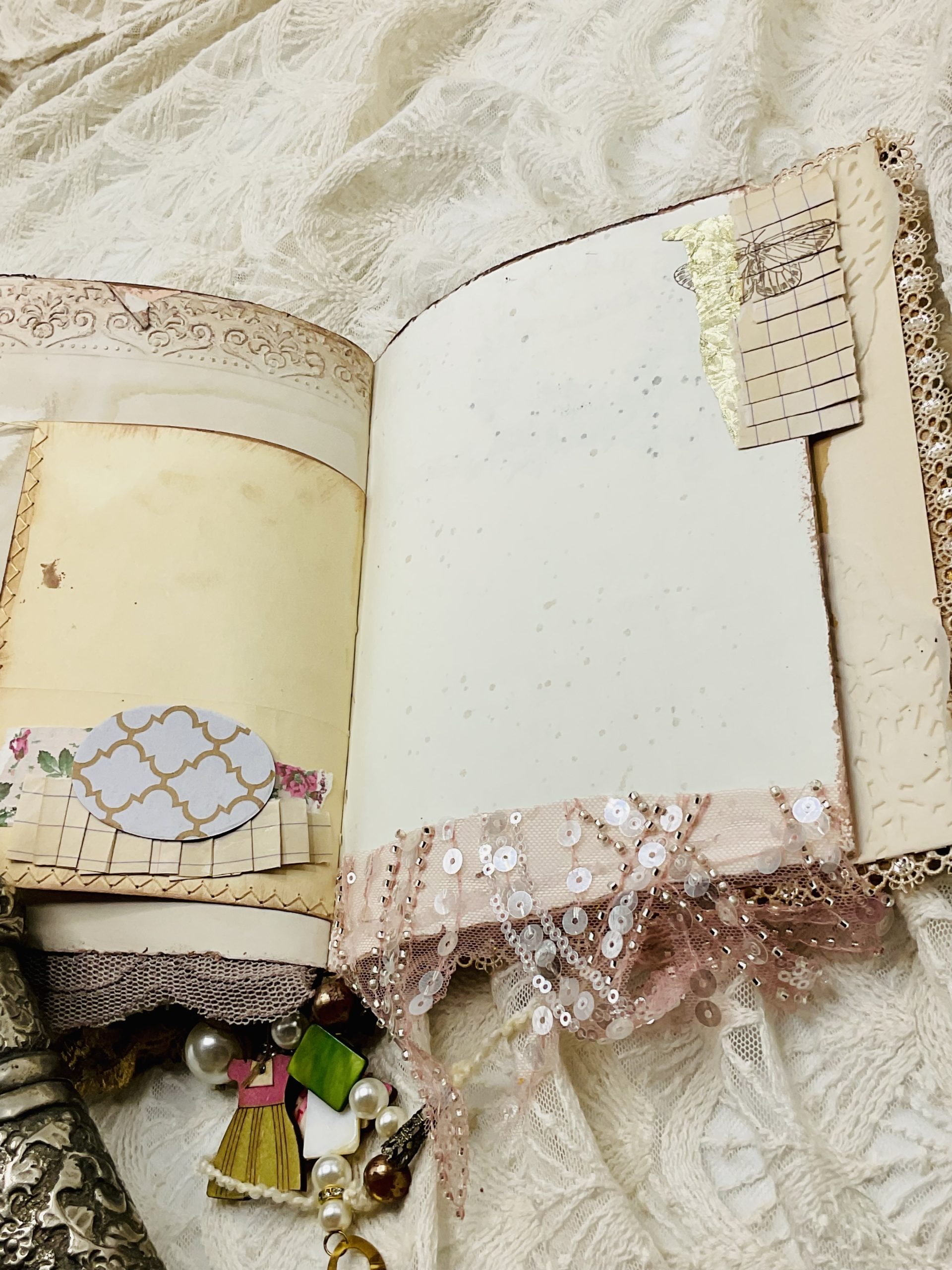
Many pages have been left relatively open to provide space for journaling, memory keeping, sketching, and creative expression. The tea-dyed papers contribute warmth and age while maintaining excellent functionality.
The balance between decorative elements and practical writing space was important throughout the design process.
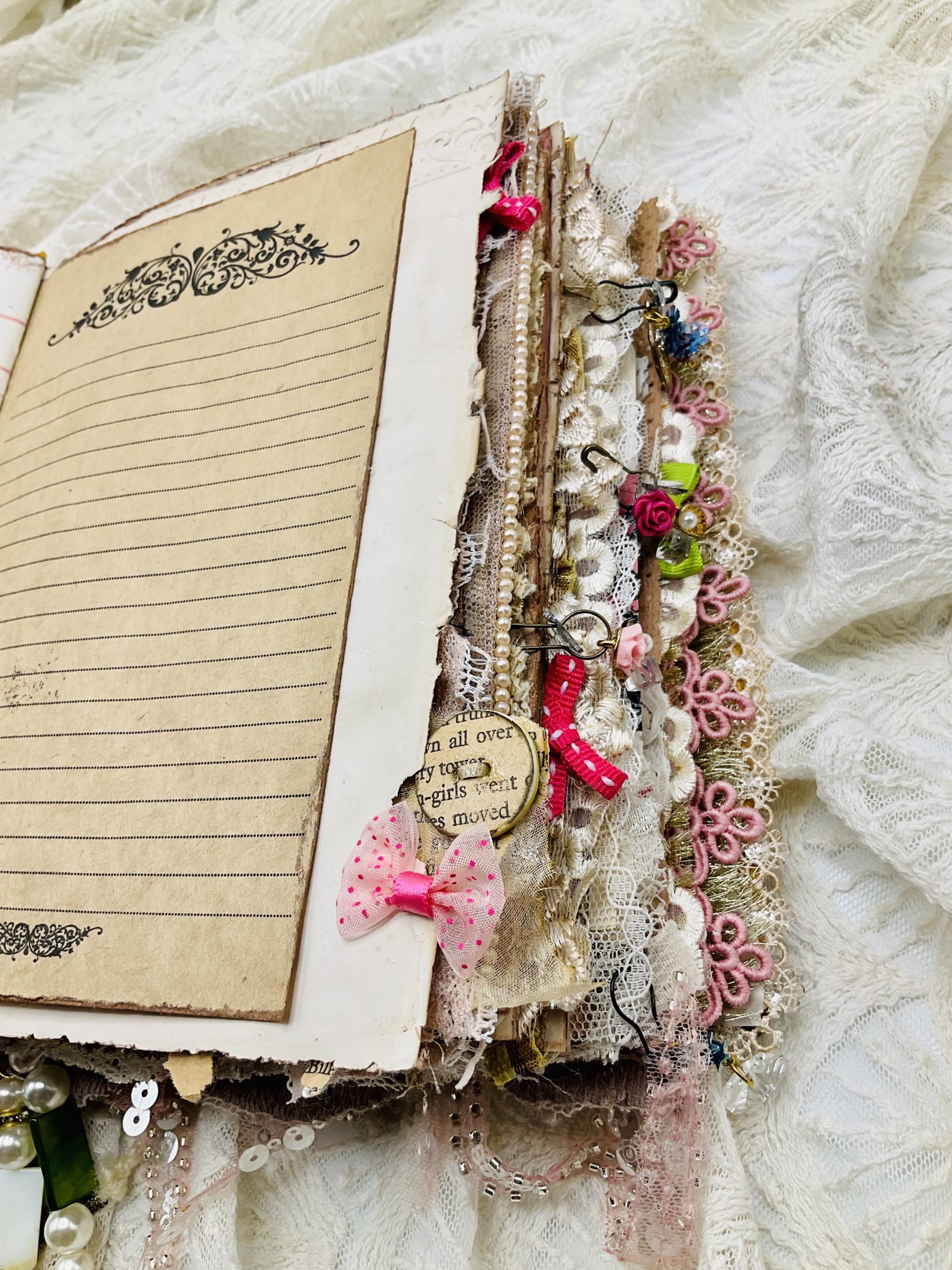
Tags and Ephemera
One of my favorite parts of creating junk journals is designing the removable ephemera.
This journal contains vintage-style tags, decorative circles, butterfly embellishments, bird imagery, receipts, labels, and journaling cards. Many pieces can be removed and repositioned, allowing the journal owner to interact with the contents.
The pink tones throughout the ephemera make the collection feel especially unique, since pink is not often found in traditional vintage document collections.
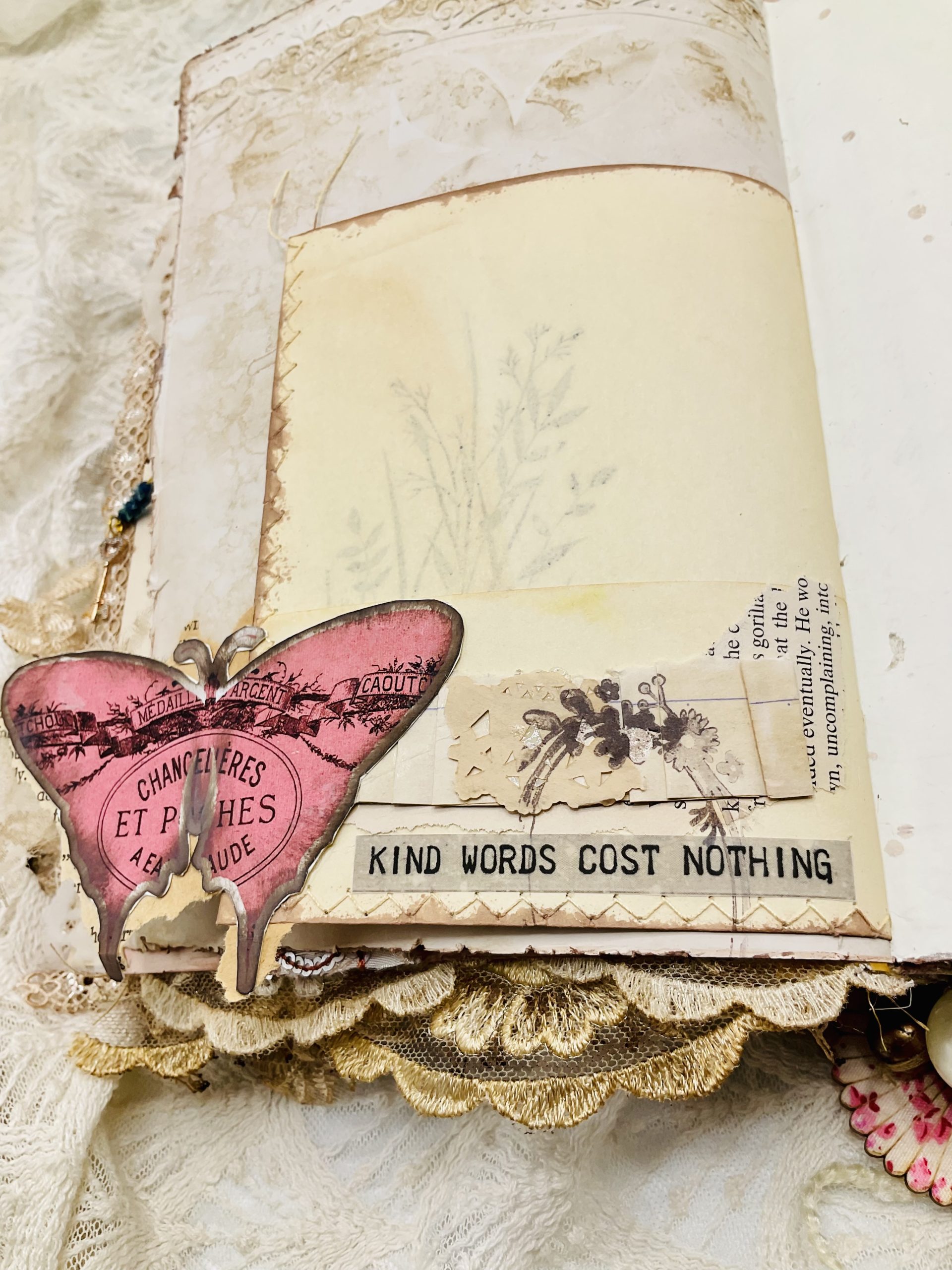
Special Features
Several elements make this journal particularly unique.
The waxed doilies and waxed music paper create beautiful translucent effects. Tea-dyed lace sewn directly into signatures adds texture without excessive bulk. Matchbook booklets offer additional storage and visual interest.
Floating pockets allow for customization and future additions, while textured paper creates a luxurious tactile experience.
The combination of vintage printable imagery, lace, fabric, and altered ephemera gives every spread a layered and collected appearance.
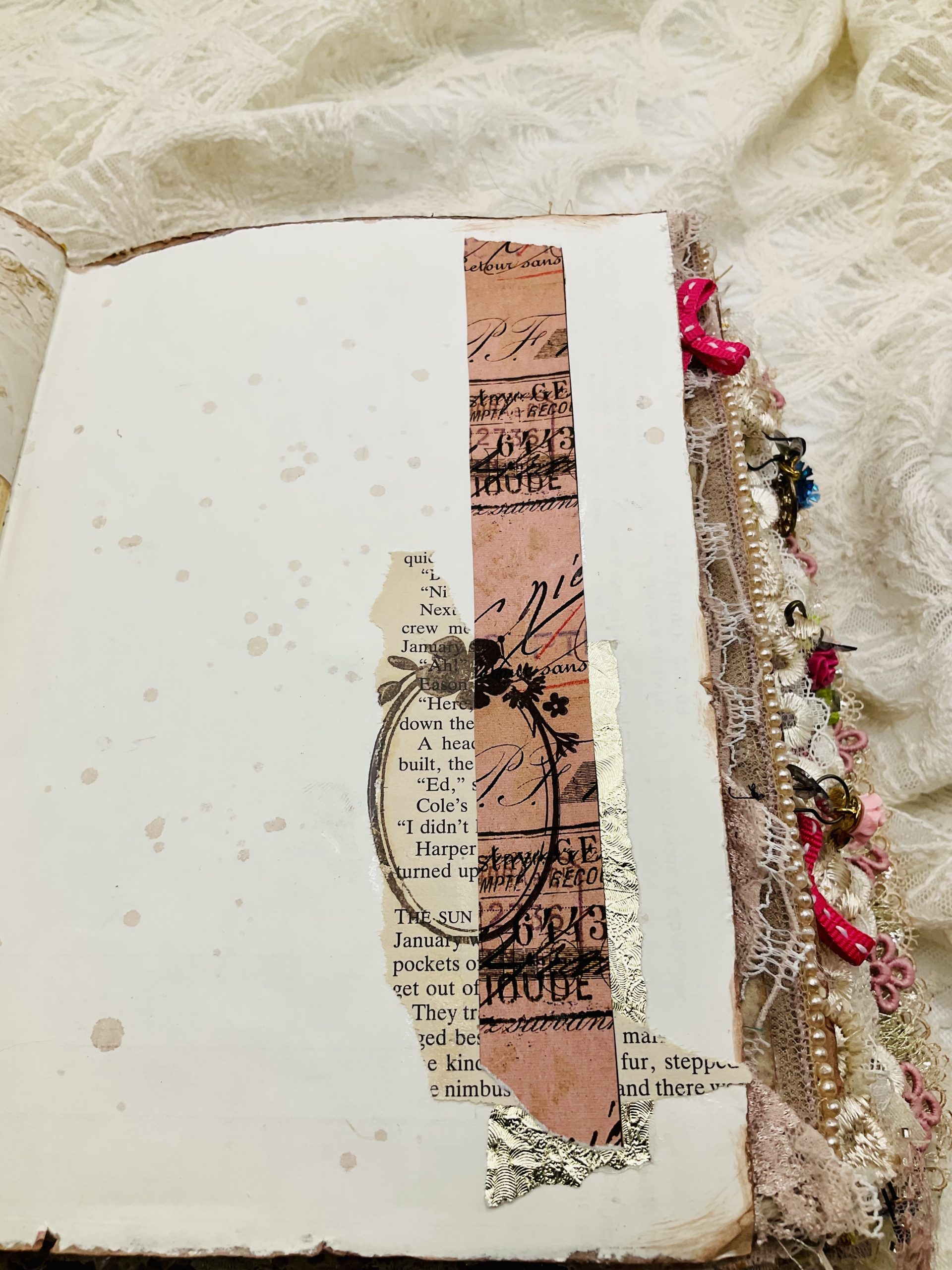
Techniques Used
Tea-Dyeing Paper
Tea-dyeing gives paper a warm, naturally aged appearance that enhances the vintage aesthetic.
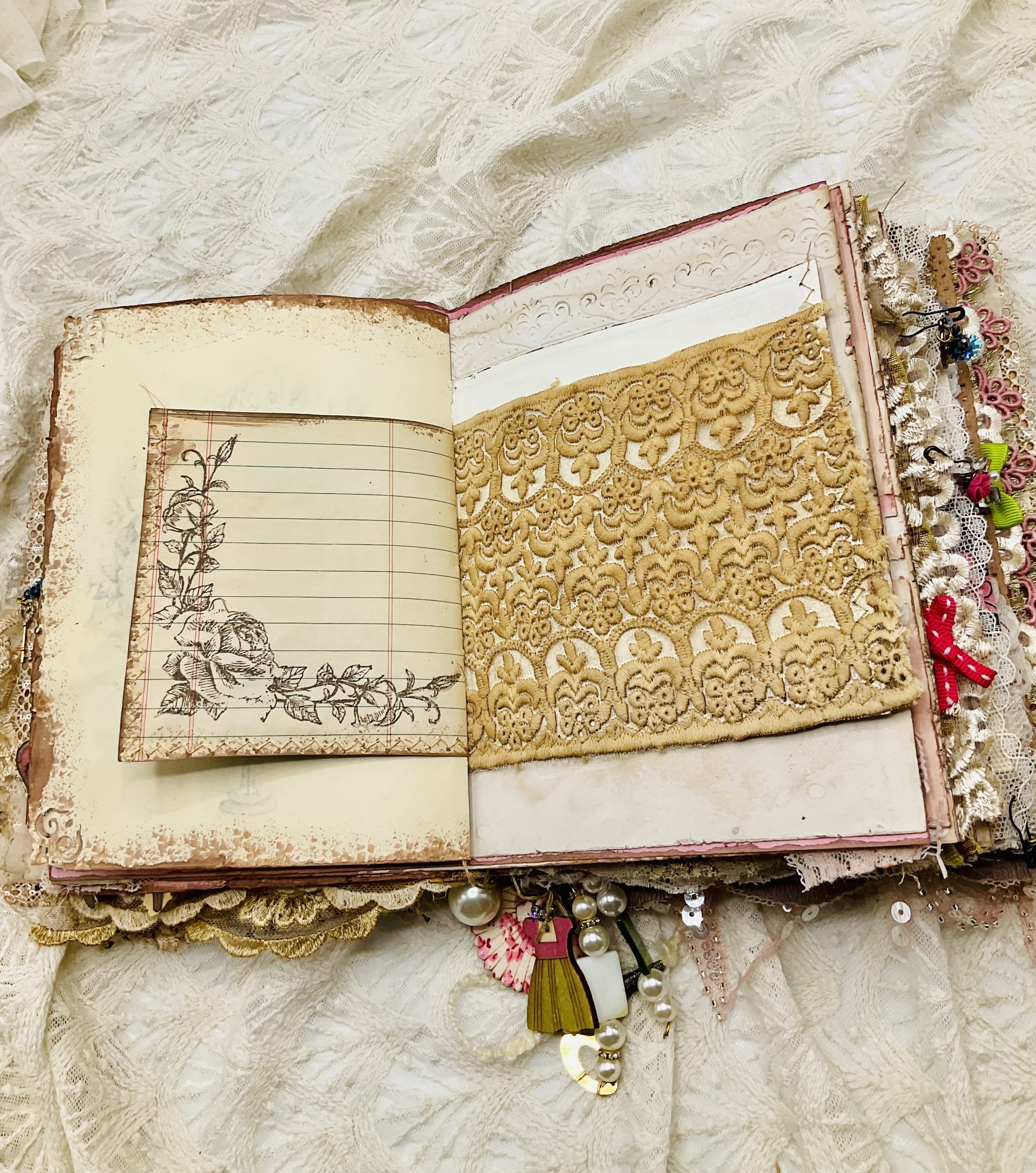
Distressing
Light distressing around page edges creates depth and helps blend modern materials with vintage-inspired elements.
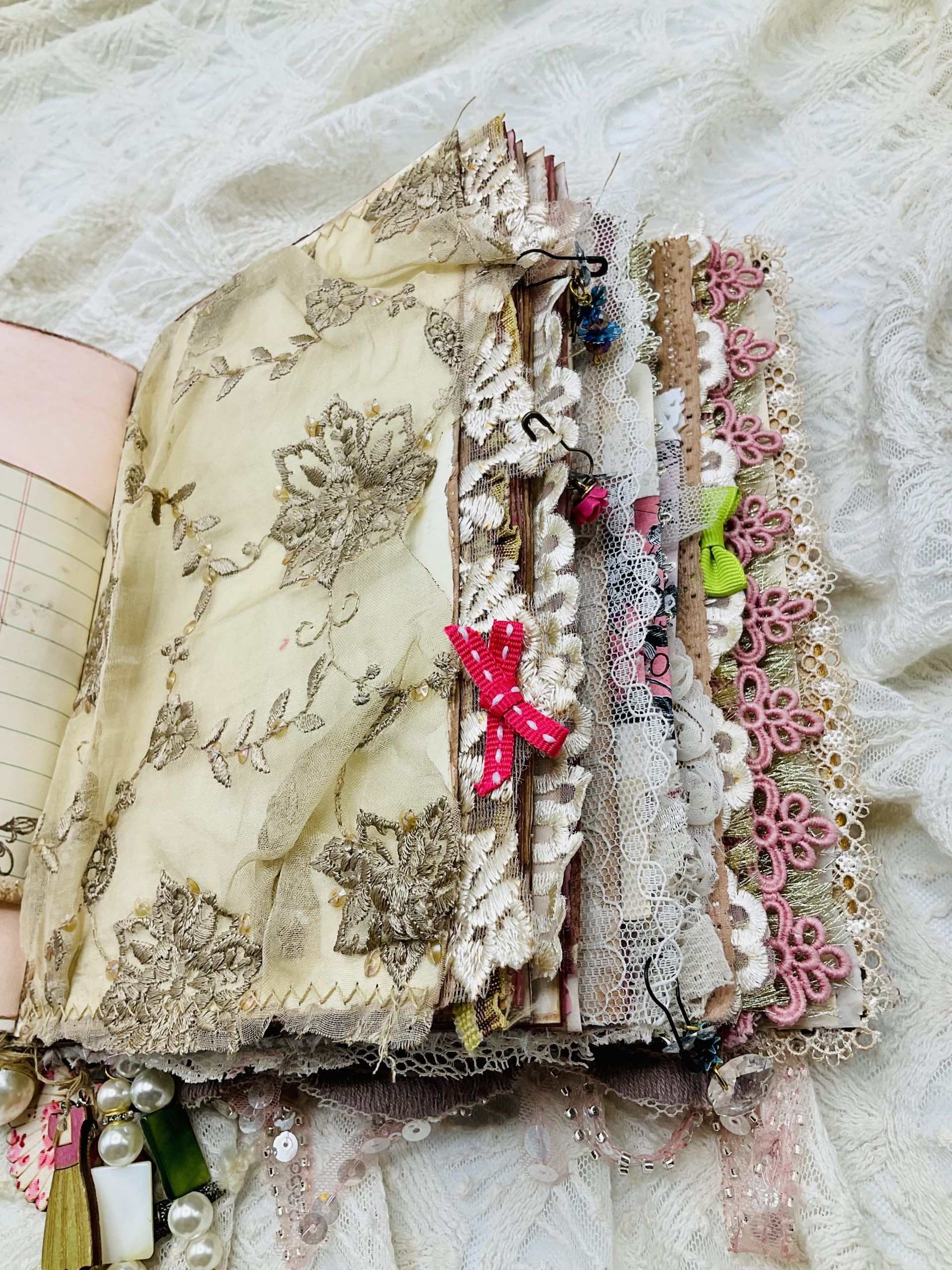
Layering
Layering printable PNG images, lace, fabric, ephemera, and paper creates dimension and visual richness throughout the journal.
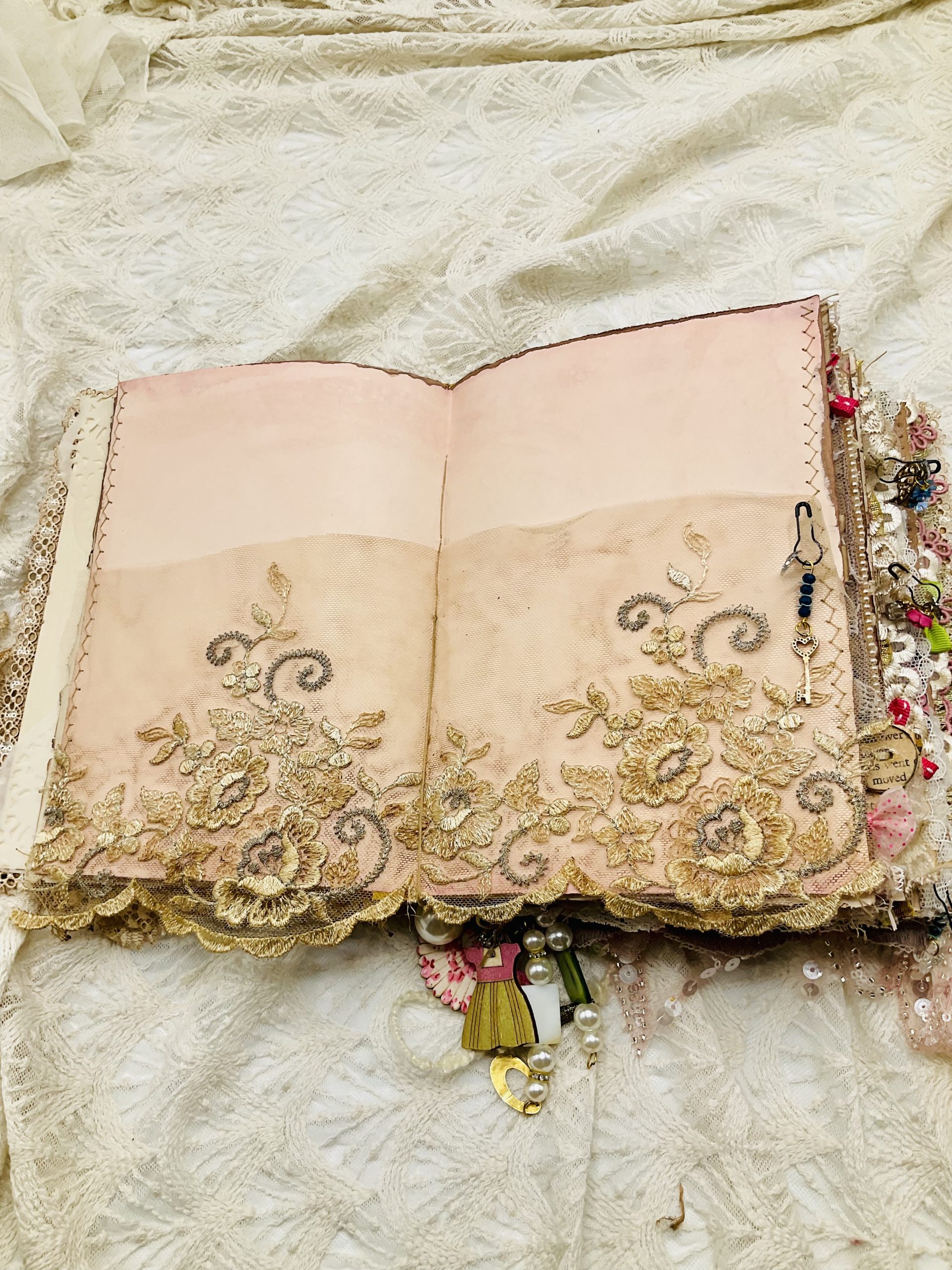
Stitching
Machine stitching secures embellishments while adding decorative texture and handcrafted character.
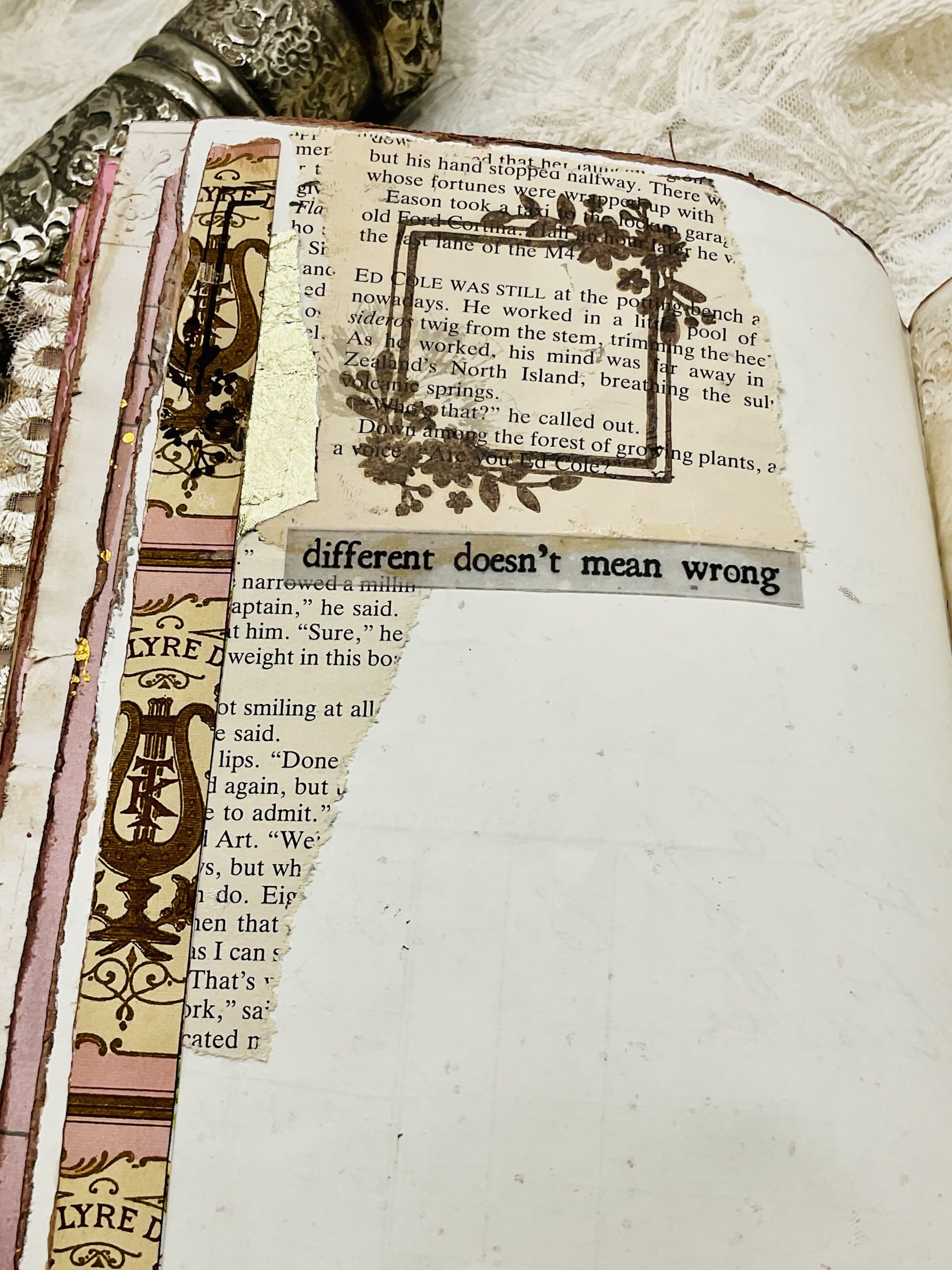
Color Palette and Design Choices
The primary colors throughout the journal are blush pink, faded rose, cream, ivory, and soft vintage neutrals.
Pink serves as the dominant color, creating a feminine and romantic atmosphere. Cream and ivory tones soften the overall design and help maintain a vintage appearance.
Touches of gold, tea-stained browns, and aged paper tones add warmth and authenticity while preventing the journal from feeling overly sweet.
The Parisian Pink palette creates an elegant vintage aesthetic that feels both nostalgic and fresh.
Tips for Creating a Similar Journal
1. Start With a Limited Color Palette
Choose one dominant color and build the entire journal around it.
2. Mix Old and New Materials
Combine printable ephemera with lace, fabric, and vintage-inspired papers.
3. Use Tea-Dyed Papers
Tea-dyed papers instantly create warmth and vintage character.
4. Create Plenty of Pockets
Interactive pockets make journals more functional and enjoyable.
5. Leave Room for Writing
A journal should be beautiful but also practical to use.
What I Learned While Making This Journal
My favorite element is the collection of matchbook-style booklets and floating pockets. They add interaction without creating excessive bulk.
One challenge was balancing embellishment with functionality. Because I love lace, trims, bows, and layered ephemera, it can be easy to over-decorate pages.
I also learned how effective PNG images can be for creating layered focal points. The ability to combine multiple transparent images opens up endless design possibilities.
If I create another journal using this collection, I would experiment even more with altered ephemera and dimensional embellishments.
Final Thoughts on This Parisian Pink Junk Journal
Creating this Parisian Pink Junk Journal was a wonderful experience and a memorable first Design Team project.
The combination of vintage ephemera, lace, printable imagery, tea-dyed papers, and romantic pink tones created a journal that feels both elegant and highly functional. It offers plenty of writing space while still delivering the layered beauty that junk journal enthusiasts love.
I believe anyone who enjoys vintage journals, shabby chic aesthetics, printable ephemera, memory keeping, or creative journaling would appreciate this style of journal.
Most importantly, this project reminded me how rewarding it can be to transform simple printable images and everyday materials into something meaningful, personal, and beautiful.
Watch the Full Journal Flip Through
Watch the complete journal flip through on YouTube to see:
• Every page
• Interactive elements
• Lace pockets
• Matchbook booklets
• Tags and ephemera
• Floating pockets
• Construction details
Frequently Asked Questions about Parisian Pink Junk Journals
What materials does a Parisian Pink junk journal use?
This journal uses Graphics Fairy printable ephemera, tea-dyed papers, waxed doilies, lace trims, sari silk, and vintage-inspired embellishments in blush pink, cream, and ivory tones.
How long does it take to make a Parisian Pink junk journal?
A journal like this takes several days of making — the tea-dyeing, layering, stitching, and embellishing all need time to feel right. It’s slow, intentional work.
Can I make a Parisian Pink style junk journal at home?
Yes — you need basic supplies like tea bags, lace, printable ephemera, and a glue stick. The Graphics Fairy Parisian Pink collection provides the printable foundation.
What makes this journal style distinctive?
The pink vintage palette sets it apart — most vintage journals use sepia and brown tones. This journal feels romantic and feminine while still carrying that beautiful aged quality.
Can I sell a Parisian Pink junk journal on Etsy?
Handmade junk journals sell beautifully on Etsy. If you want to plan your own kit collection, the free Trinketz Studio can help you build cohesive vintage collections ready to list.
Related Articles
• What Is a Junk Journal? A Gentle Journey into Creative Memory Keeping
• How I Made a Chinoiserie Inspired Junk Journal
• How I Made a Seed Packet Junk Journal with Vintage Envelopes and Garden-Inspired Ephemera
Create Your Own Vintage Journal
If you enjoy vintage journaling, printable ephemera, and creative paper crafting, explore the resources available at Trinketz.
After years of creating handmade junk journals, I designed the Trinketz Kit Builder specifically for journal makers who want cohesive vintage collections and printable aesthetics.
How I Made a Seed Packet Junk Journal with Vintage Envelopes and Garden-Inspired Ephemera
Author: Savera | Updated October 2025 | 7 Minute Read
The Inspiration Behind This Seed Packet Junk Journal
Some journal projects take months to finish. Others come together almost effortlessly because the idea is simply too exciting to put down.
This Seed Packet Junk Journal was one of those projects.
The journal began as part of a creative collaboration with Bella Crafts and Angela from The Journal Jigsaw. What started as a tutorial for handmade seed packets quickly grew into a full garden-themed junk journal filled with vintage envelopes, botanical ephemera, tea-dyed papers, interactive pockets, and beautiful hidden details.
As someone who loves both gardening and junk journaling, the idea immediately felt special. Seed packets naturally represent growth, patience, creativity, and the changing seasons — everything I love about both gardening and memory keeping.
The finished journal became one of my most interactive projects, with pockets, tags, flip-outs, hidden spaces, and plenty of room for collecting memories, keepsakes, and even actual seeds.
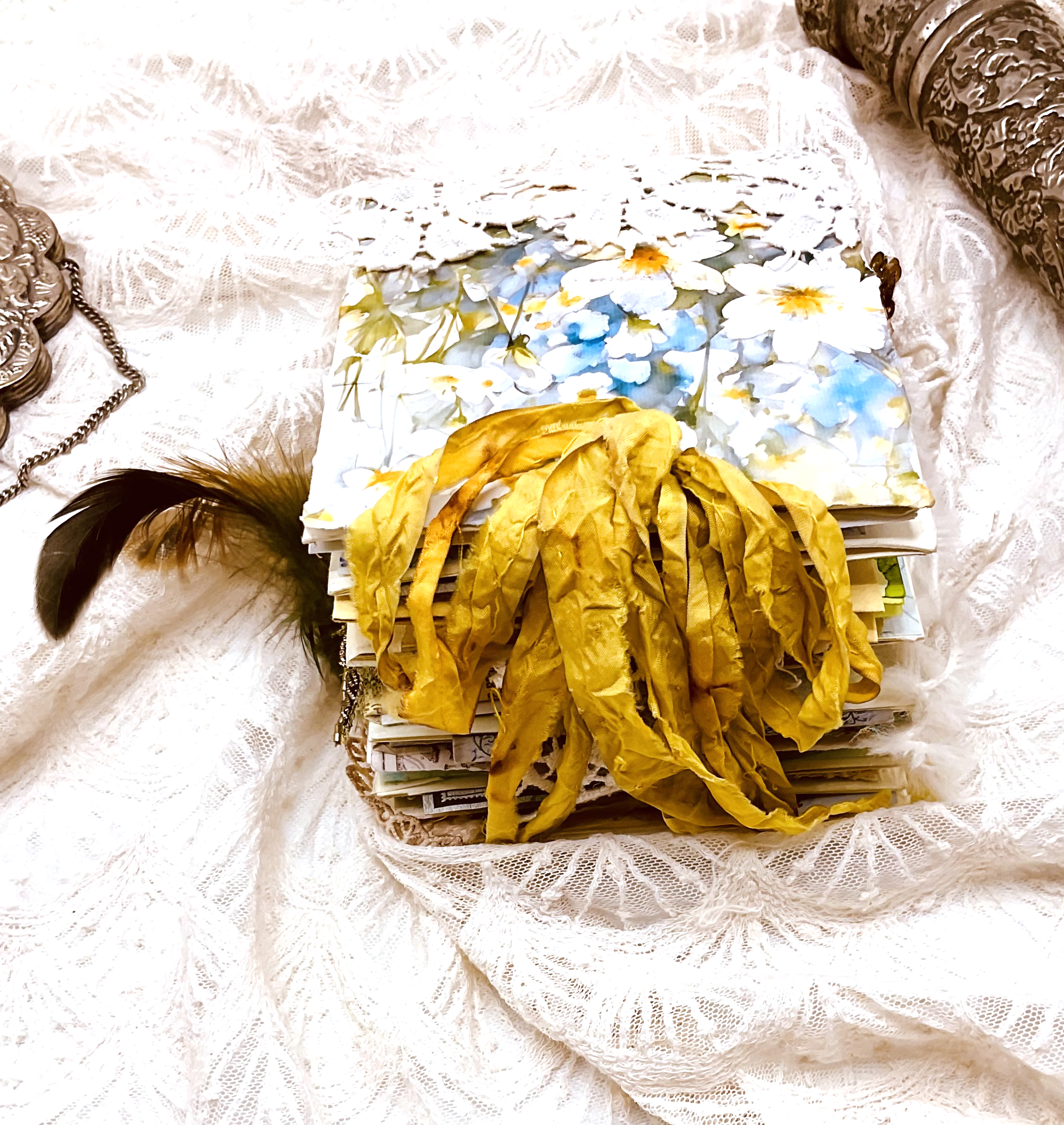
The Inspiration Behind This Seed Packet Junk Journal
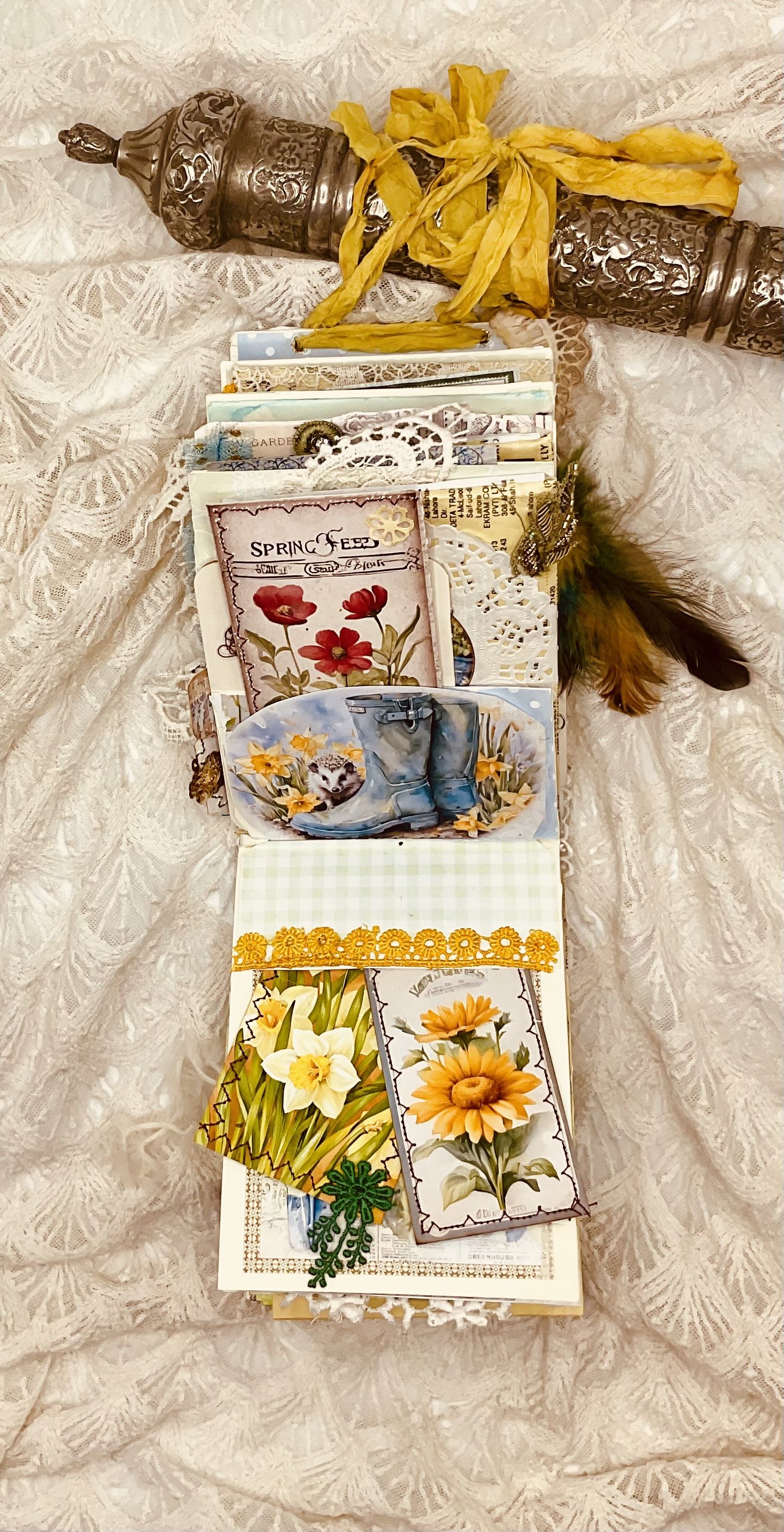
Gardens tell stories.
Each packet of seeds carries the possibility of something beautiful. A tiny seed eventually becomes a flower, a vegetable, or a thriving garden. In many ways, journaling feels the same.
We gather small moments, memories, photographs, and scraps of paper, and over time they grow into something meaningful.
That idea became the heart of this project.
I wanted every page to feel like opening a tiny garden treasure. Every pocket, envelope, and tuck spot would reveal another surprise waiting to be discovered.
The journal combines:
- Gardening inspiration
- Vintage papers
- Botanical imagery
- Handmade seed packets
- Interactive junk journal elements
- Memory keeping opportunities
The result feels like a gardener’s keepsake journal tucked away in an old greenhouse.
Supplies Used in This Garden-Themed Junk Journal
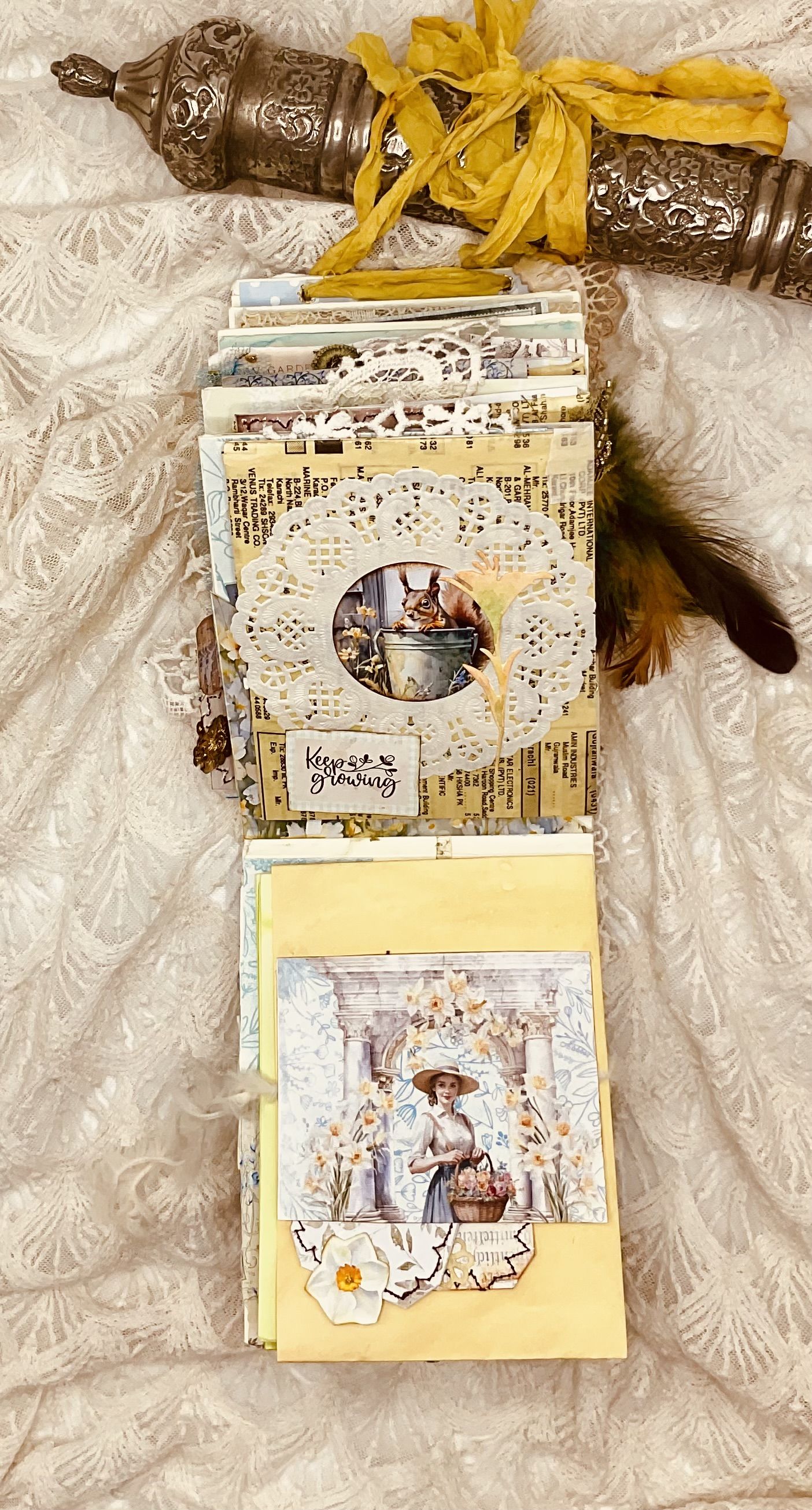
Papers
- Vintage envelopes
- Tea-dyed papers
- Yellow dyed book pages
- Botanical digital papers
- Garden-themed printables
Embellishments
- Vintage lace trims
- Fabric ribbons
- Botanical ephemera
- Decorative tags
- Floral embellishments
Interactive Elements
- Handmade seed packets
- Envelope flips
- Double pockets
- File folders
- Tuck spots
- Fold-out pages
Tools
- Sewing machine
- Glue
- Distress inks
- Scissors
- Cardstock backing
Planning a Garden Journal Theme
Before starting any themed journal, I like collecting inspiration and coordinating papers, colors, ephemera, and embellishments.
The free Trinketz Kit Builder is a simple way to gather ideas and create a cohesive vintage journal aesthetic before beginning a project.
Creating the Journal Cover
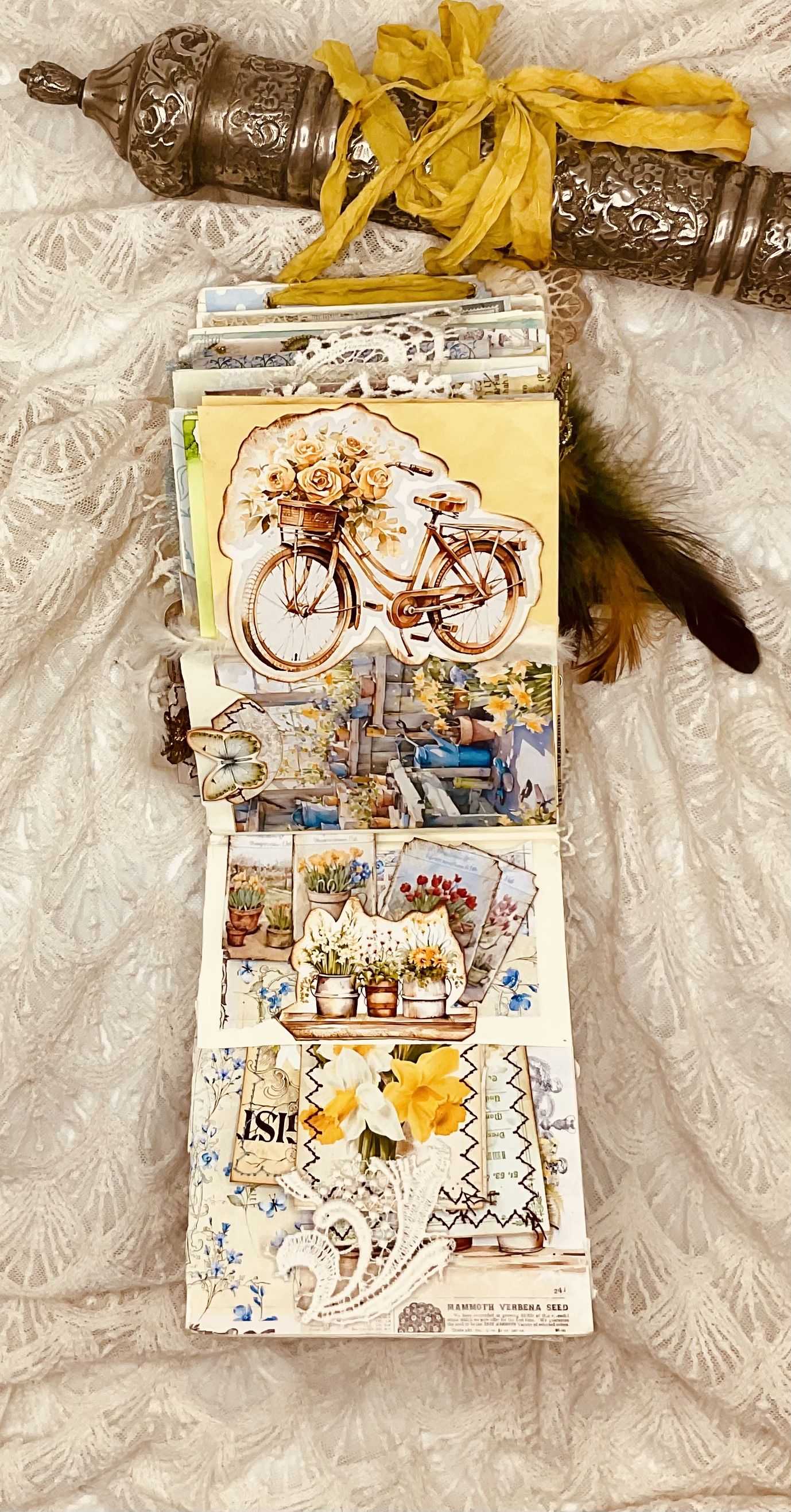
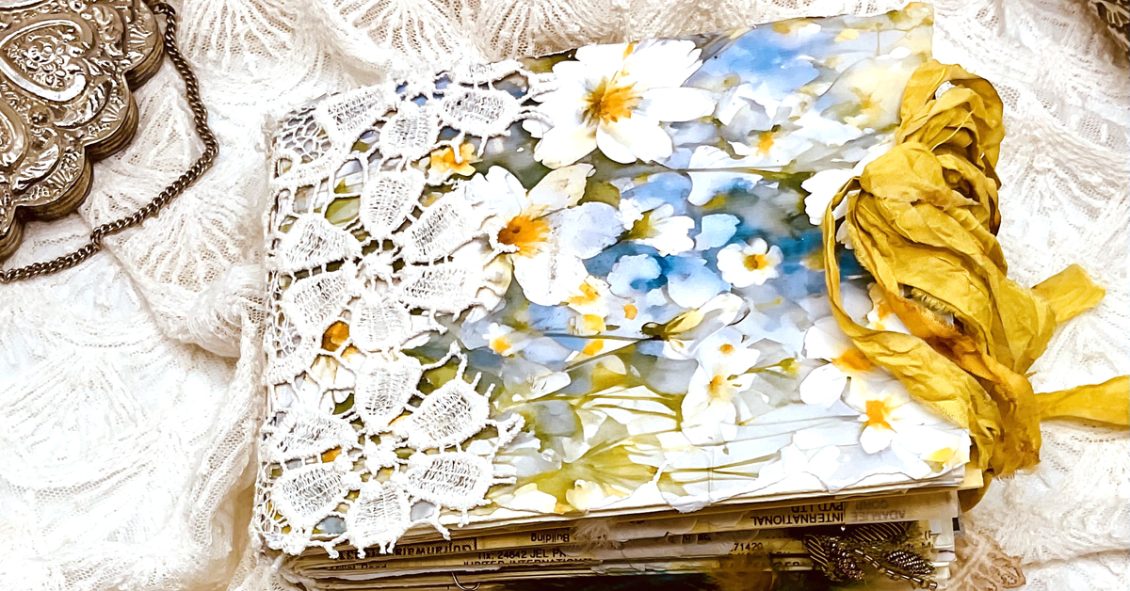
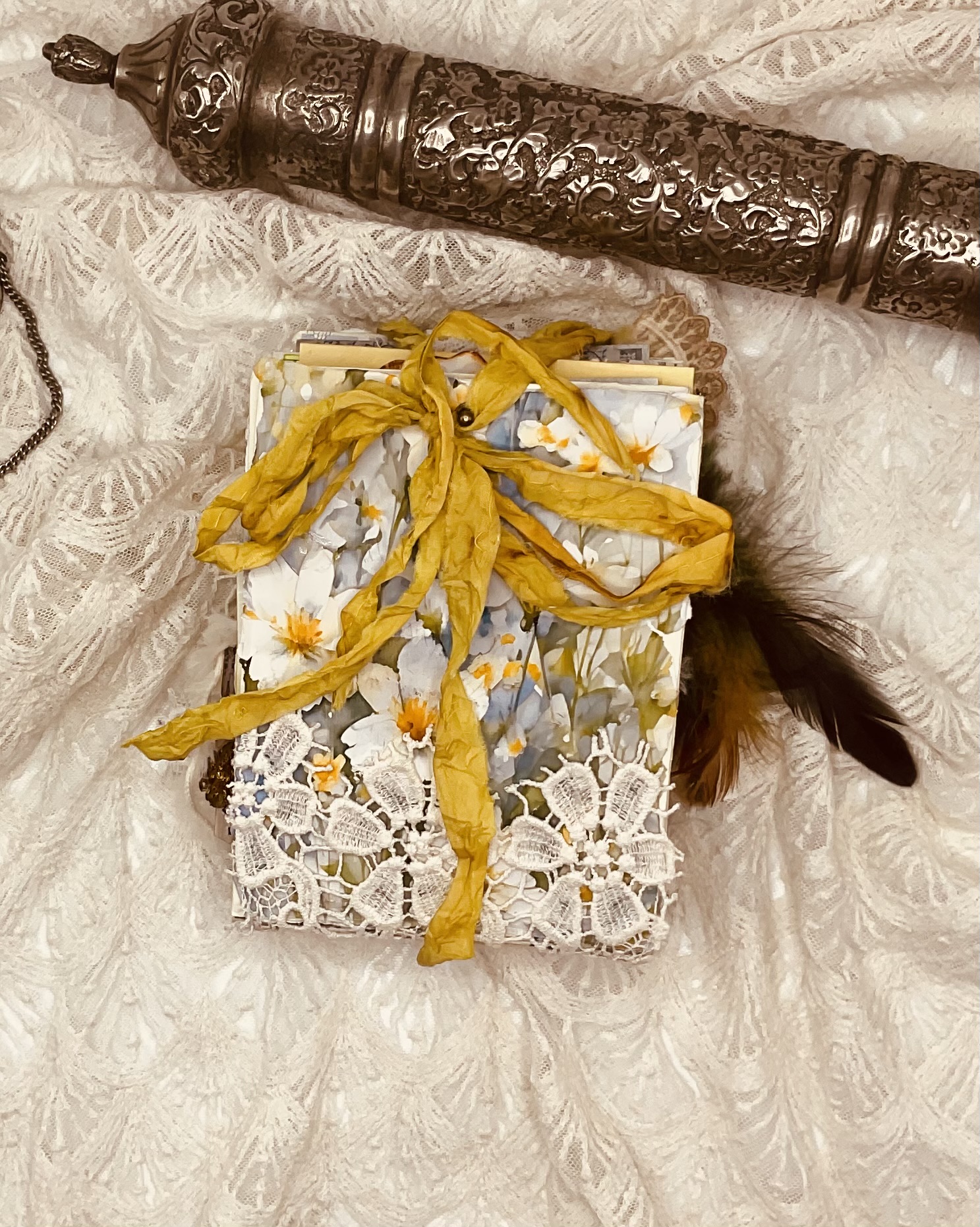
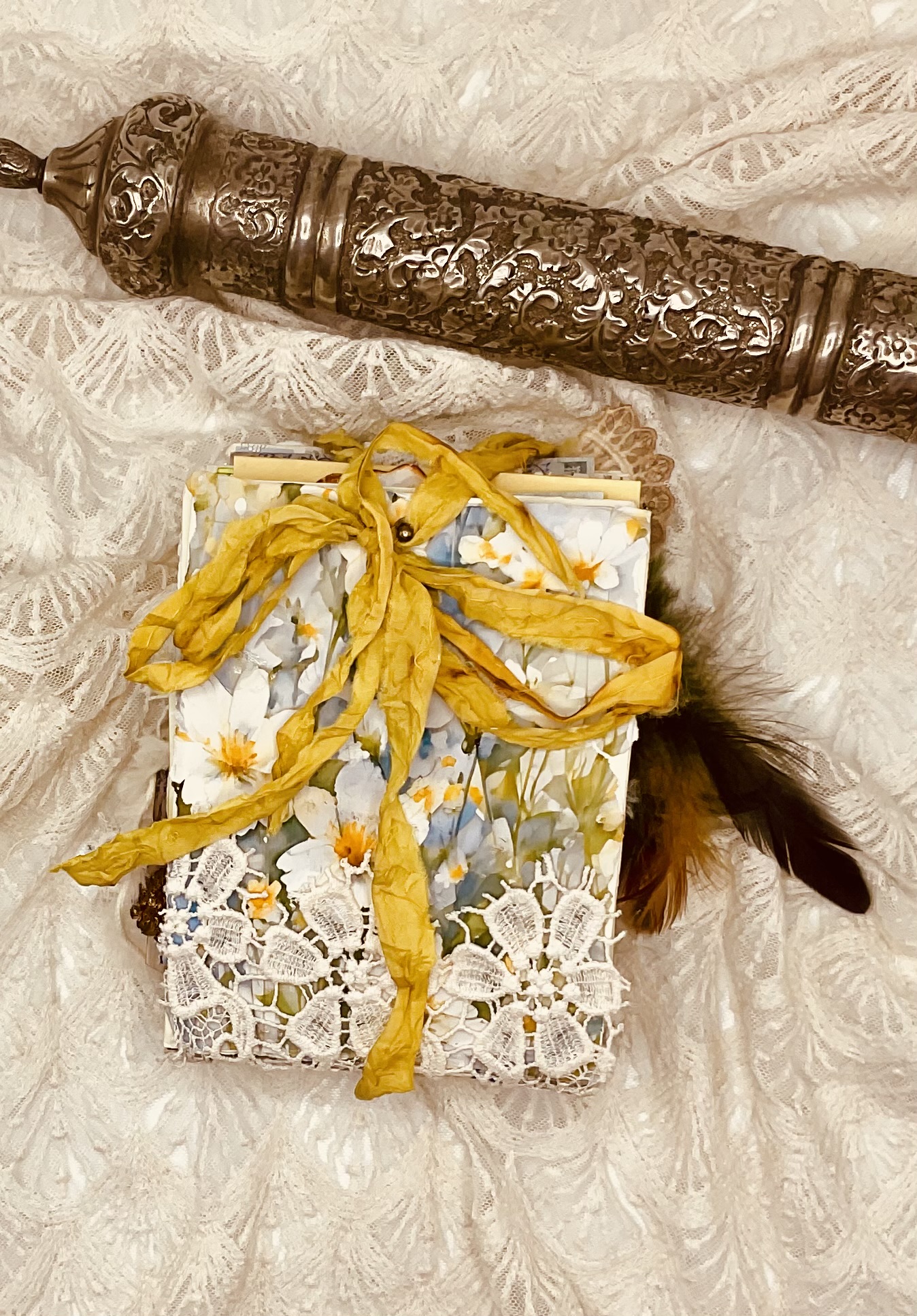
The cover was built using vintage envelopes layered with botanical embellishments and garden-inspired details.
I wanted the journal to immediately feel nostalgic and inviting — as though it had been discovered inside an old gardener’s writing desk.
The dimensional flower embellishment became the focal point of the cover while also helping reinforce the handmade garden aesthetic.
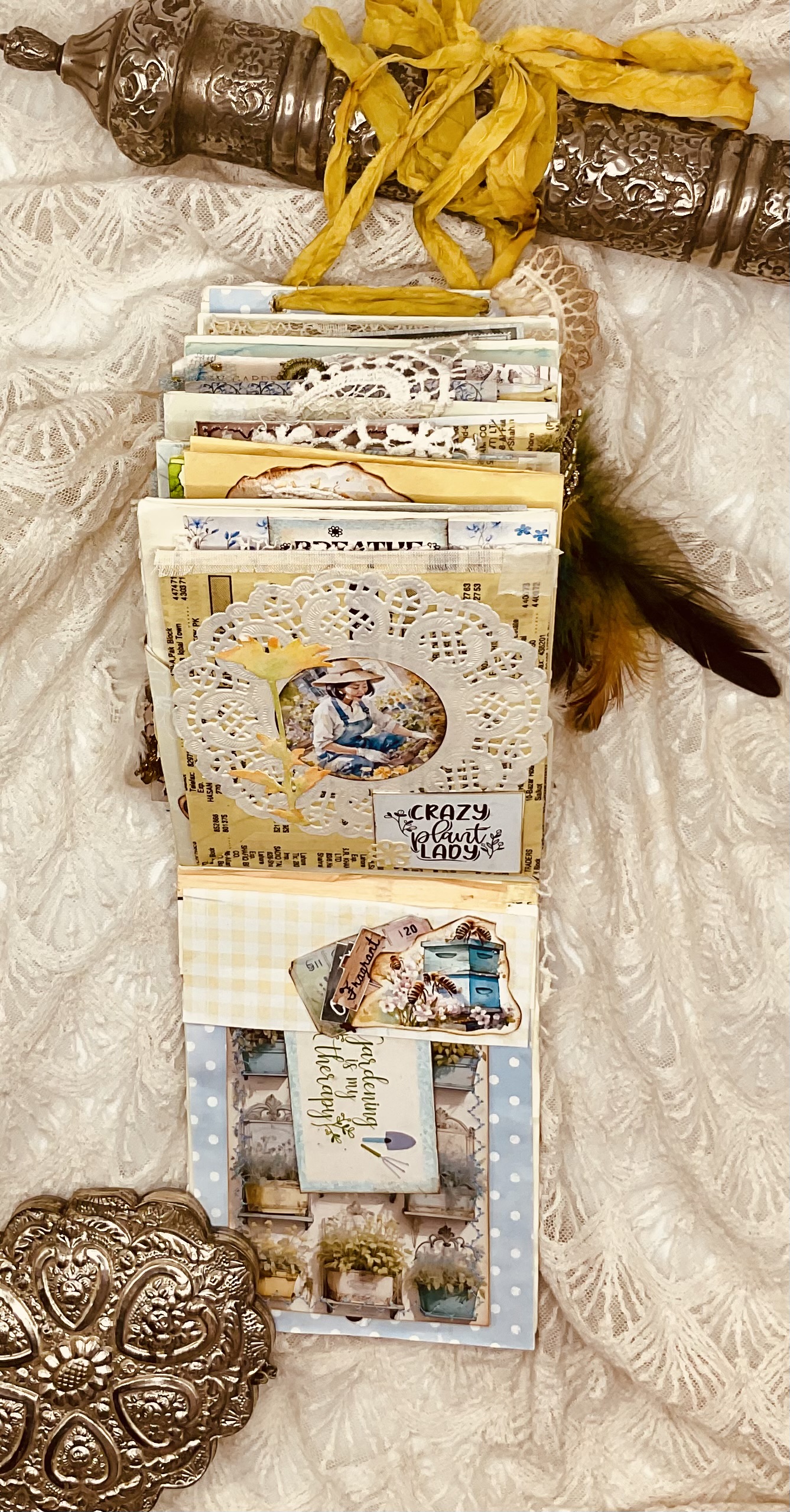
The combination of vintage textures, soft colors, and layered embellishments perfectly introduced the story waiting inside.
The Handmade Seed Packets
The handmade seed packets are undoubtedly the stars of this journal.
Originally created for a collaborative tutorial, they quickly became the foundation of the entire project.
One design decision I made early on was to keep many of the packets relatively simple.
Over-decorating every packet would have made the journal extremely bulky and difficult to use.
Instead, I focused on:
- Beautiful botanical papers
- Functional construction
- Useful storage
- Interactive features
This allowed the journal to remain decorative while still feeling practical.
Each packet can hold:
- Seeds
- Journal cards
- Notes
- Botanical specimens
- Garden plans
- Small keepsakes
A Look Inside the Journal
Envelope Flips and Hidden Spaces
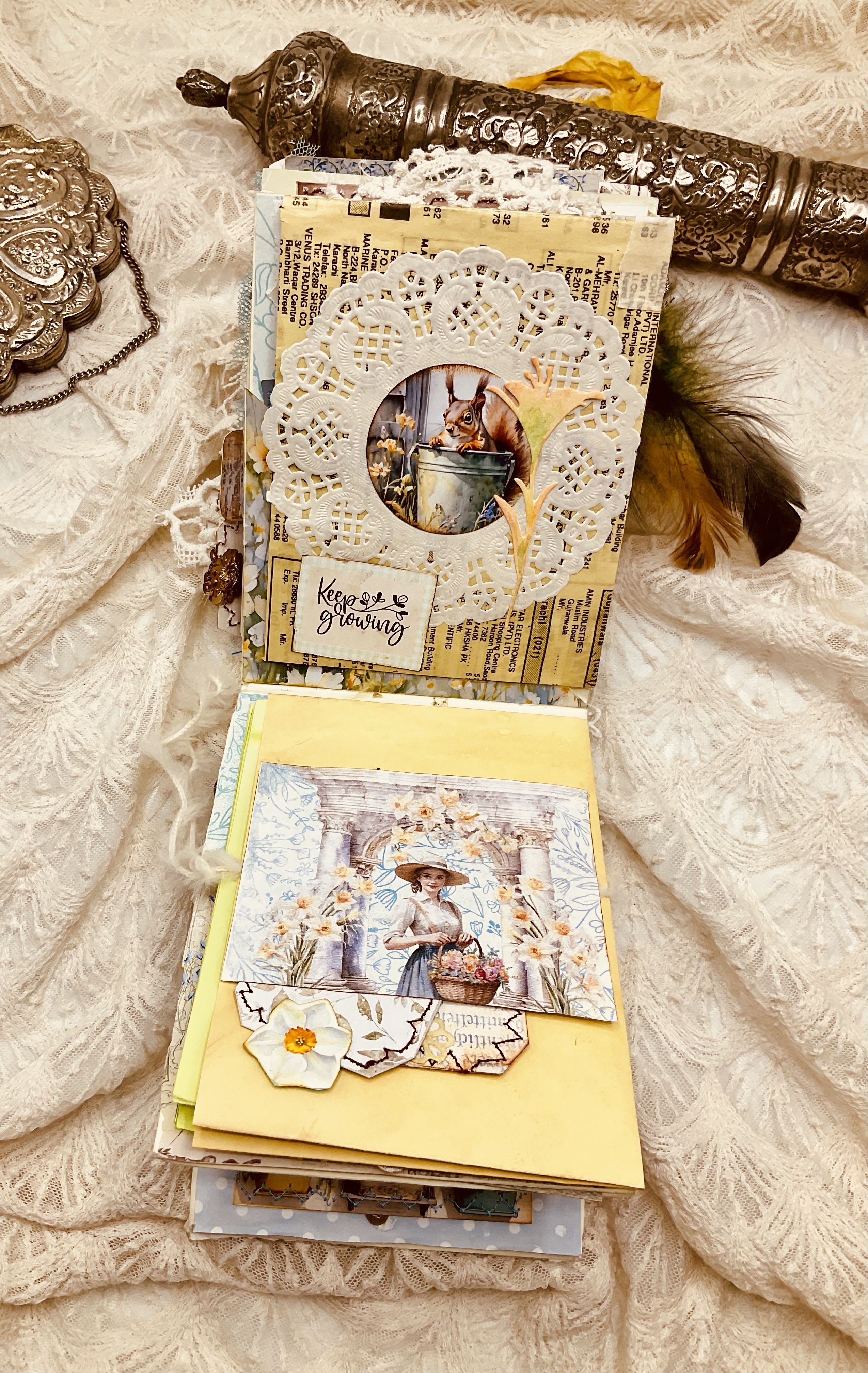
Many pages include envelope constructions that open to reveal hidden compartments and tuck spots.
These interactive elements create a sense of discovery throughout the journal.
Every page turn reveals another pocket, card, or surprise.
Tea-Dyed and Dyed Papers
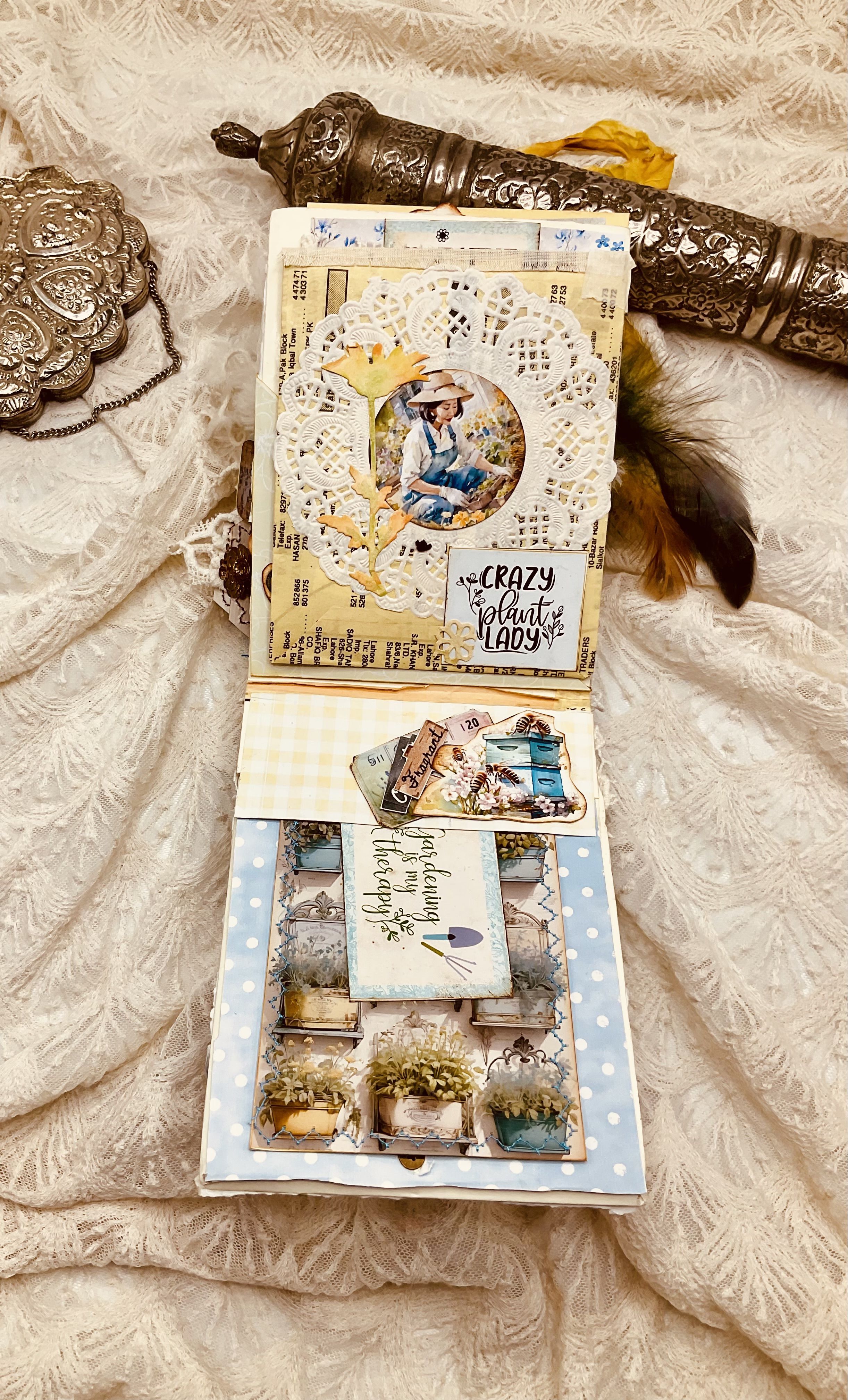
Throughout the journal I used tea-dyed papers and food-colored pages to create warmth and consistency.
The soft yellow tones work beautifully with the botanical imagery and help unify the various elements throughout the journal.
These aged pages add character while providing plenty of writing space.
Botanical Ephemera
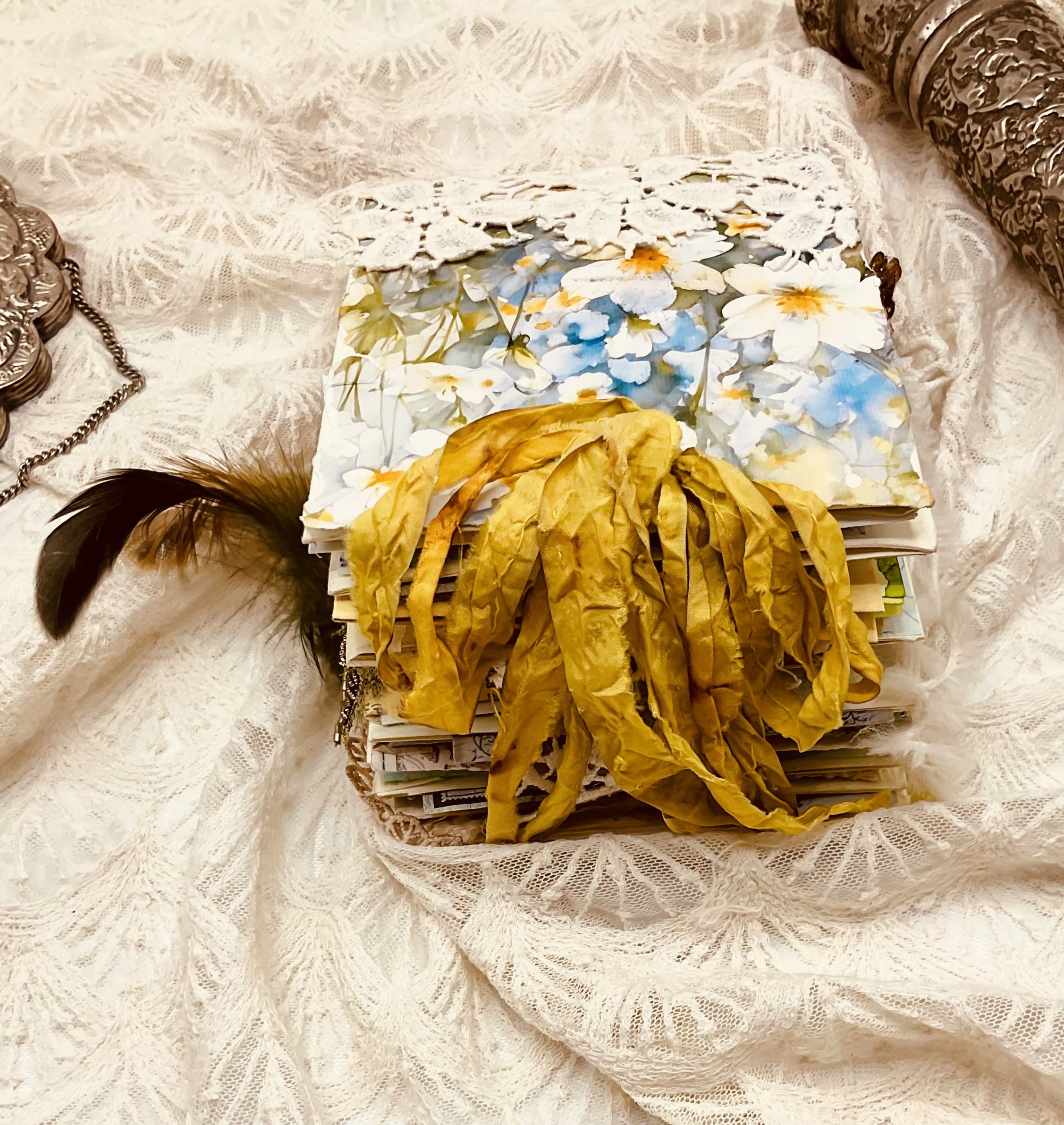
One of my favorite parts of this project is the abundance of botanical ephemera.
Each seed packet contains carefully selected:
- Botanical tags
- Journal cards
- Floral illustrations
- Decorative labels
- Vintage garden imagery
To improve durability, each piece was backed with sturdy cardstock while maintaining a handmade appearance.
File Folder Features and Interactive Elements
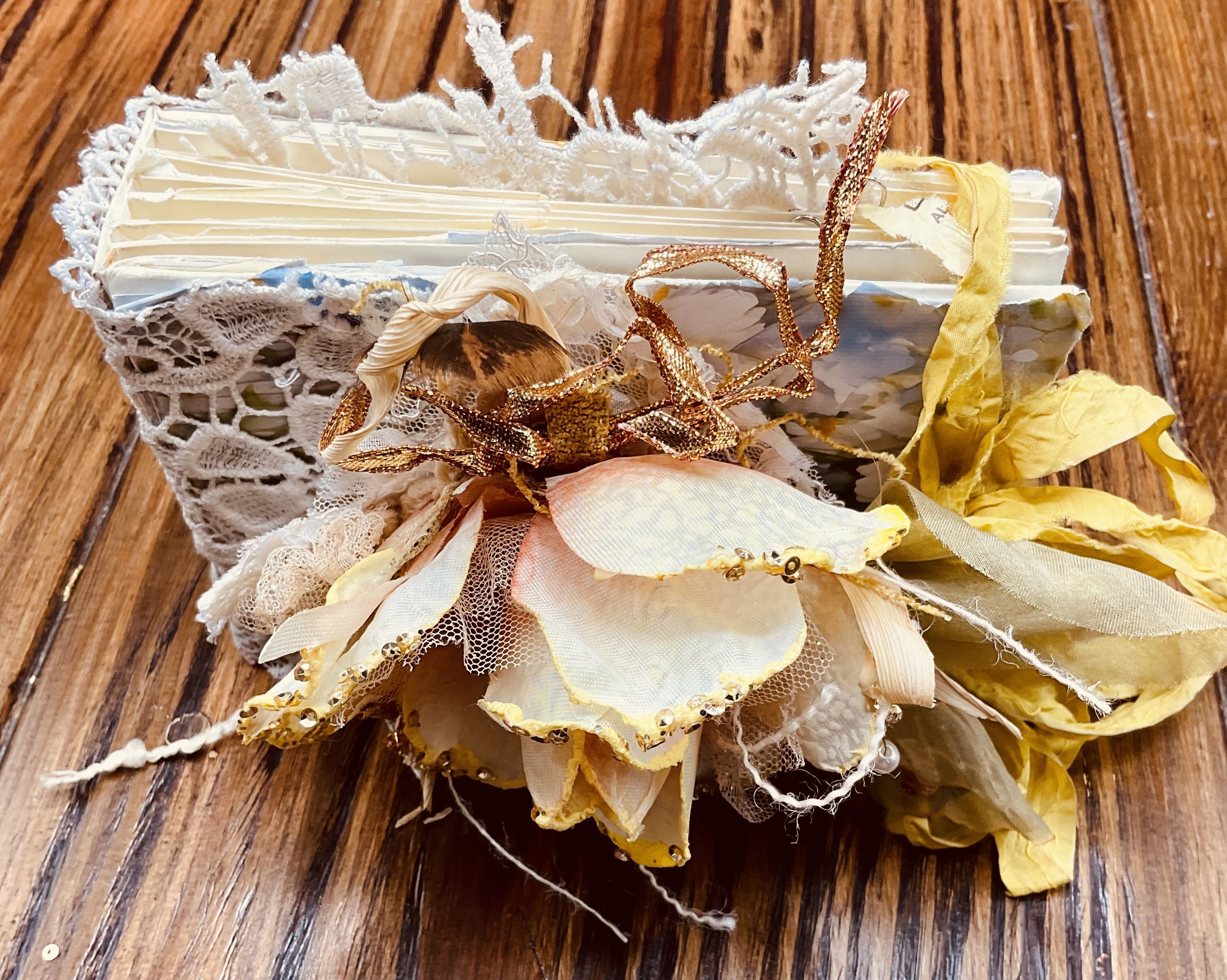
One of the most enjoyable elements was incorporating file folders, double pockets, and fold-out structures.
These interactive features create additional storage while adding visual interest and variety throughout the journal.
The journal encourages exploration and invites the viewer to interact with every page.
Making the Journal Functional
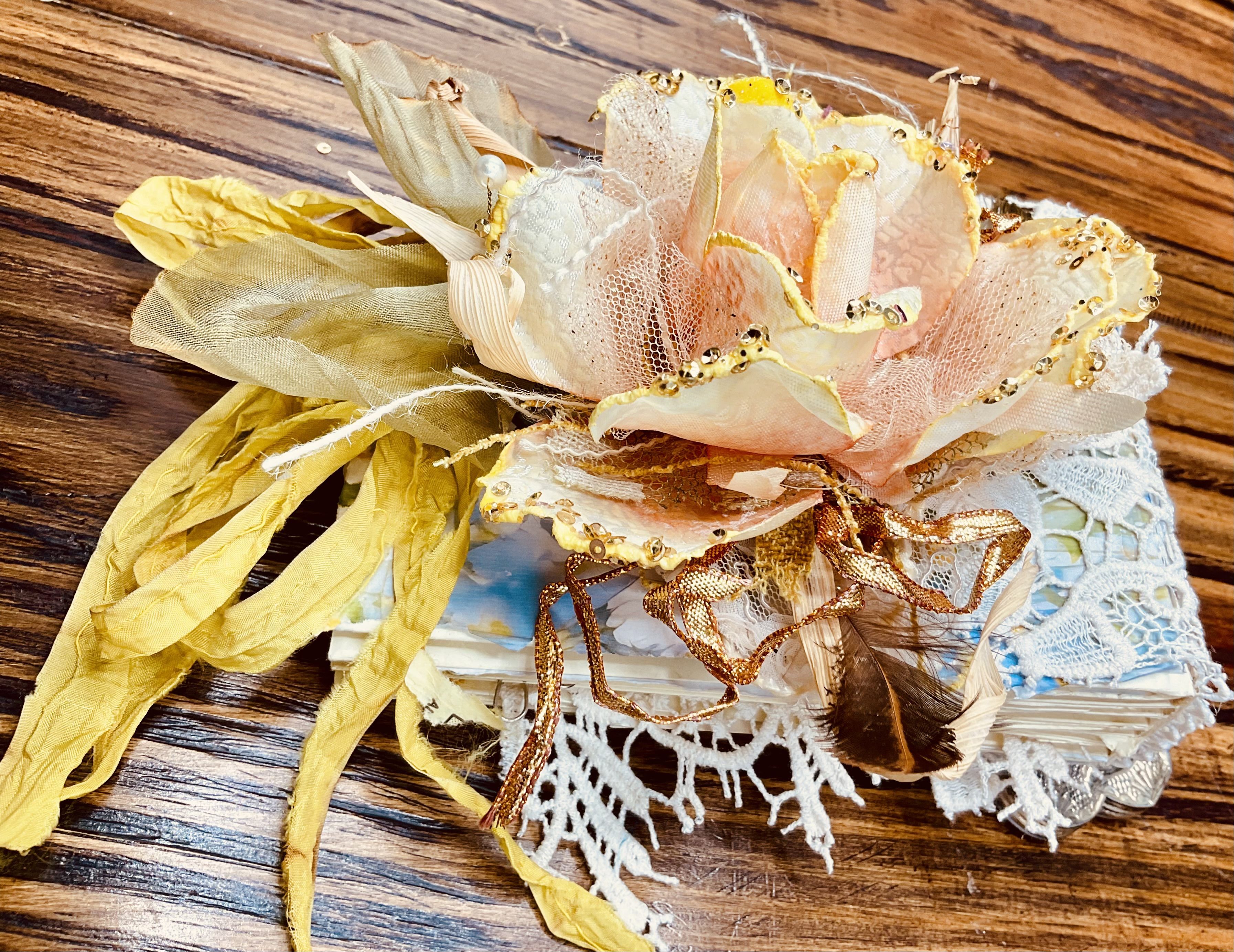
Although highly decorative, I wanted this journal to remain practical.
Many elements can be removed and used separately.
For example:
- Ephemera can be reused in future projects
- Seed packets can hold actual seeds
- Journal cards provide writing space
- Tuck spots can store photographs and keepsakes
Removing some decorative pieces also creates additional room for journaling.
This flexibility makes the journal useful as both an art journal and a functional gardening journal.
What I Learned While Making This Journal
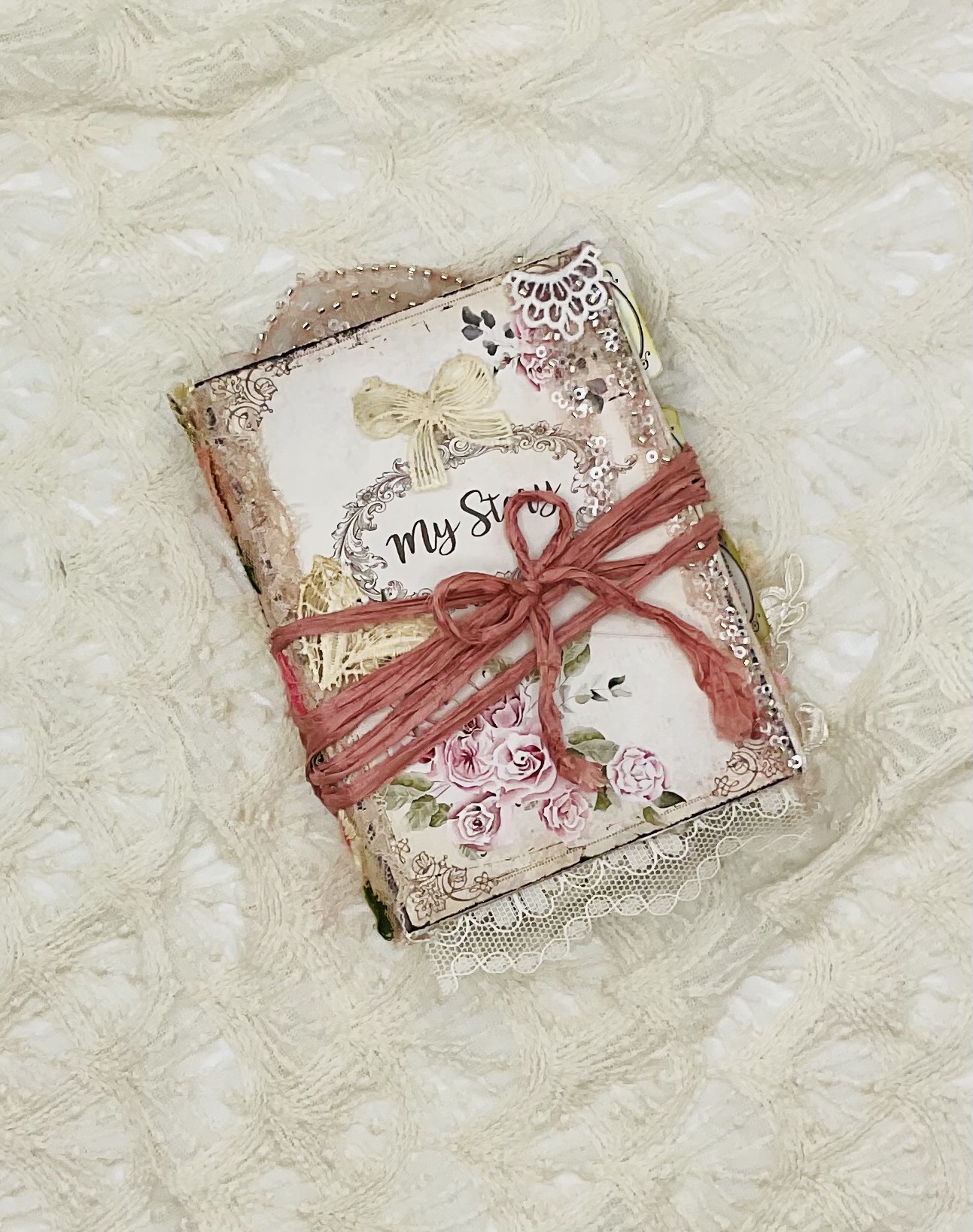
Like many handmade projects, this journal taught me valuable lessons.
At one point I accidentally glued an envelope flap incorrectly, making it difficult to close properly.
Instead of treating it as a failure, it became a reminder of one of the reasons I love junk journaling:
Perfection is not required.
One of the joys of handmade journals is the ability to adapt, improvise, and solve creative problems along the way.
Often the “mistakes” become part of the journal’s personality.
That handmade imperfection is what gives these journals their charm.
Tips for Making Your Own Seed Packet Junk Journal
- Reinforce Delicate Papers — Use cardstock backing or reinforcement strips in high-use areas.
- Don’t Overdecorate Every Packet — Simple packets help reduce bulk and improve functionality.
- Add Interactive Features — Flip-outs, envelopes, and pockets create a more engaging journal experience.
- Use a Consistent Garden Theme — Botanical imagery, flowers, and nature-inspired papers create cohesion.
- Create Elements in Bulk — Making pockets and packets in batches saves time and improves consistency.
Need Help Building a Theme?
The free Trinketz Kit Builder helps journal makers create coordinated journal themes by gathering papers, ephemera, colors, and vintage inspiration in one place.
Ideas for Using a Seed Packet Journal
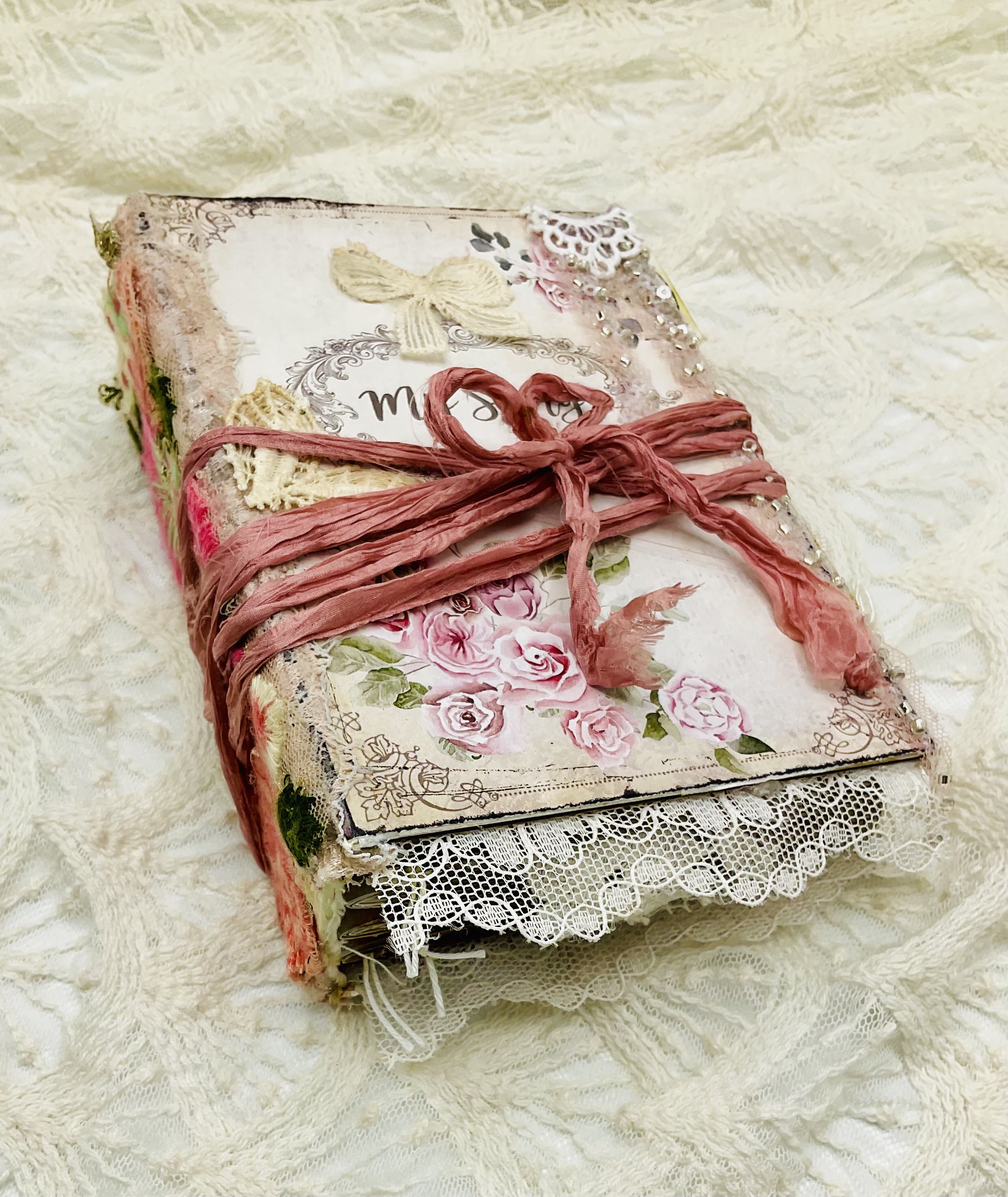
This style of journal works beautifully for:
- Garden planning
- Seed storage
- Nature journaling
- Botanical memory keeping
- Seasonal gardening notes
- Junk journal collecting
- Spring scrapbooking
- Garden-inspired storytelling
Because of its interactive structure, it works equally well as a display piece or a practical journal.
Why I Love Garden-Themed Junk Journals
Gardens and journals share something beautiful in common.
Both preserve moments.
One preserves flowers, seeds, and seasons.
The other preserves thoughts, memories, and stories.
Bringing these two worlds together creates something deeply personal and meaningful.
This Seed Packet Journal became more than a creative project.
It became a celebration of growth, nature, patience, and the joy of making something beautiful by hand.
Final Thoughts on This Seed Packet Junk Journal
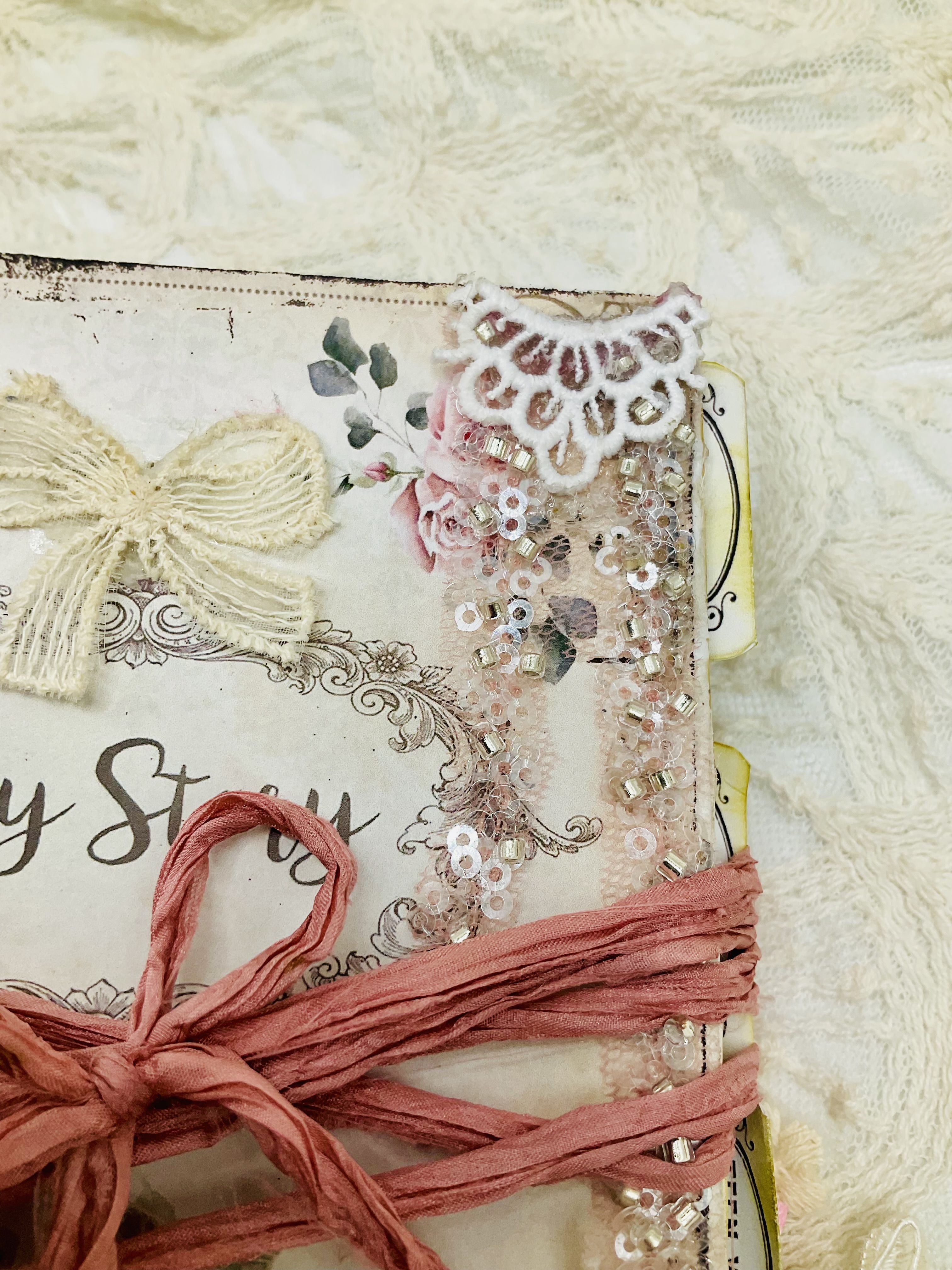
This remains one of my favorite interactive junk journal projects.
Between the handmade seed packets, vintage envelopes, tea-dyed papers, botanical ephemera, and layered pockets, every page offers something new to discover.
If you enjoy creating journals that combine beauty and functionality, a seed packet journal is a wonderful project to explore.
Whether you use it for gardening, memory keeping, or creative storytelling, it offers endless opportunities for personal expression.
Watch the Full Seed Packet Journal Flip Through
Watch the complete flip-through to see:
- Handmade seed packets
- Interactive elements
- Hidden pockets
- Botanical ephemera
- Garden-inspired details
Related Articles
- How to Make Handmade Seed Packets for Junk Journals
- Garden-Themed Junk Journal Ideas
- Tea-Dyed Paper Techniques for Beginners
- Interactive Junk Journal Elements
- Botanical Ephemera Ideas for Vintage Journals
Create Your Own Garden Journal
If you enjoy vintage journaling, botanical ephemera, tea-dyed papers, and creative paper crafting, explore more inspiration at Trinketz.
- Browse Journal Inspiration
- Explore Creative Tutorials
- Watch More Flip Through Videos
- Try the Free Trinketz Kit Builder
After years of creating handmade junk journals, I designed the Trinketz Kit Builder specifically for journal makers who want cohesive vintage collections and printable aesthetics.
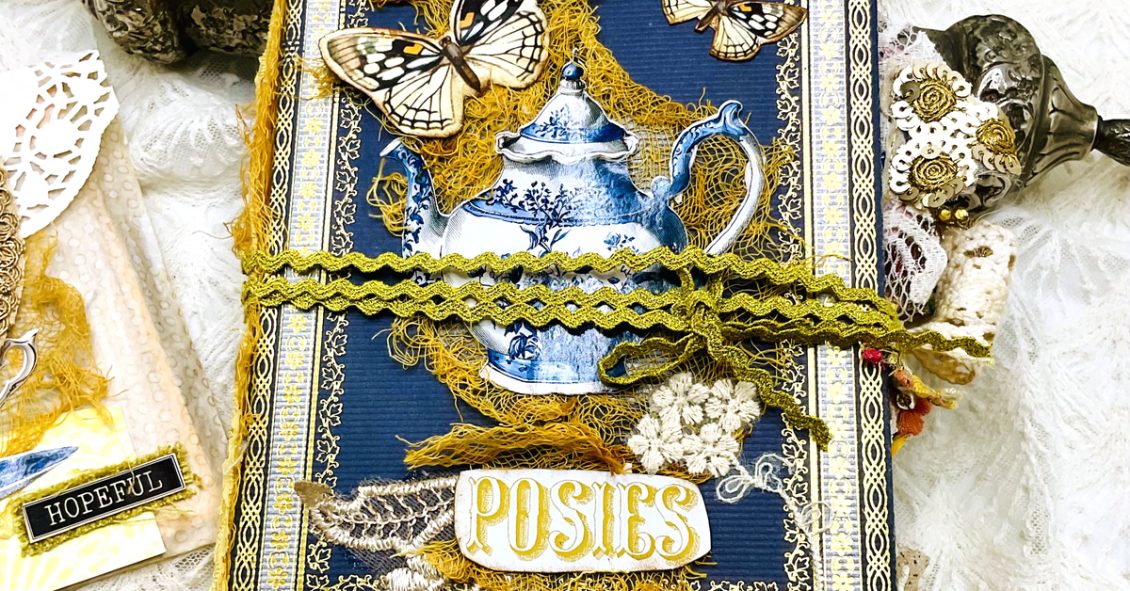
How I Made a Chinoiserie Inspired Junk Journal
Author: Savera | Updated September 2025 | 6 Minute Read
A Chinoiserie Journal Filled with Vintage Elegance
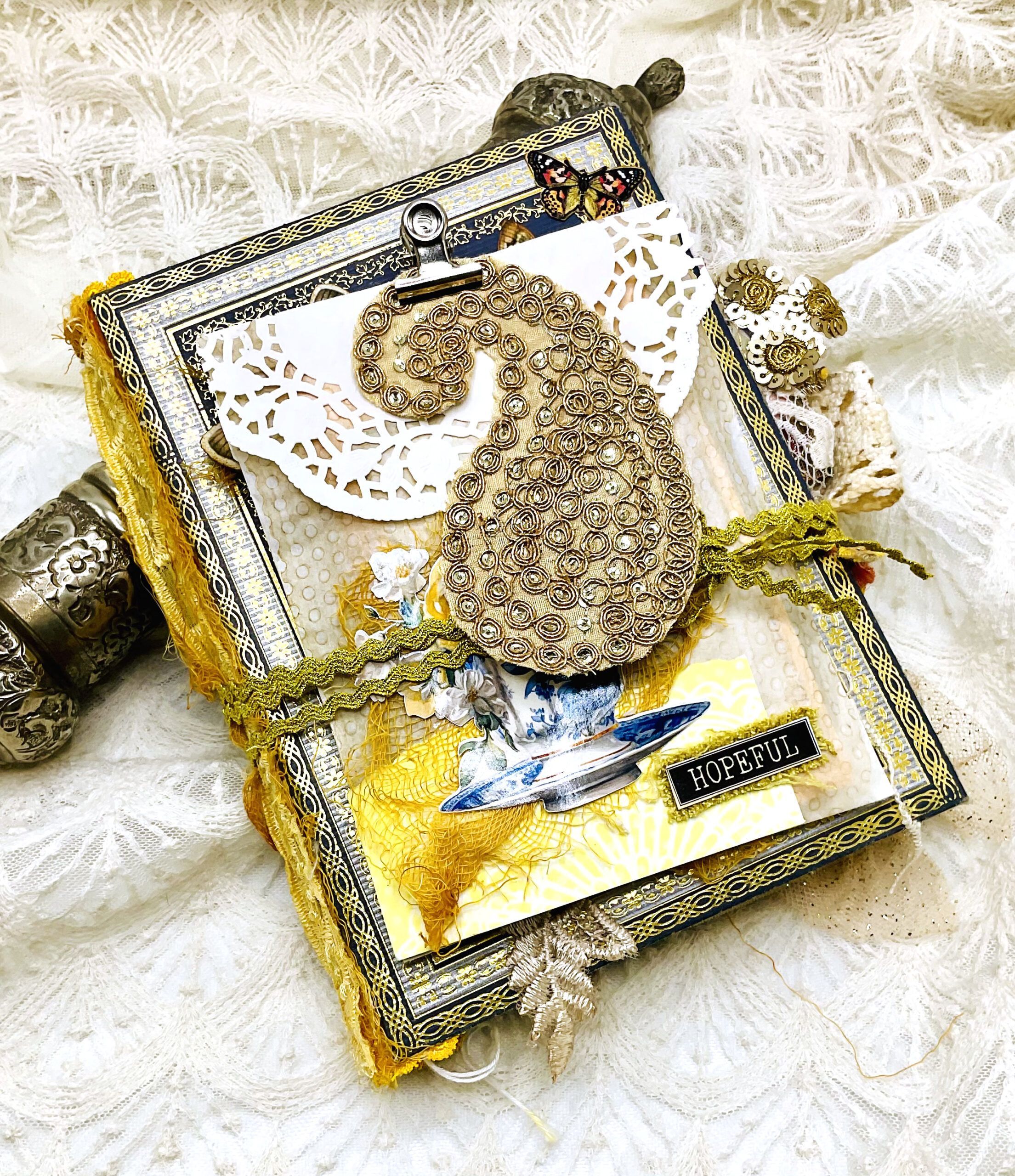
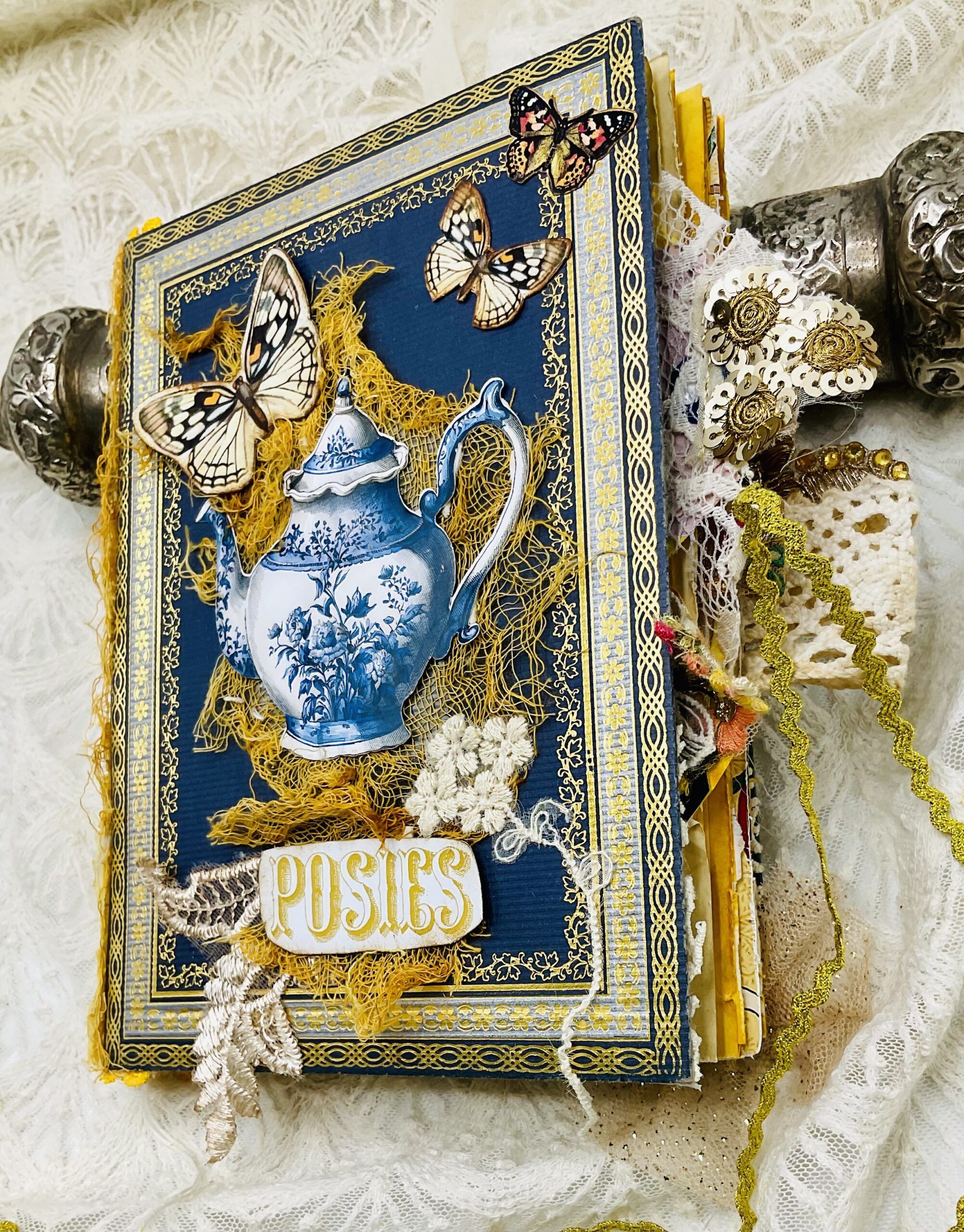
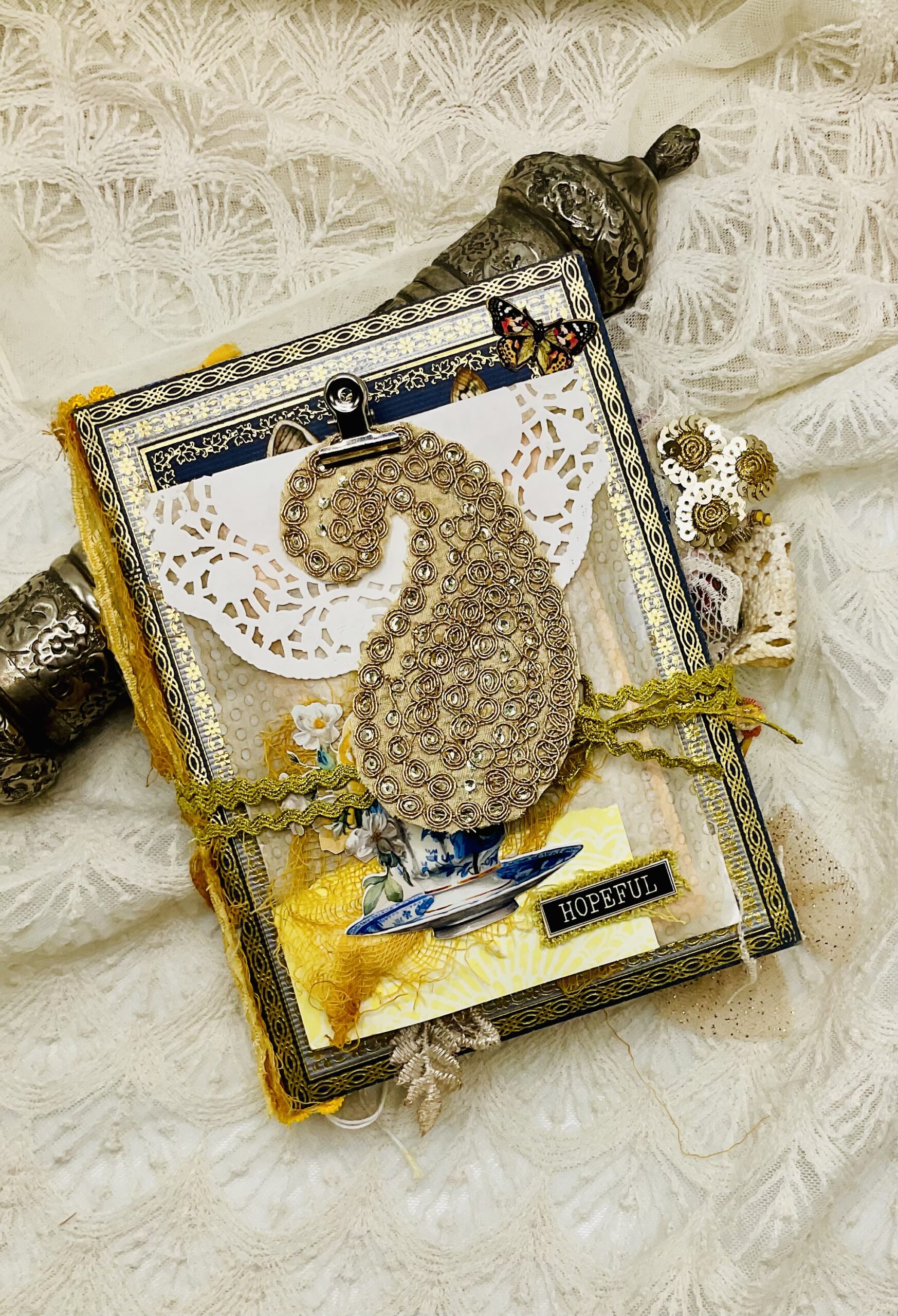
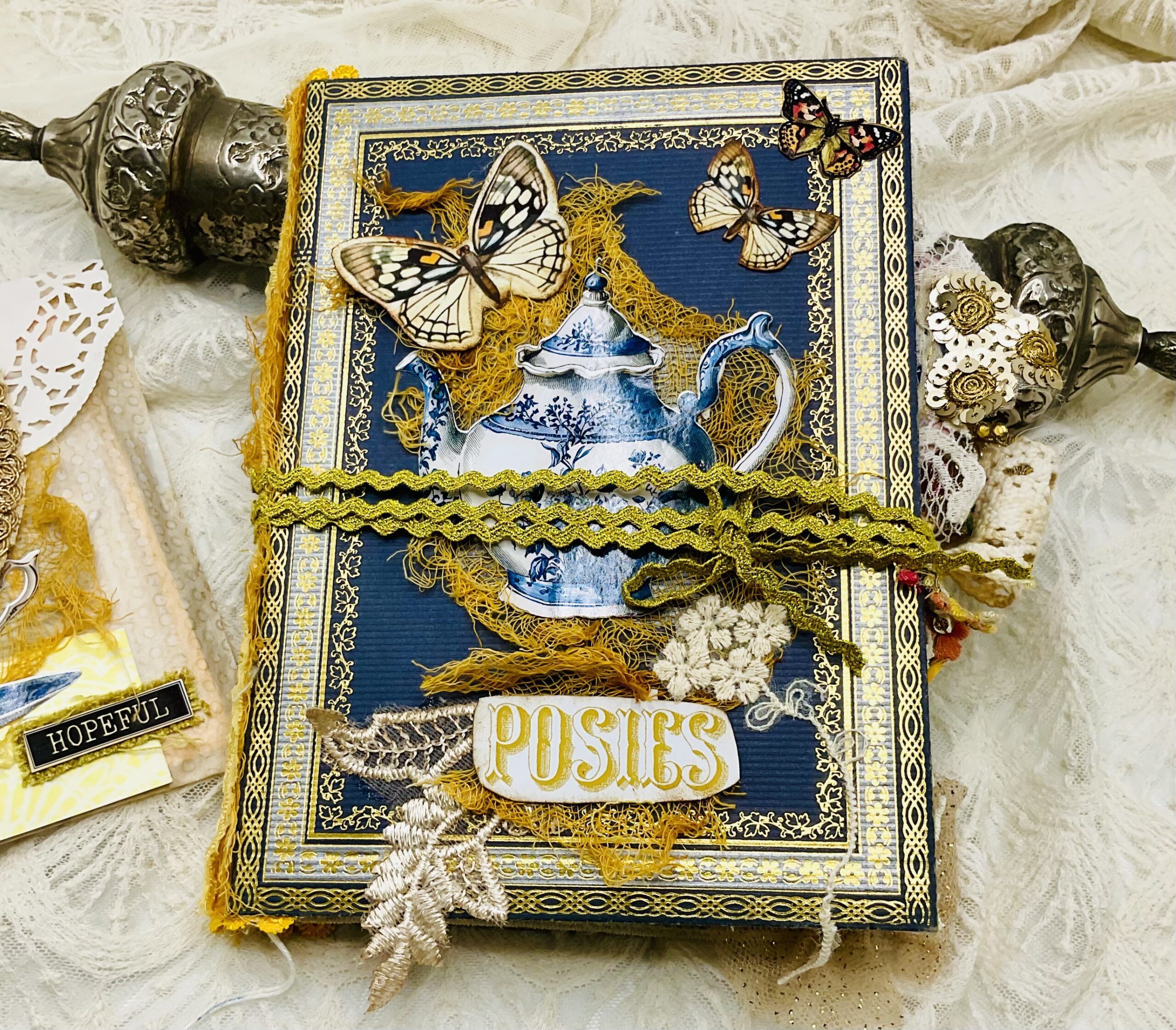
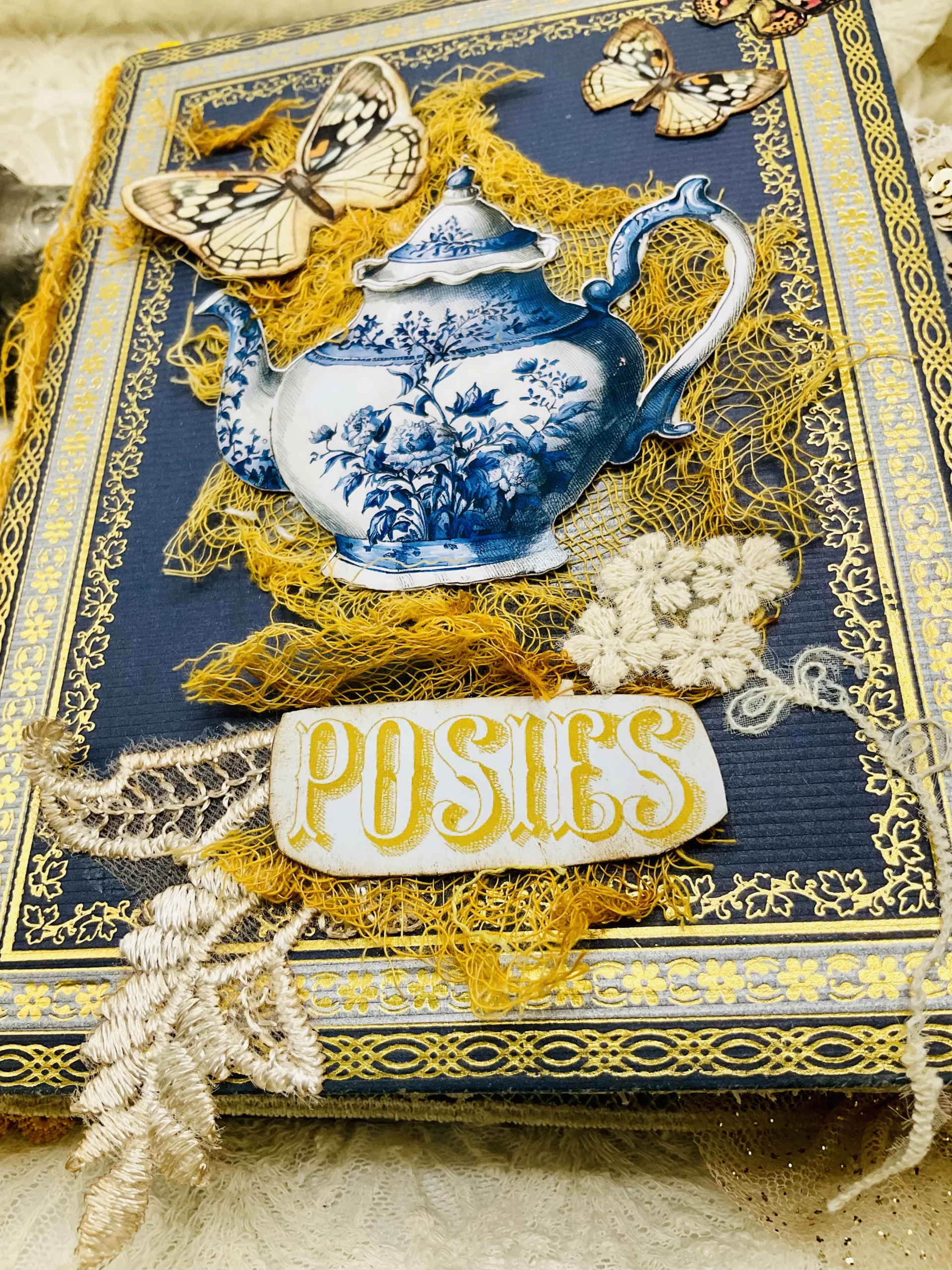
One of my favorite things about junk journaling is the opportunity to blend different artistic influences into something completely unique. Every journal tells its own story, and this Chinoiserie-inspired junk journal was a chance to combine elegant blue-and-white imagery with warm vintage textures and tea-dyed papers.
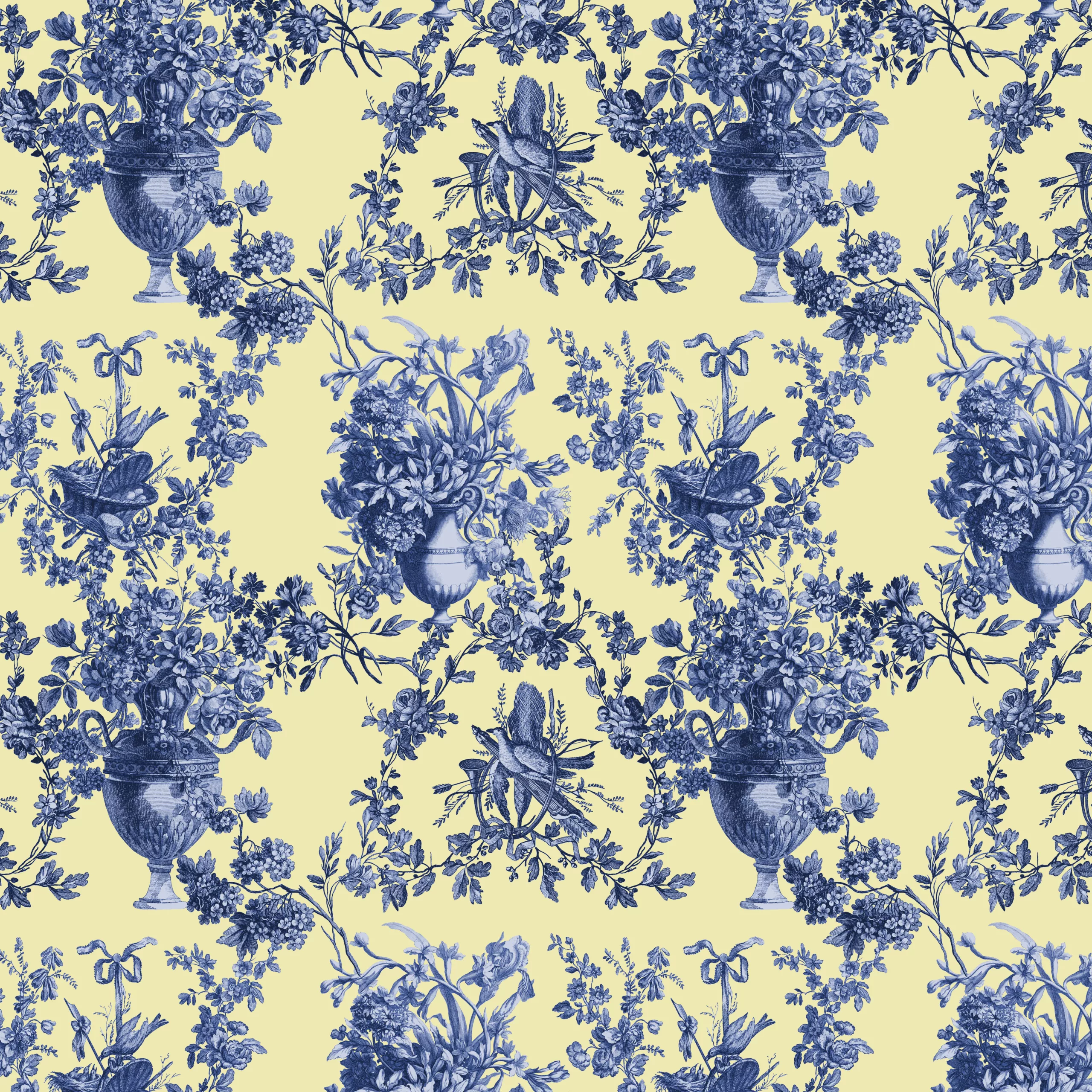
For this project, I was inspired by the timeless beauty of traditional Chinoiserie designs—ornate porcelain patterns, delicate florals, graceful birds, and the refined elegance often found in antique decorative arts.
Rather than creating a journal that felt formal or fragile, I wanted something that felt collected over time. A journal that looked as though it had been tucked away inside an old writing desk, filled with memories, pressed flowers, and treasured keepsakes.
The combination of blue Chinoiserie artwork, tea-dyed papers, vintage lace, and layered ephemera created exactly the feeling I was hoping for: elegant, nostalgic, and inviting.
What Is Chinoiserie?
Chinoiserie is a decorative style inspired by Chinese art, architecture, textiles, and porcelain. Popular throughout Europe during the 17th and 18th centuries, it is known for:
- Blue and white porcelain imagery
- Elegant floral motifs
- Birds and botanical illustrations
- Decorative scrollwork
- Timeless vintage beauty
For junk journal makers, Chinoiserie offers endless inspiration because it combines history, artistry, and storytelling in a way that works beautifully with vintage journaling techniques.
Supplies Used in This Junk Journal
Papers
- Yellow tea-dyed papers
- Decorative floral papers
- Vintage-style envelope cover
- Printed Chinoiserie designs
- Botanical ephemera
Embellishments
- Vintage lace trims
- Fabric appliqués
- Decorative tags
- Layered embellishment clusters
Printables
- Chinoiserie journal cards
- Floral ephemera
- Decorative labels
- Blue porcelain imagery
Tools
- Paper trimmer
- Glue
- Distress inks
- Sewing machine
- Scissors
Want to Create a Similar Journal?
One of the easiest ways to build a cohesive journal is to begin with a coordinated collection of papers, ephemera, and embellishments.
The free Trinketz Kit Builder helps junk journal makers gather inspiration and curate supplies around a specific theme, color palette, or aesthetic before starting a project.
Creating the Journal Cover
The journal cover began with a vintage envelope, which immediately established the aged and collected feeling I wanted throughout the project.
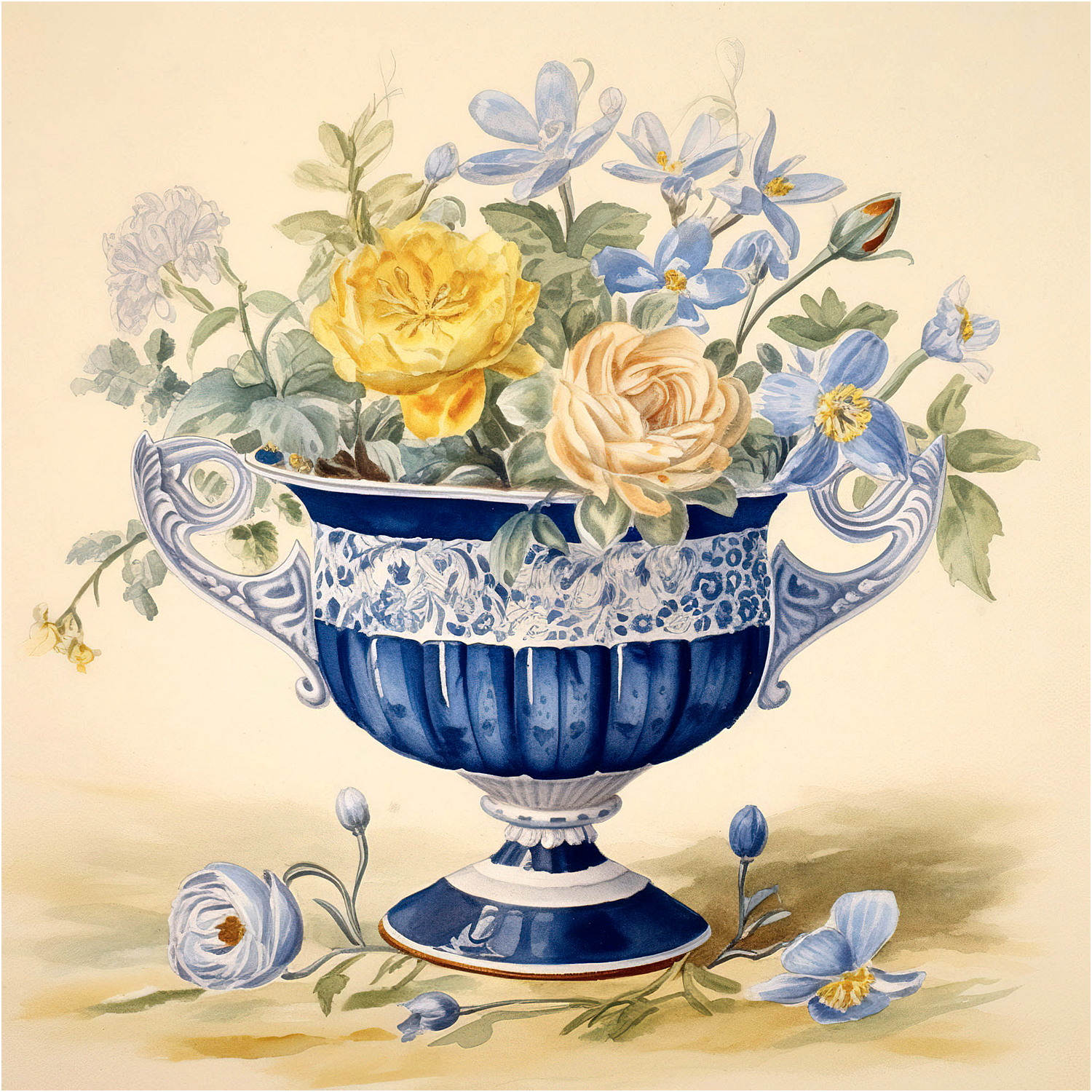
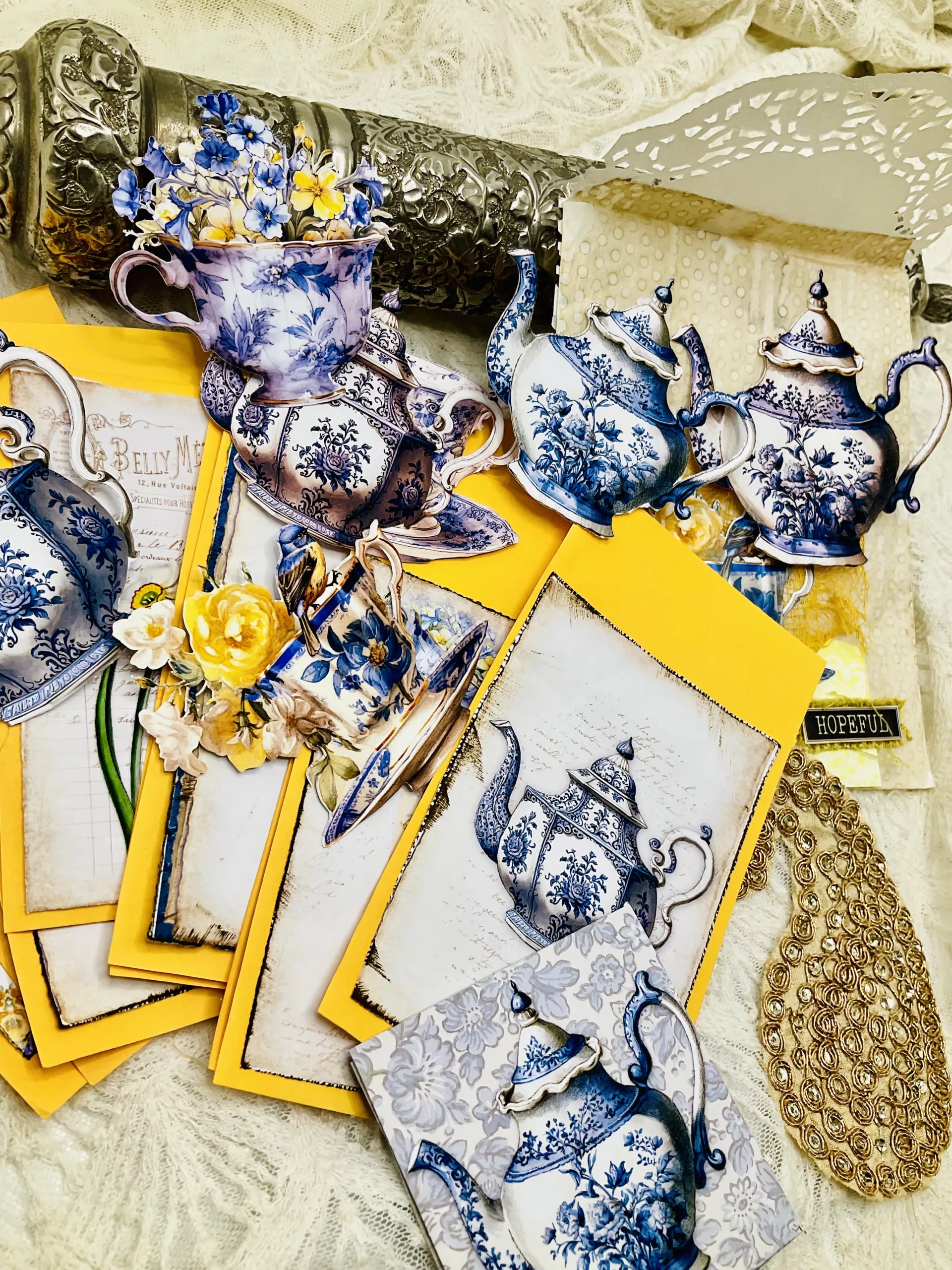
To create a focal point, I layered blue Chinoiserie imagery with warm yellow floral accents and vintage embellishments. The contrast between the cool blues and warm tea-dyed papers became one of my favorite parts of the design.
I wanted the cover to feel like a forgotten treasure discovered in an antique writing desk.
A Look Inside the Journal
Tea-Dyed Pages
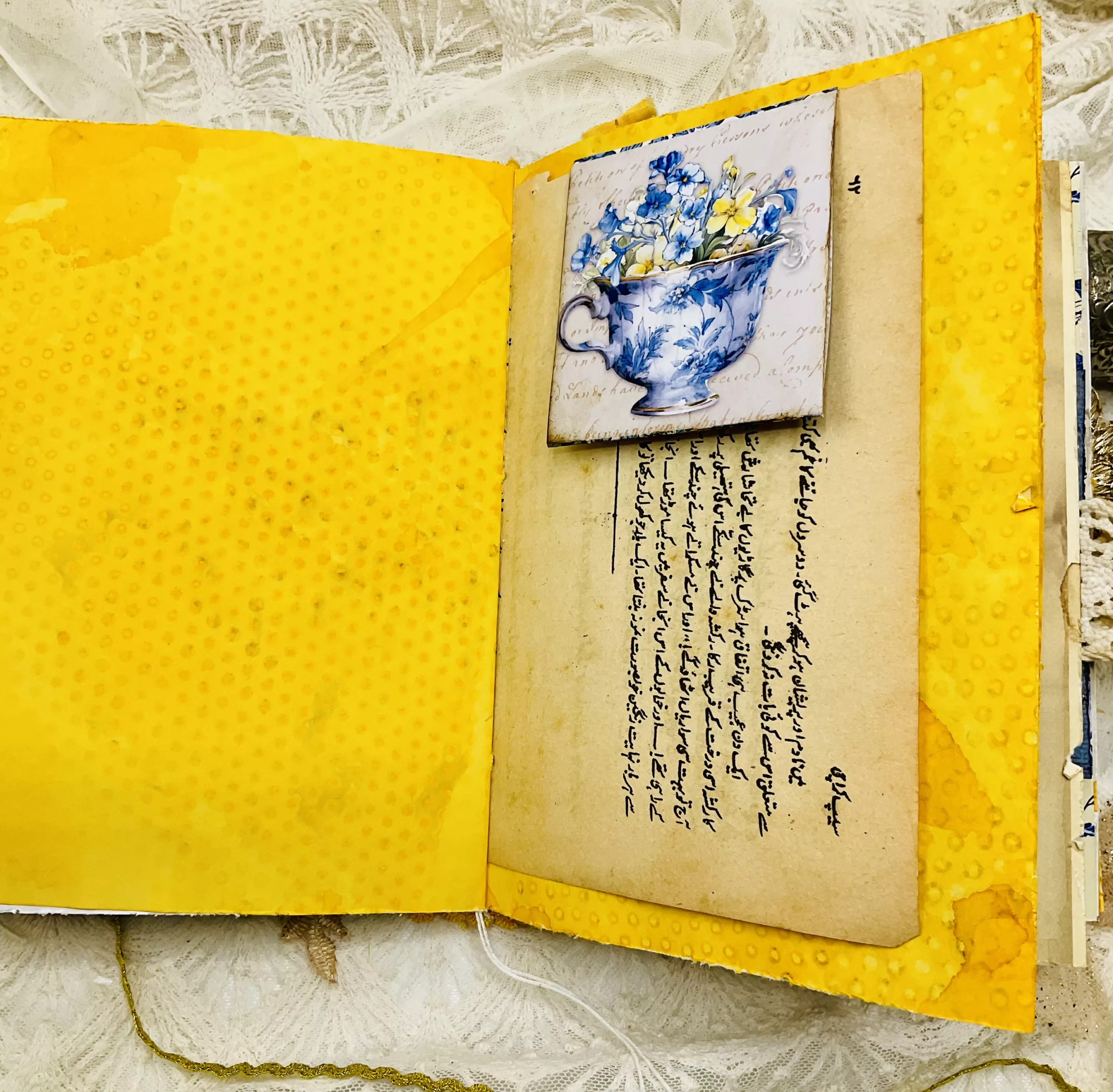
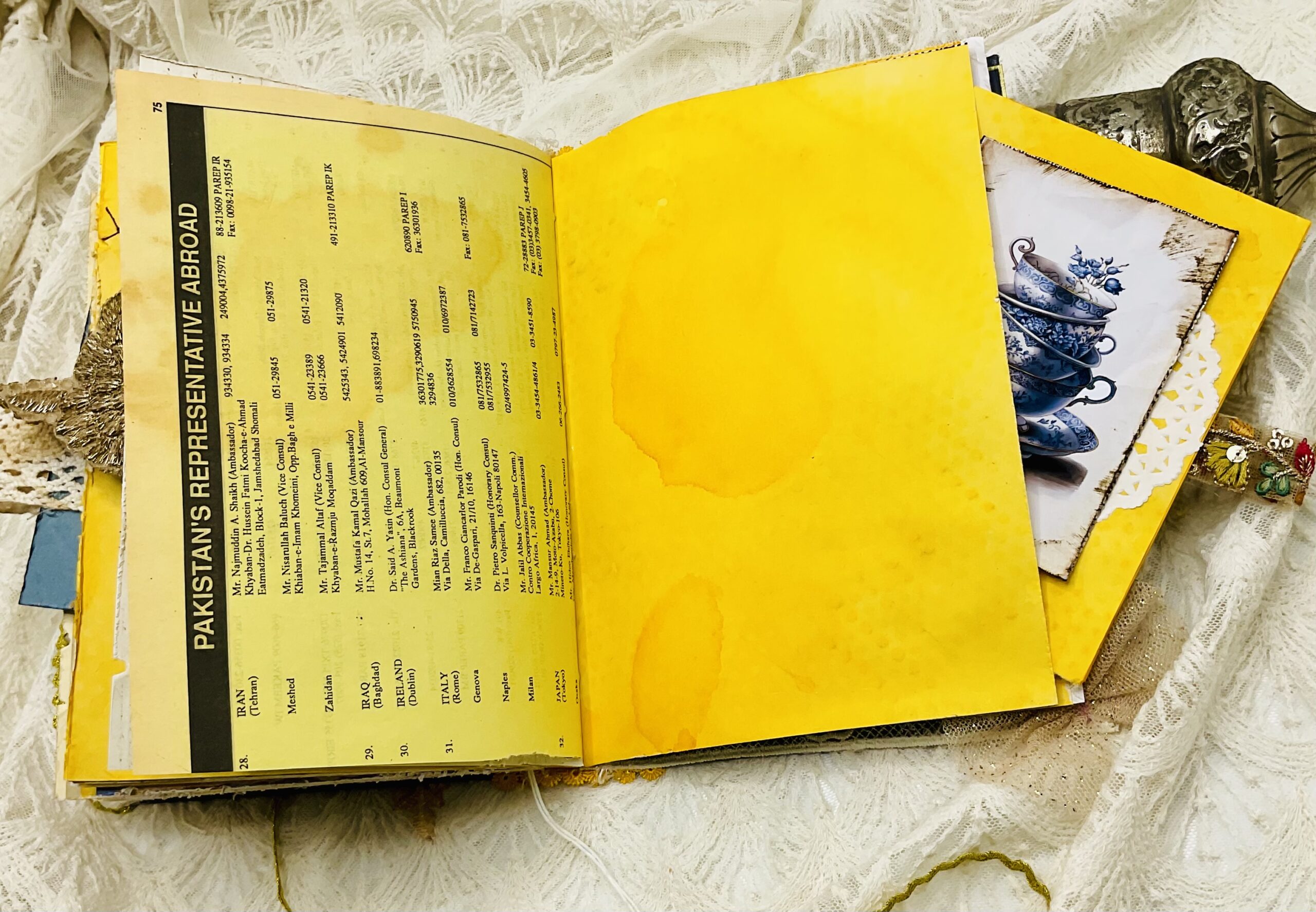
Throughout the journal I used tea-dyed papers to create warmth and visual continuity.
The soft golden tones help balance the cool blue imagery while reinforcing the vintage aesthetic.
Pockets and Tuck Spots
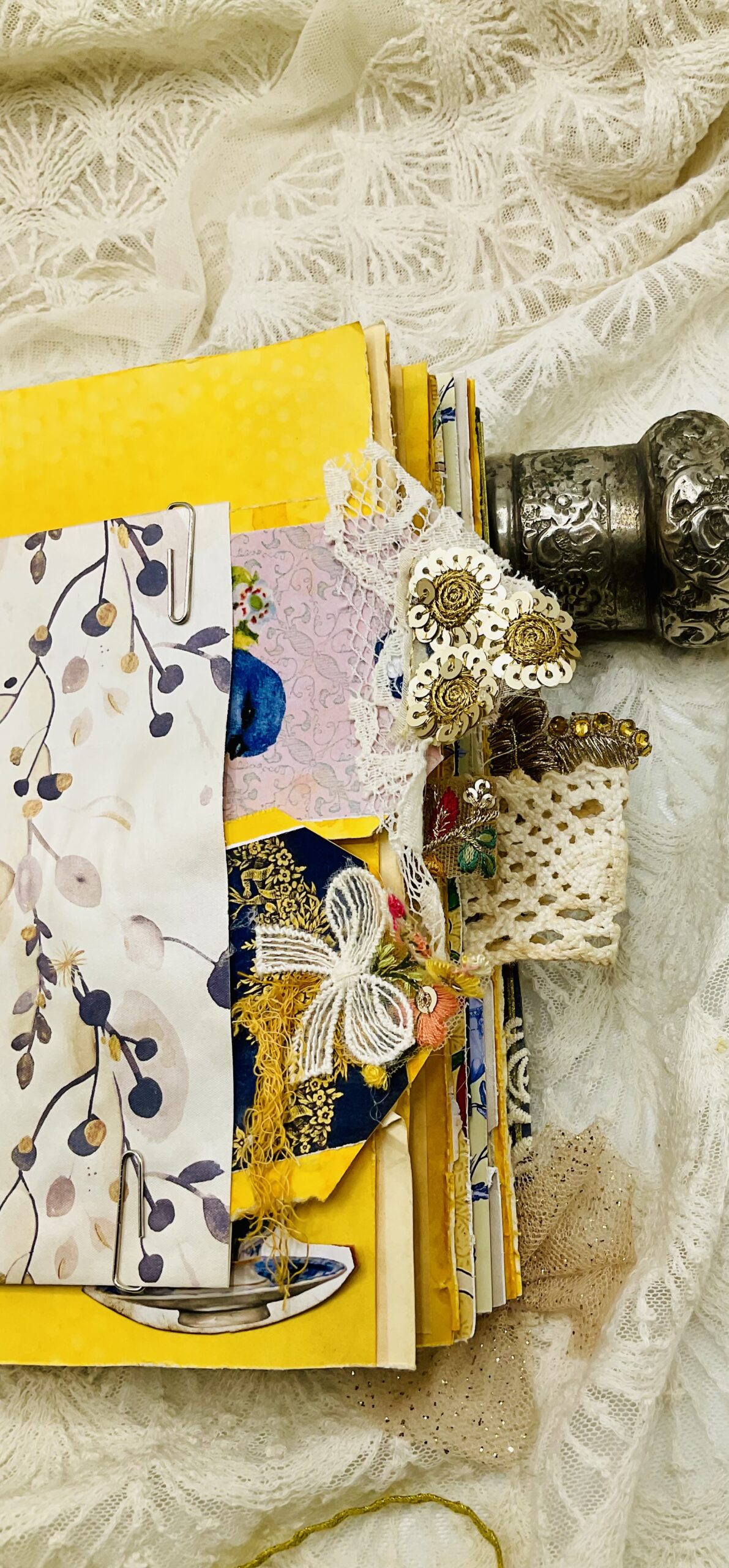
Several pages include decorative pockets and tuck spots designed to hold:
- Journal cards
- Notes
- Photographs
- Memorabilia
These interactive elements add both functionality and opportunities for personal storytelling.
Journal Cards and Ephemera
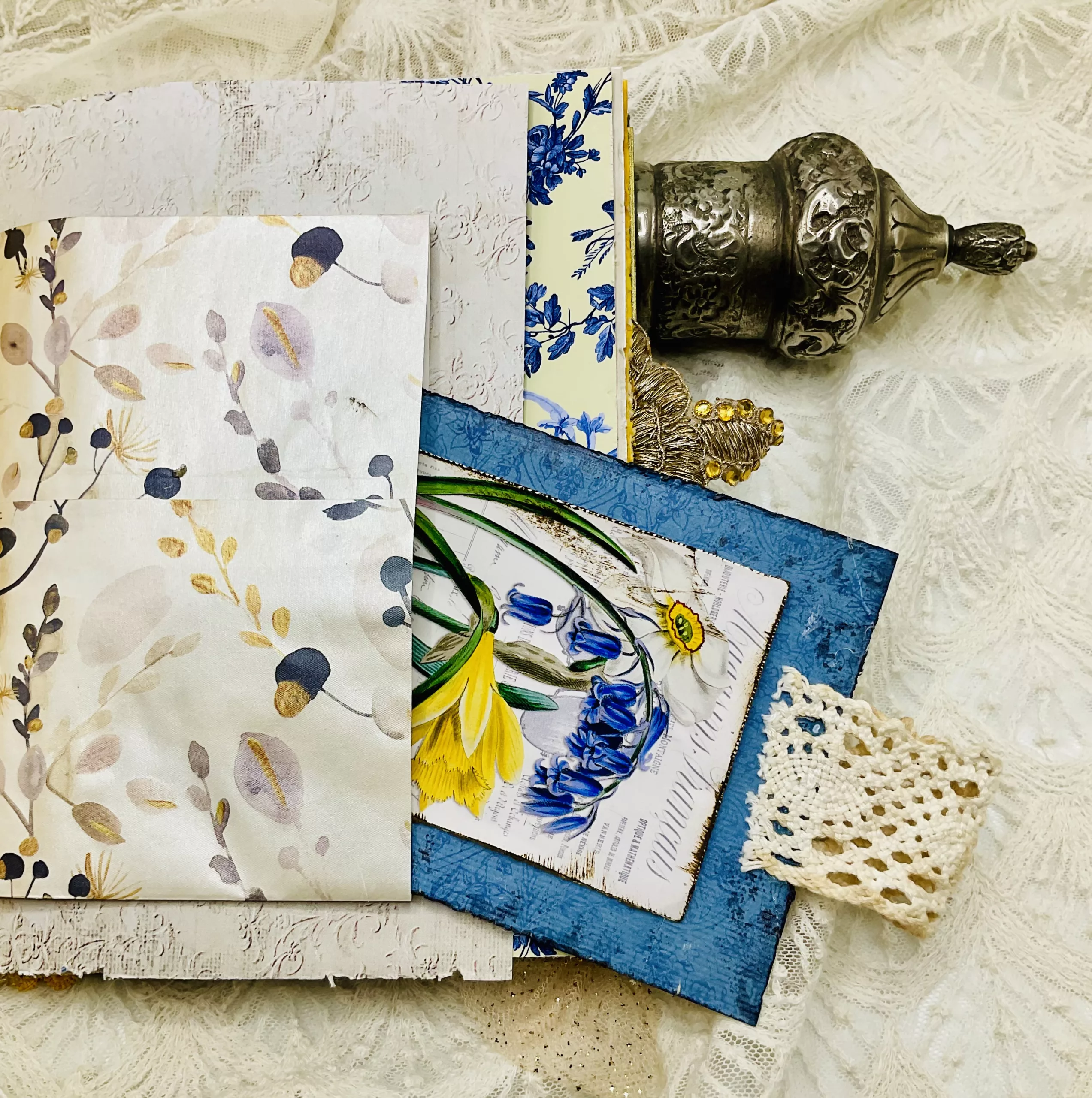
The journal contains multiple removable cards featuring botanical artwork and Chinoiserie-inspired imagery.
These pieces can be used for journaling, memory keeping, or decorative layering.
Lace and Texture
Vintage lace appears throughout the journal to add softness and dimension.
Layering fabric, lace, and paper helps create the collected, handmade look that I love in vintage journals.
Why Blue and Yellow Work So Well Together
One of the most successful aspects of this project was the color palette.
Traditional Chinoiserie imagery often features blue and white porcelain-inspired artwork. Rather than pairing those designs with plain white papers, I chose warm tea-dyed pages to soften the overall look.
This combination creates:
- Strong visual contrast
- Vintage character
- Warmth and softness
- A handcrafted appearance
The blue brings elegance while the tea-dyed papers make the journal feel approachable and lived-in.
Techniques Used in This Journal
Tea-Dyeing Paper
Tea-dyeing creates natural aging and beautiful vintage tones.
Layering
Layering papers, lace, and embellishments creates visual richness throughout the journal.
Distressing
Soft distressing around page edges helps unify the design and reduce harsh contrasts.
Collage Clusters
Decorative clusters combine florals, labels, lace, and Chinoiserie imagery to create focal points throughout the journal.
Tips for Creating Your Own Chinoiserie Junk Journal
- Limit Your Color Palette — Focus on blue, cream, white, and warm tea-stained tones.
- Mix Elegant and Rustic Elements — Pair refined Chinoiserie artwork with aged papers and vintage textures.
- Use Plenty of Layers — Layering helps create the richness associated with antique journals.
- Add Interactive Elements — Pockets, tags, and tuck spots increase both beauty and functionality.
- Let the Artwork Shine — Chinoiserie imagery is naturally detailed, so leave some areas uncluttered.
Looking for Coordinated Supplies?
The free Trinketz Kit Builder can help you gather ideas, colors, papers, and embellishments for your next themed journal project.
What I Learned While Making This Journal
This project reminded me how powerful color combinations can be.
The contrast between cool blue porcelain imagery and warm tea-dyed papers created a balance I had not fully appreciated before beginning the journal.
I also discovered how naturally Chinoiserie themes fit into junk journaling. The style already contains the elements many journal makers love: history, elegance, botanical imagery, and storytelling.
Working with vintage printable artwork across different projects has shown me how a single collection can inspire completely different journal styles. If you’d like to see more examples of how I use vintage graphics, layered ephemera, and printable collections in my journals, explore my Graphics Fairy Design Team Projects.
The finished journal feels both decorative and functional—a balance I always strive for in my work.
Final Thoughts on This Chinoiserie Junk Journal
This journal became one of my favorite projects because it combines so many elements I love: tea-dyed papers, vintage lace, layered ephemera, florals, and timeless blue-and-white artwork.
If you’re looking for a junk journal theme that feels elegant, historical, and endlessly inspiring, Chinoiserie is a wonderful place to begin.
Whether you use antique-inspired printables, tea-dyed papers, or vintage ephemera, the style offers countless opportunities for creative exploration.
Watch the Full Journal Flip Through
Watch the complete flip-through to see:
- Every page
- Interactive elements
- Hidden pockets
- Journal cards
- Decorative details
Related Articles
- How to Make Tea-Dyed Paper for Junk Journals
- Beginner Junk Journal Ideas
- Vintage Floral Journal Inspiration
- Journal Cover Design Ideas
- Chinoiserie Ephemera and Printables
Create Your Own Vintage Journal
If you enjoy vintage journaling, tea-dyed papers, printable ephemera, and creative paper crafting, explore more inspiration at Trinketz.
- Browse Journal Inspiration
- Explore Creative Tutorials
- Watch More Flip Through Videos
- Try the Free Trinketz Kit Builder
What Is a Junk Journal? A Gentle Journey into Creative Memory Keeping
Author: Savera | Updated August 2025 | 5 Minute Read
Quick Answer
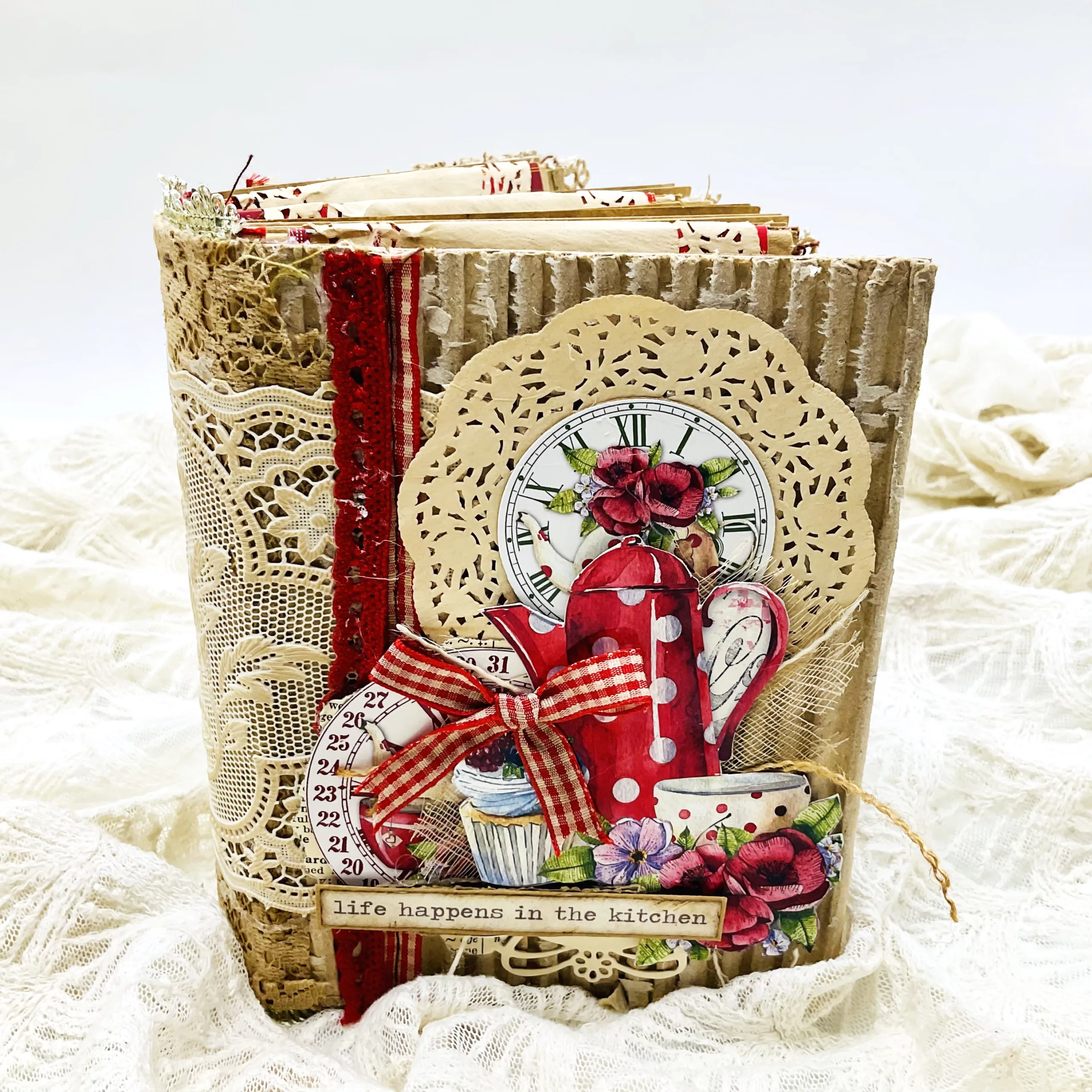
a junk journalis a handmade journal created using recycled papers, vintage ephemera, book pages, packaging, fabric scraps, photographs, and personal keepsakes. Unlike traditional notebooks, junk journals celebrate imperfection and creative memory keeping, transforming everyday objects into meaningful works of art.
In This Guide
- What a junk journal is
- Why people love junk journaling
- How junk journals preserve memories
- How to start your first junk journal
- Supplies you already have at home
- Beginner tips and inspiration
When Paper Holds More Than Words
There’s a quiet magic in the things we almost throw away.
Last evening, as I sorted through old receipts and faded bus tickets, I found myself pausing over a crumpled wrapper from mithai we’d shared during Eid. The gold foil had dulled, but somehow it still carried the sweetness of that afternoon — the sound of laughter spilling from the courtyard, the way the light fell through the jaali work on our veranda.
I smoothed it gently between my fingers, this small witness to joy, and knew it belonged somewhere more sacred than the dustbin.
That somewhere, I’ve learned, is what we call a junk journal.
If you’ve ever pressed a flower between book pages, or kept a love letter until its edges softened with time, you already understand. Some moments ask to be held, not just remembered.
And sometimes, our hearts speak in textures and fragments when words feel too small.
What This Gentle Space Will Share
- How handmade vintage journals become vessels for the soul
- Why junk journals for beginners feel like coming home to yourself
- The tender art of how to start a junk journal with what surrounds you
- How memory keeping creatively becomes a form of prayer
The Poetry of Discarded Things
A junk journal breathes differently than other books.
It’s a gathering place for forgotten beauty — tea stains that map lazy Sunday mornings, envelope corners softened by time, pages from old books that whispered stories before finding new ones within your hands.
Unlike the crisp lines of bullet journals or the posed perfection of scrapbooks, these handmade companions embrace the imperfect.
Here, a torn photograph finds its place beside dried jasmine petals.
Here, your grandmother’s recipe, written in careful Urdu script, lives next to ticket stubs from the film that made you cry.
It’s memory keeping creatively — not as documentation, but as devotion.
Each page becomes a small altar to the moments that shaped you, however quietly.
Why Your Heart Already Knows This Craft
For those drawn to junk journals for beginners, there’s something deeply familiar about this practice.
Perhaps it’s the way our mothers saved pretty packaging, or how we naturally collect shells from childhood beaches. This gentle craft honors that instinct to gather what matters.
The beauty lives in the undemanding nature of it all.
Your tea-dyed paper journal doesn’t ask for perfection — it asks for presence. A crooked line of text becomes calligraphy when it carries your truth. A coffee ring transforms into a perfect circle of memory when it holds the essence of a morning conversation with a dear friend.
There are no templates here.
No pressure.
Just you, your collected treasures, and the quiet companionship of creating something entirely your own.
A Memory Wrapped in Monsoon Paper
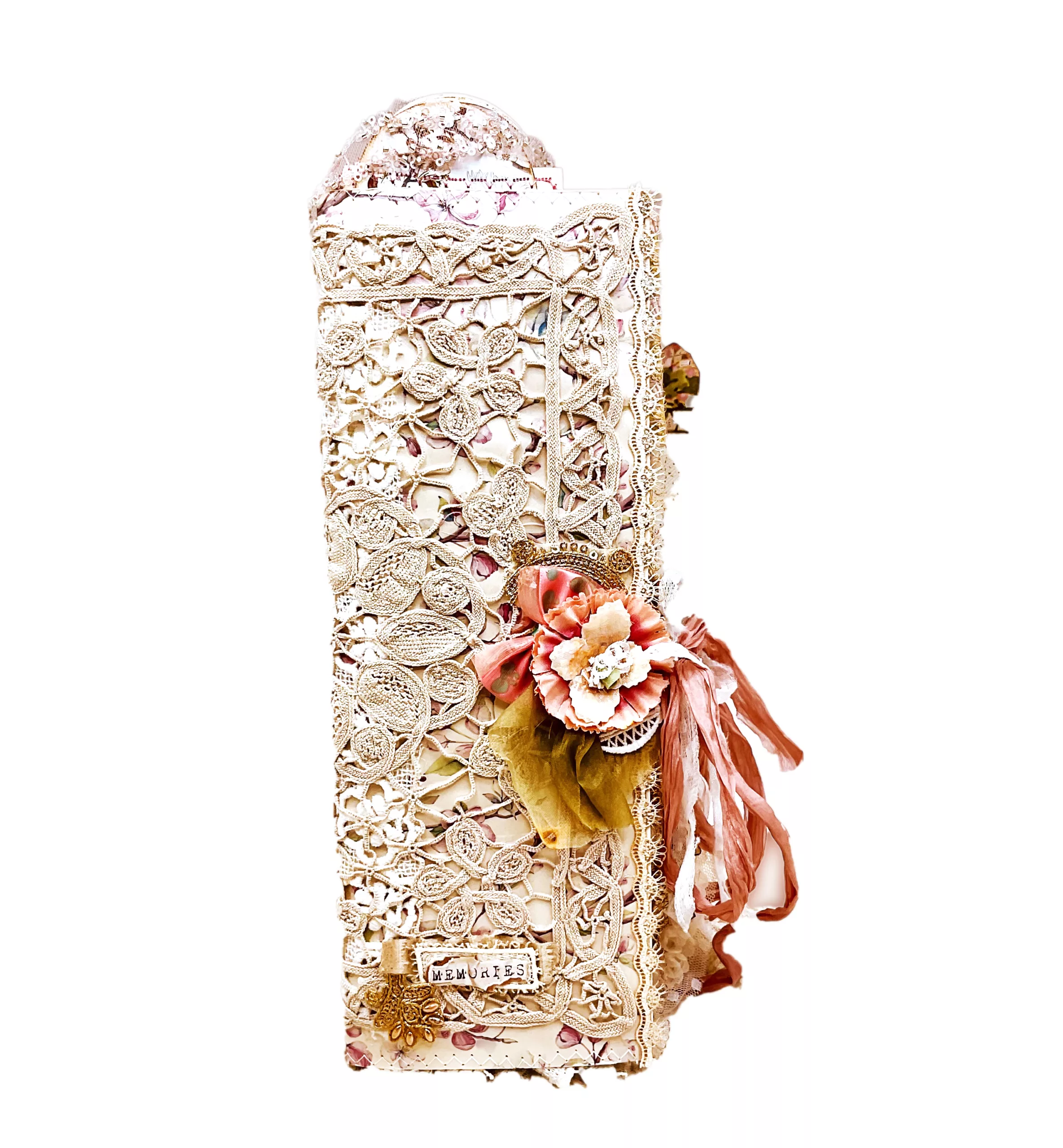
My first page emerged during last year’s monsoon, when the rain drummed softly against our windows for days.
I’d been saving scraps in a small wooden box — a piece of my dupatta that caught on a rose bush, a pressed marigold from the flower market, the corner of a page from an old poetry collection.
With the sky weeping silver outside, I spread these fragments on my low table and began.
No plan. Just trust.
The marigold found its home next to a line from Ghalib, written in my clumsy hand. The dupatta thread wove around words I’d whispered to myself during a difficult week:
“Even broken things can be beautiful.”
When I finished, I realized I hadn’t just made a page. I’d made peace with that season of my life.
How to Start a Junk Journal
Supplies You Already Have
- Old notebooks
- Scrap paper
- Tea-dyed paper
- Vintage book pages
- Envelopes
- Magazine cutouts
- Fabric scraps
- Glue stick
- Scissors
Beginner Steps
- Gather meaningful paper pieces.
- Choose a notebook or journal base.
- Create your first page without overthinking.
- Add keepsakes, photographs, and handwritten notes.
- Let the journal evolve naturally.
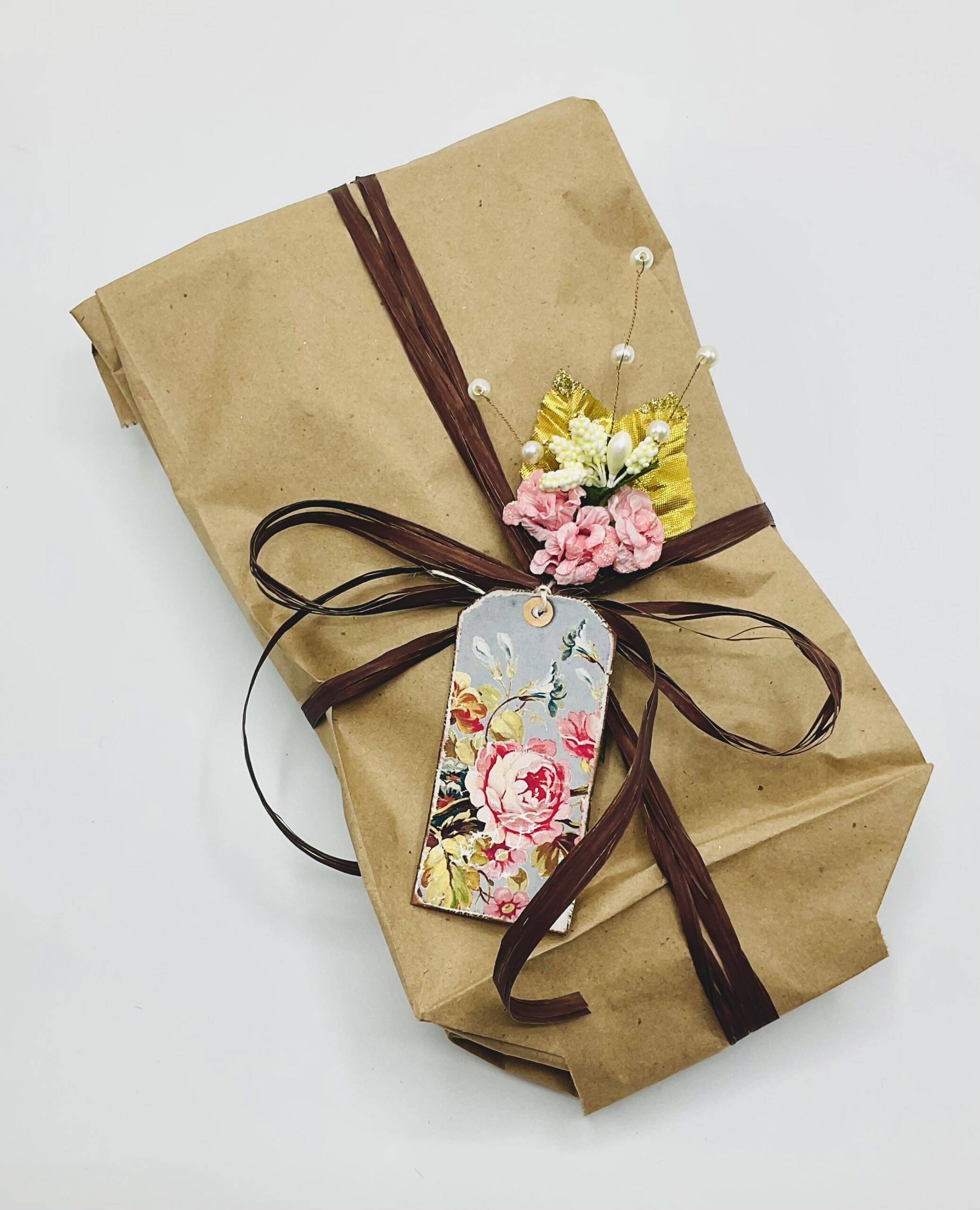
Frequently Asked Questions
What is a junk journal used for?
Junk journals are used for creative memory keeping, storytelling, journaling, art, scrapbooking, and preserving meaningful keepsakes.
Can beginners make junk journals?
Absolutely. Junk journaling is one of the most beginner-friendly paper crafts because there are no strict rules.
What can I put in a junk journal?
Photographs, tickets, letters, pressed flowers, packaging, lace, book pages, tea-dyed paper, tags, and personal mementos.
Do I need expensive supplies?
No. Most junk journals begin with recycled materials already found around the home.
Key Takeaways
- Junk journals preserve memories through paper and ephemera.
- Imperfection is part of the beauty.
- Beginners can start with supplies they already own.
- Everyday objects often become the most meaningful journal elements.
- Creative memory keeping connects stories, emotions, and experiences.
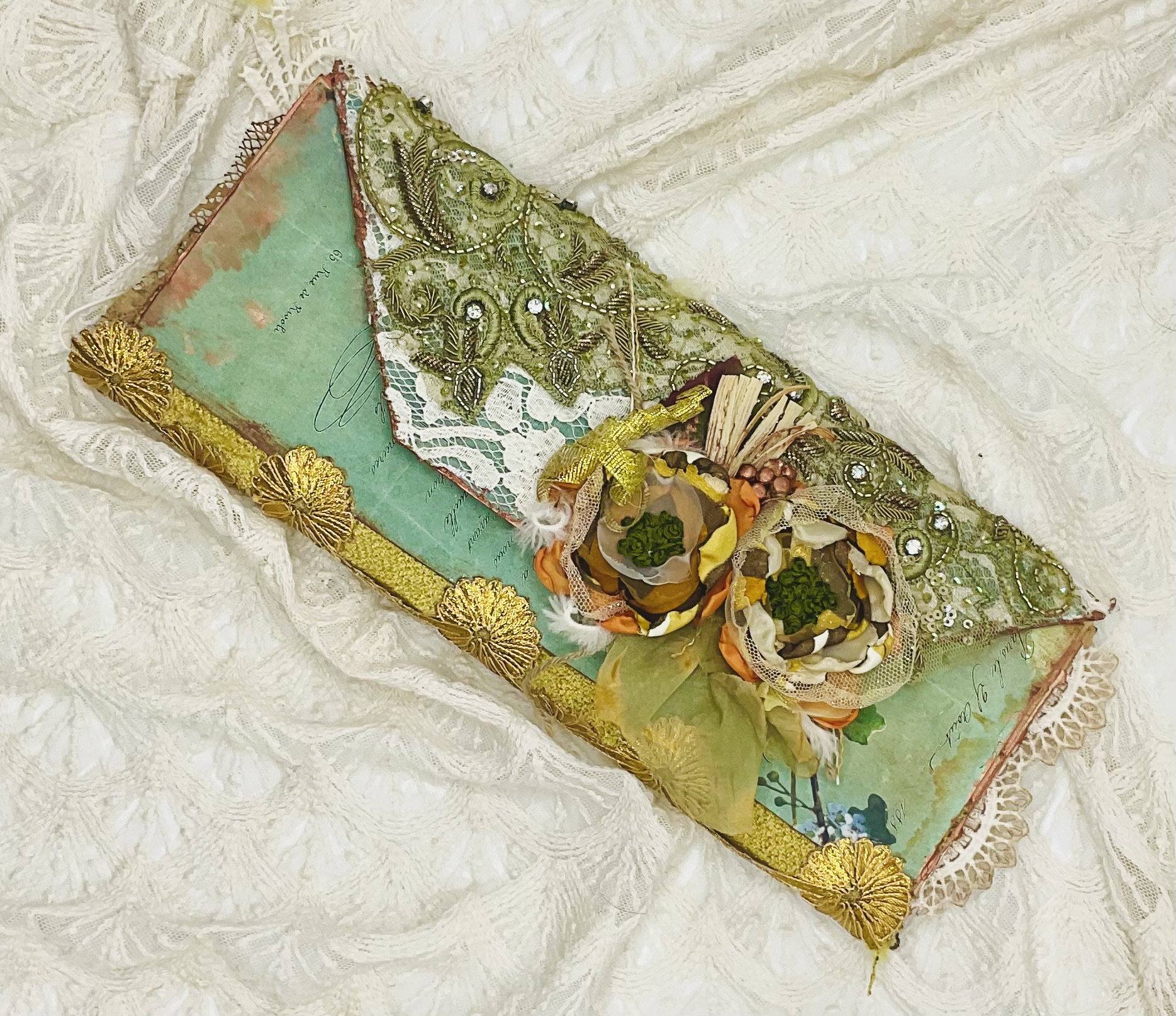
A Soft Beginning Awaits
If these words have stirred something in your creative soul, perhaps you’re ready to begin your own journey into vintage-inspired junk journaling.
After years of creating handmade junk journals, I designed the Trinketz Kit Builder specifically for journal makers who want cohesive vintage collections and printable aesthetics.
The path of memory keeping creatively begins not with perfect supplies, but with a willing heart and the small treasures that surround you each day.
Your story is already beautiful — now you have a way to hold it gently.