
Author: Savera | Updated March 2026 | 12 Minute Read
How to Make Time for Creativity in a Busy Life
Quick Answer
You don’t need hours of free time to keep a creative practice alive. Even 10–15 minutes of intentional creative time — truly intentional, not squeezed in with one eye on the clock — can bring you back to yourself. It can help you preserve memories, stay connected to making, and remember who you are outside of everything you are responsible for. The secret isn’t a system. It’s a gentle rhythm. A return, rather than a restart.
In This Guide
- Why creativity often disappears during busy seasons
- The concept of a Handmade Hour
- Tiny creative rituals that fit into daily life
- A simple weekly rhythm for makers
- How to build a sustainable creative practice
- Returning to creativity without guilt
The Night My Handmade Hour Was Born
There are nights when the house finally exhales.
The dishes are done. The children are settled. The noise of the day — all of it — loosens its grip a little.
It was on one such night that I found my Handmade Hour.
Not because I planned it. Not because I read about it somewhere and decided to implement it like a productivity strategy. It arrived the way all the best things arrive — quietly, when I wasn’t looking.
I had just put away the last of the dinner things. The kitchen light was warm. I could hear the ceiling fan turning slowly in the next room. And something in me said: go to the craft table.
So I did.
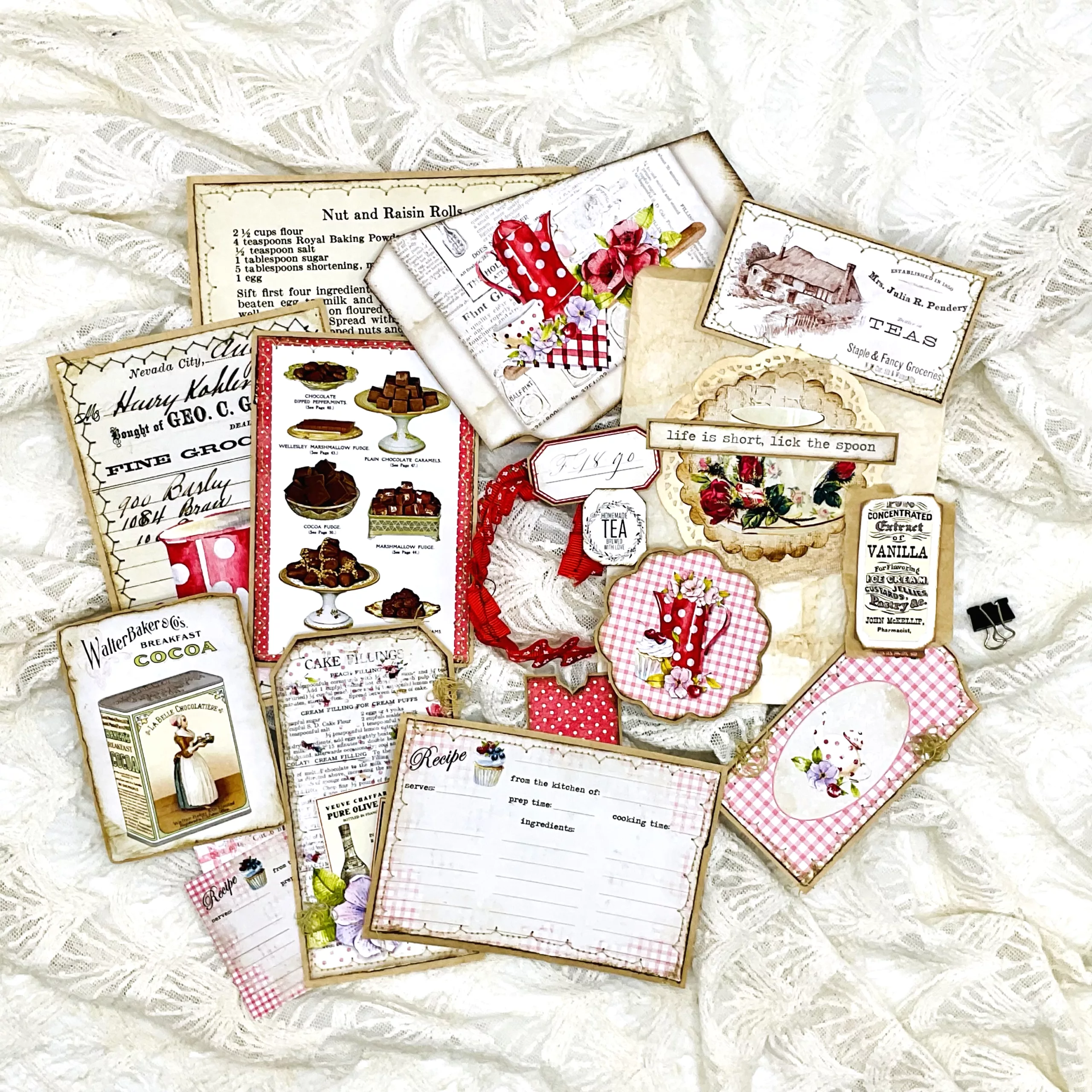
My tea-dyed pages were waiting where I had left them three days earlier. A handful of scraps. A candle I had been meaning to light for a week. And I sat down — not to be productive, not to finish something — just to be there.
For the first time all day, I felt like myself.
Not a mother running through a mental checklist. Not a lawyer parsing language. Not a list of things left undone.
Just a person making something beautiful with her hands.
That is what I have come to call my Handmade Hour. And it changed things for me in ways I am still discovering.
Why We Struggle to Make Time for Creativity
Most of us who love making don’t stop because we stop loving it.
We stop because life gets full.
Work fills in around the edges of everything else. Family needs arrive in waves, sometimes all at once. Responsibilities have a way of expanding to fill whatever space you thought you had.
And slowly, without meaning to, we start telling ourselves things like: I don’t have time right now. I’ll start again when things are calmer. I’ll go back to it when I have a proper stretch of hours.
But here is the thing I have learned — and it took me a long time to learn it properly: life does not get calmer on its own. The stretch of hours doesn’t appear from nowhere.
Creativity survives because we choose to make space for it. Small space, imperfect space, stolen space — it doesn’t matter. What matters is that we show up for it, even briefly.
I think of the women I know who create. The ones who are raising children, caring for parents, working full-time, managing households that never quite stay managed. They are not creating in ideal conditions. They are creating in the margins. And the work they make in those margins is some of the most beautiful, most honest work I have ever seen.
What Is a Handmade Hour?
A Handmade Hour is not necessarily sixty minutes.
I want to say that clearly, because the name might suggest you need a full hour — and if you’re reading this in a season of life where sixty uninterrupted minutes feels impossible, I don’t want you to set this aside before you’ve even begun.
A Handmade Hour is a dedicated pocket of creative connection.
Some days it’s sixty minutes. Some days it’s thirty. Some days — during the school holidays, during the months when everything layers on top of everything else — it’s fifteen minutes while the chai is still hot and the house is quiet enough.
The length matters far less than the intention.
What makes it a Handmade Hour is that you have decided: this time is for making. Not for planning making. Not for watching videos about making. For actually sitting down with your hands and your materials and your pages.
It is simply a recurring moment of return. A place you come back to, so you never quite lose yourself entirely.
Tiny Creative Rituals for Busy Days
You do not need a clear afternoon. You need small opportunities — and the willingness to take them.
Over the years I have learned to find these pockets where they exist, rather than waiting for them to arrive in a form I planned for.
The Dawn Whisper
Before the house wakes fully — or while the chai is brewing, which in my house amounts to the same thing — there is a small window. Sometimes it is only three minutes. I use it. I add one element to a page that’s been sitting open. I tuck in one photograph. I write one line in the margin. Three minutes is not nothing. Over a week, those three-minute moments make something real.
The Afternoon Pause
During the quieter part of the afternoon, when the heat settles over the city and everything slows a little, I might sort ephemera. Organise the scraps I’ve been gathering into a tin. Flip through a printable sheet and fussy-cut one or two things I’ve been meaning to use. Small actions like this keep the practice warm. They keep me connected to it, so I never feel I am starting from scratch.
The Evening Return
This is my favourite. After dinner, after the children, after everything — I come back to the craft table. Not always for long. But I come back. I journal for ten minutes. I add a keepsake from the day. I sit with whatever is in front of me and I give it a little time. Creative rituals thrive in the transitions between things. In the spaces between one responsibility and the next. That is where you will find your Handmade Hour, if you go looking.
A Gentle Weekly Rhythm
One reason creative habits fall apart is that we expect every session to look the same. We expect the same energy, the same amount of time, the same quality of focus. And when a session doesn’t match the ideal we’ve built in our heads, it feels like failure.
It isn’t failure. It’s just Tuesday.
What has helped me more than anything is giving different days different intentions. Not rules — intentions. Something gentle to reach toward, not something to measure myself against.
Sunday: Gather
This is the day I collect. Photographs from the week. A note I meant to save. A flower market find, still wrapped in its newspaper cone. A ticket, a label, a piece of packaging that was too beautiful to throw away. Sunday is for gathering without pressure to use anything yet.
Monday–Thursday: Create Lightly
Short sessions. No deadlines. No expectations about how much should be finished. Just showing up and adding something. One layer. One page. One thing.
Friday: Finish
I try to bring something to a close on Fridays. Complete a spread. Add the final touches to a page I’ve been working on through the week. There is something satisfying about ending the week with something finished — even something small.
Saturday: Appreciate
I look at what I’ve made. I photograph pages. I share if I feel like sharing. I celebrate the week’s small things without waiting for them to be grand things.
Creating a Space That Invites Creativity
One of the simplest things you can do to protect a creative practice is to make it visible.
When your supplies are tucked away in a cupboard — when you have to get everything out before you can begin and put everything away before you can feel finished — the barrier to starting becomes much higher than it needs to be.
My craft table is always set up. Not perfectly, not tidily, but set up. My tea-dyed papers are in a stack where I can see them. My scissors and a favourite pen are always nearby. There is almost always a current project somewhere in a visible state of in-progress.
This matters more than it sounds like it should. Because when you sit down for a fifteen-minute pocket of making, you want to be making within seconds, not still getting organised five minutes in.
Some things that help: a dedicated tray where current supplies live, a small basket of go-to materials that doesn’t need to be unpacked and repacked, a portable project pouch if you move between rooms. Whatever makes it easy to pick up where you left off — that is your creative infrastructure. It doesn’t need to be beautiful (though it can be). It just needs to work.
The easier it is to begin, the more often you will begin.
How to Stay Consistent Without Burnout
I have watched so many creative people — women I admire deeply — approach their practice the way they approach everything else in their lives: with the expectation that consistency means doing the same thing, the same way, with the same intensity, every single day.
And then they burn out. Or they have a hard week and miss several days and feel so far behind that starting again feels harder than just stopping.
I understand this. I have lived it.
Here is what I have come to believe instead:
Think Relationship, Not Routine
Creativity is something you return to. It is not something you complete. You would not tell a friendship it had failed because you went a week without speaking. You would simply call again. Your creative practice deserves the same understanding.
Lower the Bar — Genuinely Lower It
One page. One photograph. One sentence in the margin of your journal. That is enough. Not as a minimum before you allow yourself to do more — as the complete goal for the day. Let that be enough and mean it.
Keep Returning
Missed a day? Return. Missed a week? Return. Missed three months because life became something you did not plan for? Return. There is no penalty for beginning again. The journal does not keep score. The pages do not remember how long you were away. They simply wait, exactly as you left them, ready for whenever you come back.
Frequently Asked Questions
How much time do I need to start a journaling practice?
Genuinely — five to fifteen minutes is enough to begin. You don’t need a full afternoon. You need a cup of chai, a quiet corner, and the decision to sit down. Start there. Everything else comes from showing up even briefly, consistently.
What if I’m too busy to create every day?
Then don’t create every day. A weekly rhythm — even two or three times a week — is far more sustainable than an ambitious daily goal that collapses the moment life gets full. Consistency over time matters more than frequency in any given week.
How do I make creativity into a habit when I keep stopping and starting?
Stop expecting yourself to be perfect at it. Habits aren’t built by never breaking them — they’re built by always returning. Keep your supplies visible and accessible. Lower the bar for what counts as a creative session. And be genuinely kind to yourself when you miss days. Harsh self-talk is one of the fastest ways to make creativity feel like a chore.
What should I do during a short creative session when I don’t have a specific plan?
Add one thing. One memory. One photograph. One piece of ephemera you’ve been meaning to use. One decorative element. One line in your journal about what this particular week has felt like. You don’t need a plan — you just need a starting point, and the smallest action is always enough to be a starting point.
Isn’t taking time for creativity a bit selfish when there’s so much else to do?
No. I feel strongly about this. A creative practice is not something we steal away to at the expense of the people we love. It is something that helps us show up for the people we love — more fully, more patiently, more like ourselves. When I have spent even fifteen minutes making something, I am gentler. I am calmer. The rest of my day goes better. That is not selfishness. That is self-knowledge.
Key Takeaways
- You do not need large amounts of free time — small creative rituals are genuinely powerful.
- A Handmade Hour can be any amount of intentional creative time, however brief.
- Weekly rhythms tend to work better than strict daily goals for real, sustainable creative life.
- Making your supplies visible and accessible removes the biggest barrier to beginning.
- Returning — always returning — matters far more than perfection.
An Invitation to Begin
What if you gave yourself fifteen minutes this week?
Not to be productive. Not to achieve anything measurable. Not to create something worth sharing.
Just fifteen minutes to sit with your materials, your tea, your pages — and make something for no other reason than that making things is one of the ways you know yourself best.
Your Handmade Hour doesn’t need to look a certain way. It doesn’t need to happen at the same time every day or produce anything impressive. It simply needs to exist — a small recurring pocket of creative life that you protect because it protects something in you.
Because creativity isn’t something we earn once everything else is finished. It is often the very thing that makes everything else possible.
After years of making handmade junk journals from the materials around me — tea-dyed pages, my grandfather’s old papers, wedding invitation envelopes from the markets in Rawalpindi — I built the Trinketz Kit Builder to help journal makers like you create cohesive vintage collections and find your own creative rhythm.
Related Articles
- The Art of Tea-Dyeing and Texture Making: A Ritual for Slowing Down
- What Is a Junk Journal? A Gentle Journey into Creative Memory Keeping
- When Paper Becomes Spiritual Healing
About the Author: Savera