
Category: Tutorials & Techniques
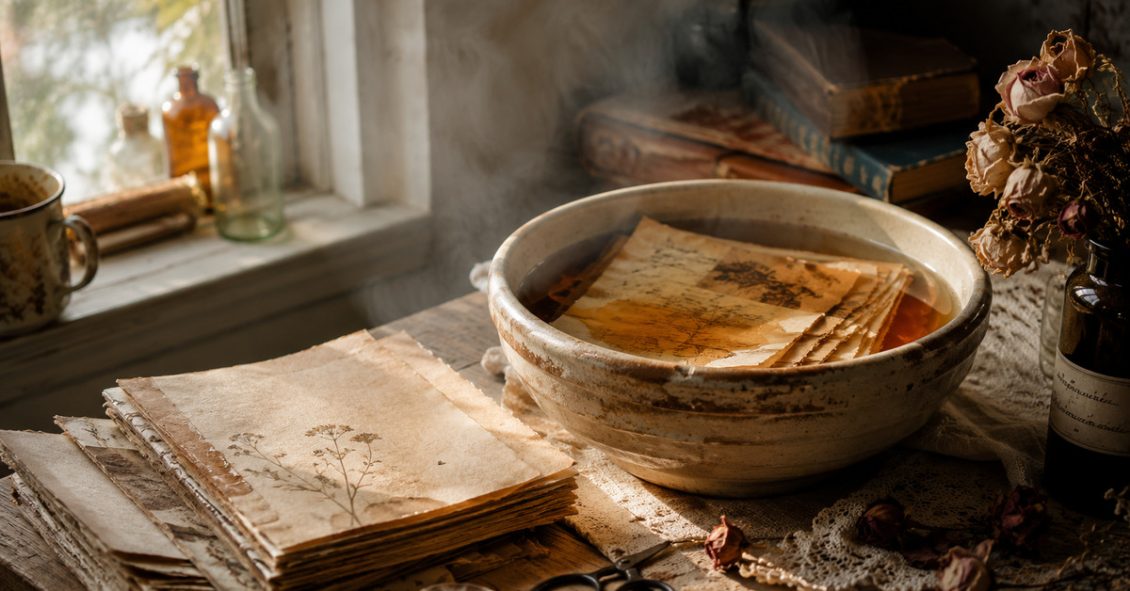

The Art of Tea-Dyeing and Texture Making: A Ritual for Slowing Down
Author: Savera | Updated February 2026 | 9 Minute Read
How to Create Beautiful Tea-Dyed Paper for Junk Journals and Vintage Crafts
Quick Answer
Tea-dyeing paper is a simple technique that transforms plain paper into beautifully aged, vintage-style pages using black tea. Popular among junk journal makers, scrapbook artists, and paper crafters, tea-dyed paper creates rich textures, warm sepia tones, and a timeless handmade appearance perfect for memory keeping and creative projects.
In This Guide
• What tea-dyeing is
• Why junk journal makers love tea-dyed paper
• How to tea dye paper step-by-step
• Ways to add texture and vintage character
• Common mistakes to avoid
• Creative ideas for using tea-dyed paper
When Paper Becomes Poetry
There’s something sacred about the moment when ordinary paper meets tea.
I still remember the first time I watched crisp white pages surrender to amber tones, curling gently as they absorbed the warmth of the liquid. The kitchen filled with the familiar comfort of black tea. But something deeper was happening. A transformation. Something that felt almost magical.
My father collected books throughout his life. Some were treasured family companions I would never dare touch. Others sat quietly on forgotten shelves. Now and then, a neglected page would find its way into my craft supplies, ready for a new beginning.
Years later, many of those papers had naturally aged into beautiful sepia tones.
That’s when I understood.
Tea-dyeing isn’t simply about making paper look old. It’s about honoring the stories paper already holds while preparing it to carry new ones.
For many people beginning their junk journaling journey, tea-dyeing becomes more than a technique. It becomes a ritual. A reminder to slow down. To notice. To create with intention.
Why Tea-Dyed Paper Is So Popular
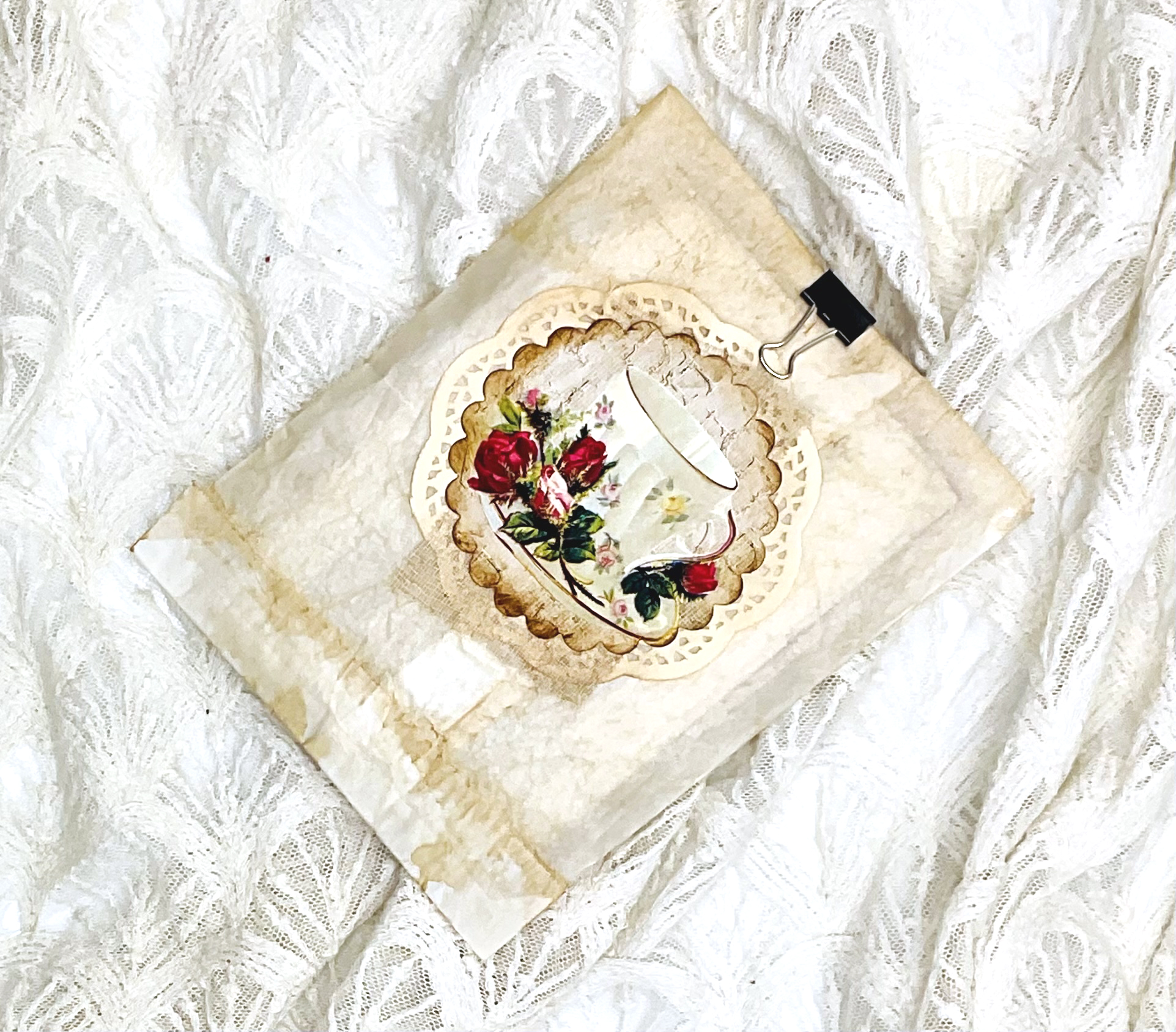
Tea-dyed paper has become a favorite among junk journal makers because it instantly creates warmth and character.
Instead of bright white paper, you get pages that feel:
• Vintage
• Soft
• Weathered
• Timeless
• Handmade
Tea staining also creates natural variations. No two pages are ever exactly alike. The stains, wrinkles, and uneven coloring become part of the charm.
Many journal makers intentionally embrace these imperfections because they create pages that feel authentic and lived-in.
How to Tea Dye Paper
There is something magical about watching plain paper slowly transform. The tea spreads unevenly. The edges darken. The fibers wrinkle and soften. And suddenly, something ordinary begins to feel like it belongs to another time.
Tea dyeing has never been just a technique for me. It is a quiet ritual. A reminder that beauty often arrives slowly.
Supplies You’ll Need
• 2–3 black tea bags
• Hot water
• Shallow baking dish or tray
• Plain paper or book pages
• Drying rack or baking tray
• Towels for cleanup
Step 1: Brew a Strong Tea Bath
Place the tea bags in a shallow dish. Pour hot water over them and allow them to steep until the water becomes a rich amber color. The darker the tea, the deeper the vintage effect.
Step 2: Let the Tea Cool Slightly
Allow the tea mixture to cool before placing paper into it. Warm tea works best because it helps prevent tearing delicate pages.
Step 3: Soak the Paper
Gently place the paper into the tea bath. Allow it to soak for several minutes.
For lighter vintage effects: 2–3 minutes
For darker antique tones: 5–10 minutes
Trust your eyes more than the clock. Every paper reacts differently.
Step 4: Dry the Pages
Carefully remove each sheet and place it on a drying rack.
You can dry paper:
Naturally — Sunlight, warm room, air drying
In the Oven — Low heat, short periods, close monitoring
Oven drying often creates darker tones and additional texture.
Step 5: Embrace the Imperfections
As the paper dries, wrinkles, stains, and uneven coloring will naturally appear. These aren’t mistakes. They’re part of what makes each page unique.
The stains won’t be even. Some pages will wrinkle more than others. Some corners may darken unexpectedly.
Let them. Those imperfections are what make tea-dyed paper feel alive. Much like our own stories, the beauty often lies in the places we didn’t plan.
Adding Texture and Character
Tea-dyeing creates color. Texture brings the page to life.
Try experimenting with:
Fabric Impressions — Lay lace or muslin over damp paper and allow the fibers to leave their quiet mark.
Cinnamon — Dust lightly for warmth and an old-world scent.
Pressed Flowers — Leave botanical impressions and natural organic shapes.
Vintage Doilies — Create delicate lace-like patterns.
Coffee Granules — Add darker speckles and aged effects.
Crumpling — Lightly crumple paper before staining for antique wrinkles.
The Beauty of Slow Making
What I love most about tea dyeing isn’t the finished page. It’s the pace. The quiet waiting. The gentle surprise of watching plain paper transform into something that feels cherished and old.
Tea dyeing reminds me that beautiful things rarely arrive in a hurry. You cannot rush the soaking. You cannot predict every stain. You cannot control every wrinkle or weathered edge.
And perhaps that is exactly where the magic lives. Each page dries differently. Each mark tells its own story. Each imperfection becomes part of the beauty.
In a world that constantly asks us to move faster, tea dyeing invites us to do the opposite. To slow down. To pay attention. To be fully present with our hands and our thoughts.
And to remember that sometimes the most meaningful creations are not the ones we perfect — but the ones we allow to unfold gently, in their own time.
You Might Be Wondering…
Can I tea dye ordinary printer paper?
Absolutely. Some of my favorite pages began as the simplest sheets of paper. Tea dyeing isn’t about using expensive materials — it’s about transforming something ordinary into something beautiful. Even plain printer paper can become soft, vintage, and full of character with a little patience and creativity.
Which tea works best for tea dyeing?
Black tea is my personal favorite because it creates rich, warm vintage tones that pair beautifully with junk journals. Green tea produces softer earthy shades, while herbal teas can create more subtle variations. There is no perfect choice. Part of the joy lies in experimenting and allowing the paper to surprise you.
Can I use coffee instead of tea?
Yes, absolutely. Coffee creates deeper sepia tones and a slightly different aged appearance. Many journal makers enjoy using both tea and coffee depending on the mood they want to create. Tea feels soft and nostalgic. Coffee feels old, weathered, and wonderfully timeworn.
Why did my paper wrinkle?
Because paper has its own personality. Some sheets wrinkle gently. Others curl dramatically. And honestly, those wrinkles are often my favorite part. They add texture, depth, and the feeling that the paper has lived a life before finding its place in your journal. Imperfection is not a mistake here. It is part of the story.
Can I print on tea-dyed paper?
Yes, once the paper is completely dry. Tea-dyed paper works beautifully for printing journal pages, ephemera, quotes, and vintage designs. The aged background often makes printed elements feel even more meaningful and timeless.
What if my pages don’t turn out perfectly?
Then they may become your most treasured pages. Some stains will spread unexpectedly. Some edges will darken more than others. Some papers may wrinkle in ways you never planned. Let them. Tea dyeing is not about control. It is about embracing the unexpected and finding beauty in the little surprises along the way.
Do I need to be artistic to try tea dyeing?
Not at all. You don’t need perfect techniques. You don’t need expensive supplies. And you certainly don’t need to call yourself an artist. All you need is curiosity. A cup of tea. A few sheets of paper. And the willingness to slow down for a while. Sometimes that is where the most beautiful creativity begins.
Frequently Asked Questions about Tea-Dyeing Paper
What is tea-dyeing?
Tea-dyeing is a simple technique that transforms plain paper into beautifully aged, vintage-style pages using black tea. It creates warm sepia tones, rich textures, and a timeless handmade appearance perfect for junk journals and paper crafts.
What type of paper works best for tea-dyeing?
Uncoated papers work best — plain printer paper, watercolour paper, music paper, and vintage book pages all absorb tea beautifully. Coated or glossy papers resist the tea and won’t colour evenly.
How long should I soak the paper in tea?
For light vintage tones soak for 2-3 minutes. For deeper antique tones soak for 5-10 minutes. Trust your eyes more than the clock — every paper reacts differently.
Can I tea-dye paper at home without special supplies?
Yes — all you need is black tea, hot water, a bowl, and plain paper. Everything else like lace impressions, pressed flowers, and cinnamon are optional extras for adding texture.
How do I stop tea-dyed paper from wrinkling?
Some wrinkling is natural and adds to the vintage character. To reduce wrinkling, press damp pages between heavy books while drying. For a flatter finish dry in the oven on very low heat with close monitoring.
What can I do with tea-dyed paper?
Tea-dyed paper is perfect for junk journal pages, ephemera, tags, envelopes, pocket inserts, scrapbook backgrounds, and vintage-inspired card making.
Key Takeaways
• Tea-dyeing creates vintage-looking paper using simple household materials.
• Every sheet develops unique patterns and textures.
• Additional elements like lace, flowers, and coffee add depth.
• Imperfection is part of the beauty.
• The process encourages slower, more intentional creativity.
A Quiet Invitation
What if this weekend you gave yourself permission to slow down? Not to create something perfect. Not to create something impressive. Simply to create.
A few sheets of paper. A cup of tea. An hour of quiet attention. That’s all this practice asks.
The stories are already waiting. The paper is ready. All that’s missing is your gentle touch.
After years of creating handmade junk journals, I designed the Trinketz Kit Builder to help journal makers create cohesive vintage aesthetics, printable collections, and beautiful journal kits with ease.
Related Articles
• What Is a Junk Journal?
• Tea-Dyed Paper vs Coffee-Dyed Paper
• Beginner Junk Journaling Supplies
• Vintage Texture Techniques
• How to Create Handmade Journal Pages