
Online exhibition
Another Life
The exhibition
Why do some thingsask to be kept?
A wedding envelope. An embroidered fragment. An inherited sheet of typing. A forgotten page, a seed packet, a length of sari silk.
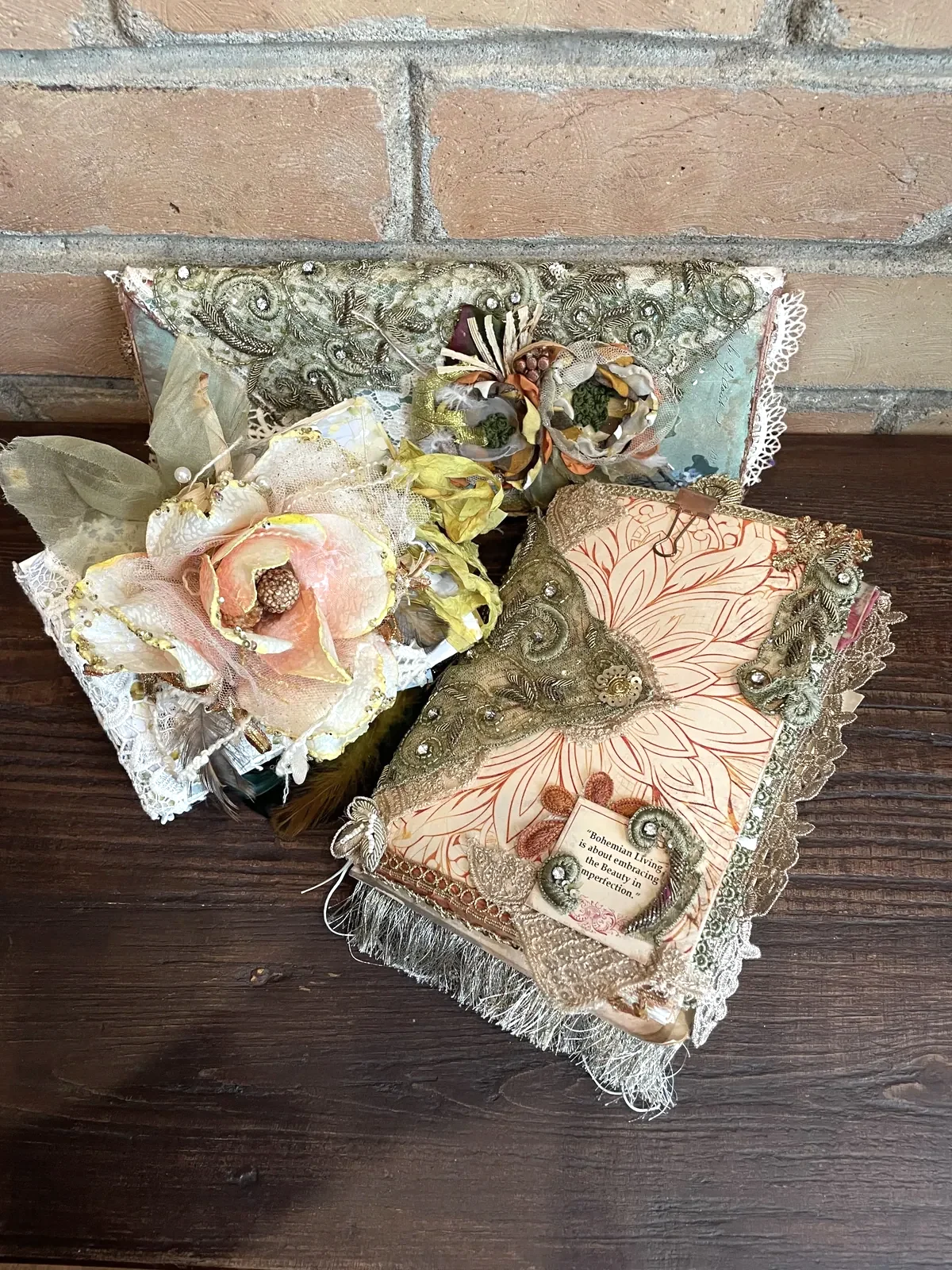
These fragments are not passive souvenirs. Working as an intuitive maximalist, Savera Kiani lets their histories determine how each artist journal opens, conceals, unfolds and reveals itself.
Keeping is not passive. It is a way of giving memory another structure.
Exhibition contents
Three books. Three ways of keeping.
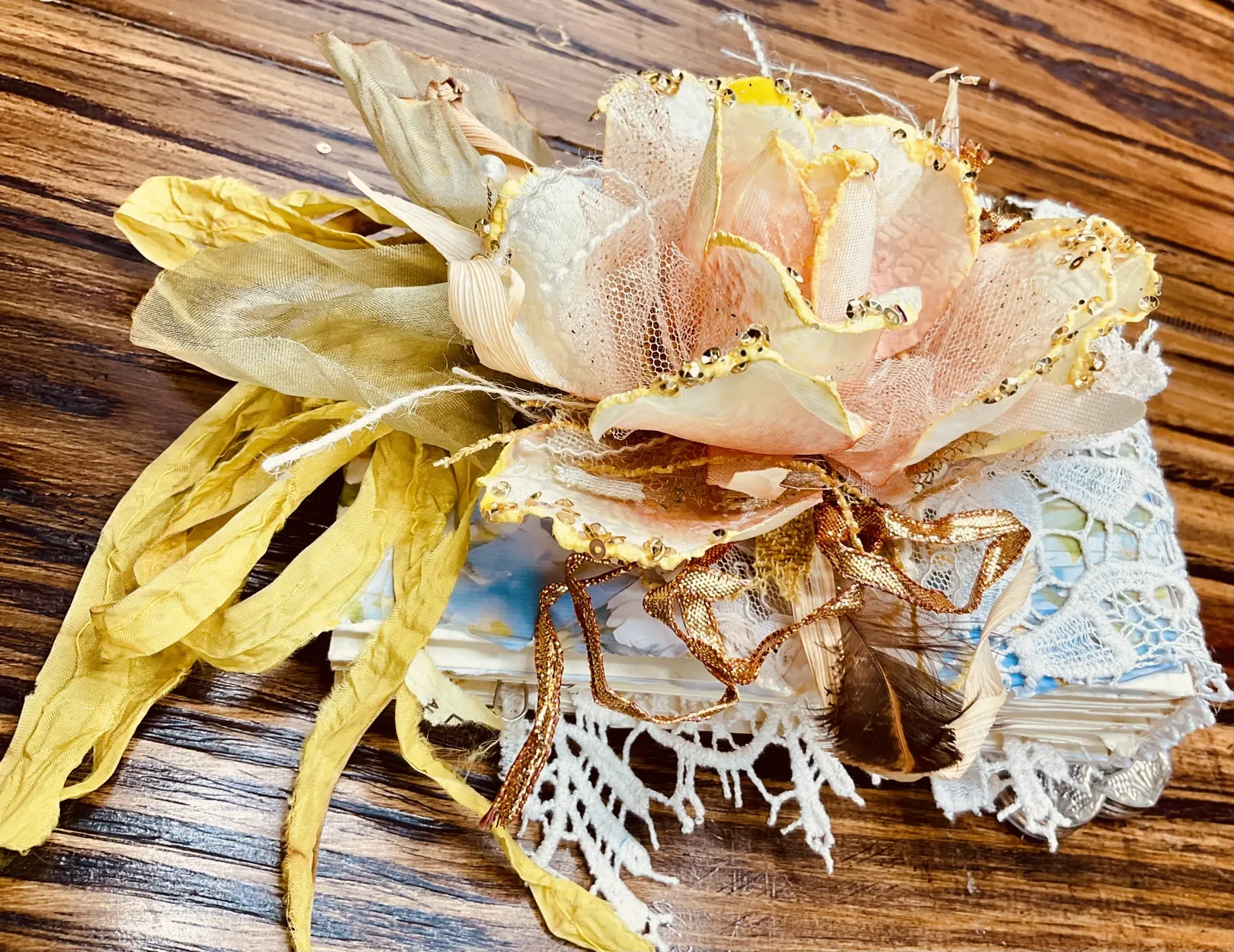
Work I · What is cultivated
The Book of Garden
Seed packets, inherited ways of caring and the Islamabad garden in which Savera’s love of nature first grew.
Open this work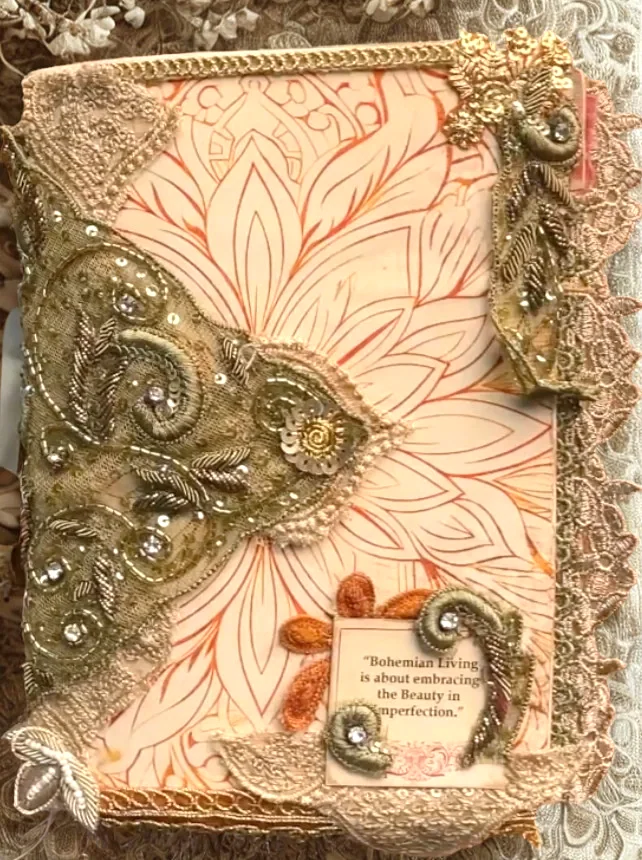
Work II · What remains after celebration
After the Wedding
Pakistani wedding envelopes and garment remnants are given a new structure after the celebration has ended.
Open this work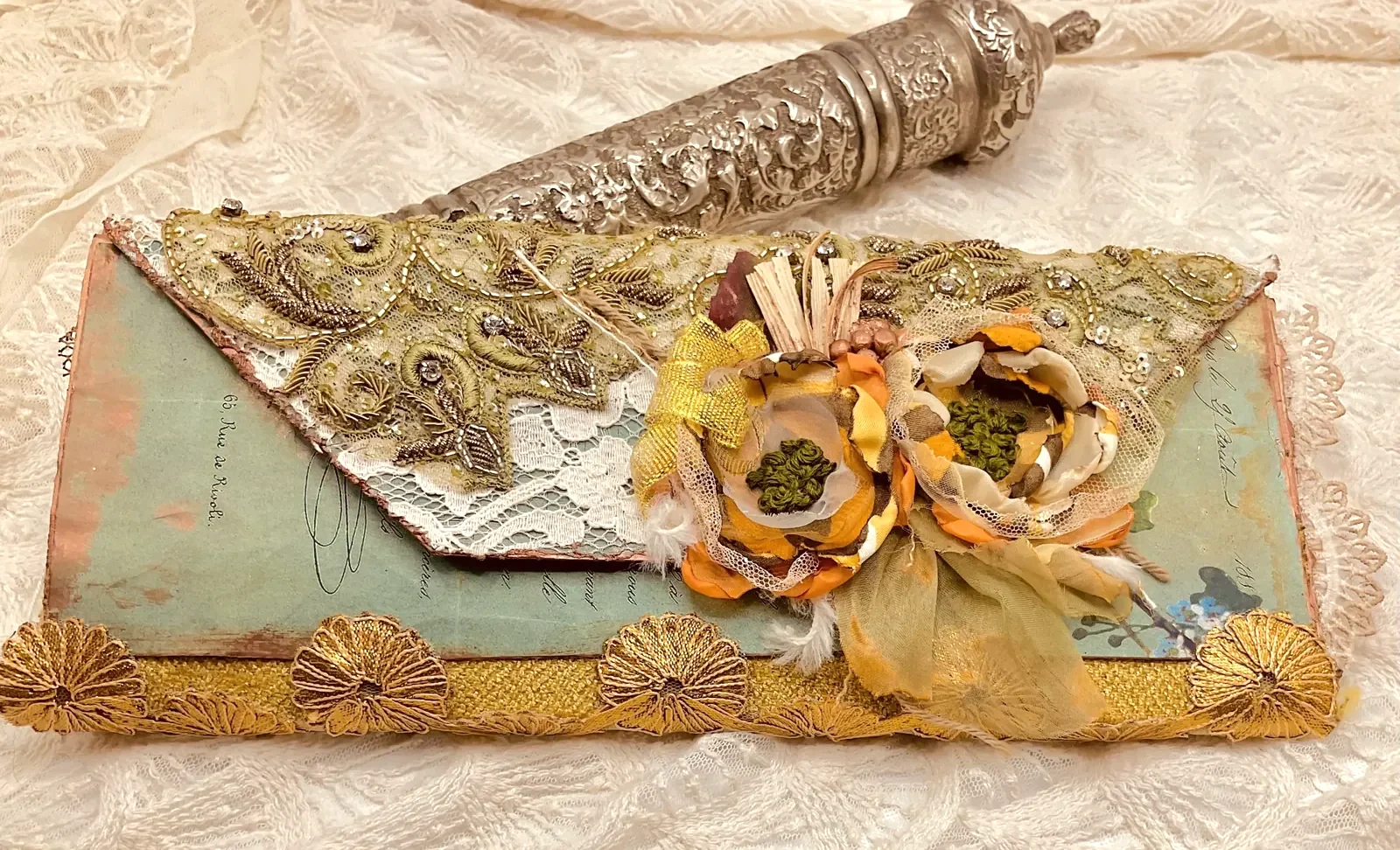
Work III · What travels between generations
The Birds Remember
Birds, butterflies, inherited papers and Urdu pages bring family memory into conversation with the divine.
Open this work
Materials, place and process
Intuitive by process.Maximalist by instinct.
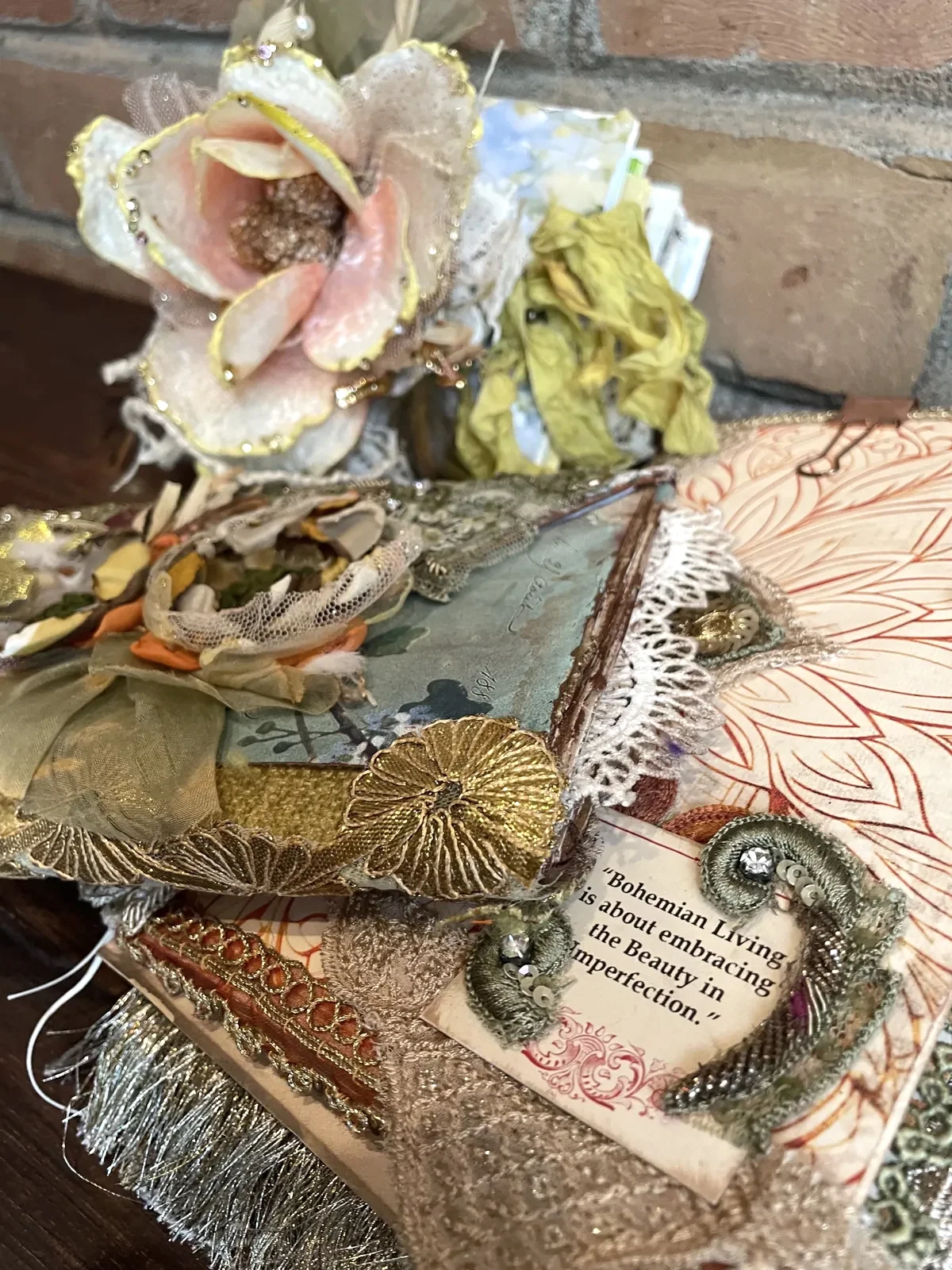
Working with what is here
I make with what is here. In Islamabad, that means tailoring remnants, wedding stationery, Urdu pages, inherited papers and cloth that has already been used or worn. These are not substitutes for supposedly ideal art materials. They are the vocabulary of my work.
I compose intuitively, allowing colour, wear, texture and previous use to determine what comes next. A torn edge can become a pocket; an uneven fold can redirect the structure; a repair can remain visible. The result is not an imitation of another place’s craft tradition, but a record of this place, these materials and this hand.
Savera Kiani
Artiststatement
In her own words
I am an intuitive maximalist. I create one-of-a-kind, hand-bound artist journals that explore memory, inheritance, nature and the histories held within everyday materials. Working in Islamabad, Pakistan, I bring embroidered garment fragments, wedding stationery, sari silk, lace, Urdu pages, inherited correspondence and reclaimed papers into richly layered book forms.
I do not begin with a fixed plan or an ideal list of supplies. I work with what is here and let each material tell me what comes next. Through stitching, distressing and collage, pockets conceal fragments, folds delay discovery and page sequences bring different histories into conversation. I do not erase age, unevenness or repair; these traces are part of the work’s life.
I do not make minimal books. I want each journal to feel abundant, tactile and alive—to reward the person willing to hold it, open it and look slowly. Birds, butterflies, gardens and seasonal change connect me to the divine and return as signs of transformation and renewal. Through these books, I consider what we choose to preserve and how attention can give memory another form.